
Audit of Legal Agents
April 9, 2026
Table of contents
- Executive summary
- 1 Statement of conformance
- 2 Acknowledgement
- 3 Background
- 4 Findings, recommendations and management response and action plan
- 5 Audit opinion
- Appendix A: About the audit
- Appendix B: List of acronyms
Executive summary
Purpose of the audit
The audit examined oversight over the management of legal agents across all sectors and regions and compliance with relevant financial policies.
Key findings
Justice Canada had a strong governance framework for managing legal agents, supported by an established policy suite, structured appointment and amendment processes, and senior-level oversight. These mechanisms helped ensure that appointments, remuneration, and expenditures were reviewed and aligned with departmental and Government of Canada requirements. However, guidance was spread across multiple interconnected documents, making requirements difficult for some users to interpret and apply.
Although LPMC policies clearly defined roles and responsibilities for managing legal agents, oversight practices across sectors, regions, and units varied significantly. Monitoring, reporting, and expenditure tracking were conducted with different levels of formality, frequency, and tools, leading to inconsistent oversight across the Department.
Internal controls over financial compliance and segregation of duties for legal agent management were generally operating as intended, with file testing showing a high level of adherence to approval, documentation, and payment verification requirements. Departmental monitoring mechanisms also provided additional assurance over compliance with financial policies. However, some process limitations were identified.
The LPMC collected and used data from information management systems to produce standard reports on Legal Agent expenditures and meet proactive disclosure and internal monitoring requirements. These reports supported operational oversight but were largely descriptive and not designed to provide a consolidated or strategic view of Legal Agent activities across the Department. As a result, information on trends, financial pressures, and patterns was not systematically shared with senior management to support decision-making.
Audit opinion and conclusion
The Department maintained effective program-level governance of legal agents through a comprehensive and up-to-date policy suite; however, oversight of individual legal agent appointments varied across sectors and regions, indicating a need for practical tools and guidance to promote greater consistency. Although progress was made in improving data capture, reporting, and guidance materials, the absence of consistent, strategically oriented reporting tools limited the Department’s ability to maintain a complete and comparable understanding of legal agent activities. Financial controls—including segregation of duties—were functioning as intended, with some identified potential for improvements. LPMC’s policy suite supported strong compliance, though opportunities remain to clarify workflow steps for users, streamline processes, and strengthen templates. Overall, audit results point to a sound control environment where targeted improvements could be made to enhance consistency, efficiency, and monitoring.
Management response
Management agrees with the audit findings, accepts the recommendations included in this report, and has developed a management action plan to address them. The management action plan is integrated in this report.
1 Statement of conformance
In my professional judgment as Chief Audit and Evaluation Executive, the audit conforms to the International Standards for the Professional Practice of Internal Auditing, as supported by the results of the Quality Assurance and Improvement Program.
Submitted by:
Tricia Goulbourne
Chief Audit and Evaluation Executive
Department of Justice Canada
Date
2 Acknowledgement
The Chief Audit and Evaluation Executive would like to thank the audit team and those individuals who contributed to this engagement and particularly, employees who provided insights and comments as part of this audit.
3 Background
Under the Department of Justice Act, the Minister of Justice and Attorney General of Canada is mandated to provide legal services to the Government of Canada, including its departments and agencies. Through this role, the Department of Justice Canada (Justice Canada or the Department) supports the Government by delivering high-quality legal advice and representation, while advancing a justice system that is fair, relevant, accessible, and reflective of Canadian values.
To fulfill this mandate, the Department relies on a combination of in-house counsel and private-sector law practitioners, known as legal agents. Legal agents are retained when specialized expertise, regional coverage, or resource pressures make it more efficient or practical to retain external counsel. They provide litigation, advisory, and real property services across a wide range of legal areas, including criminal, civil, administrative, and constitutional law.
The use of legal agents is coordinated through the national Agent Affairs Program, created in 1996 to supplement the Department’s capacity to deliver timely and effective legal services. The Program is administered by the Litigation Practice Management Centre (LPMC) within the National Litigation Sector (NLS). The LPMC manages the appointment process, develops policies and procedures, and monitors agent performance and expenditures, thereby supporting the Deputy Minister and the Minister of Justice and Attorney General of Canada in exercising effective oversight of outsourced legal services.
Unlike most contracting activities within the federal government, legal agent appointments are exempt from standard procurement requirements under the Government Contract Regulations, and Treasury Board policies. Instead, appointments are authorized directly by the Minister of Justice. To facilitate accountability, transparency, and stewardship, the Department established the Legal Services Contracting Framework in 2005. The foundation of this framework is the Policy on Contracting for Legal Services and Legal Agent Appointment; this policy and related directives and guidelines set out internal standards for appointing, monitoring, and managing legal agents, with a focus on due diligence, value for money, and alignment with government-wide procurement principles.
The appointment of legal agents follows a lifecycle that begins with the identification and selection of qualified practitioners, supported by registration, qualification assessment, and selection based on legal criteria. Once appointed, legal agents are engaged through formalized contracts, and their work is subject to oversight, performance monitoring, and financial management controls. Data gathered through these processes support both program management and departmental accountability.
Figure 1: Legal Agent appointment lifecycle
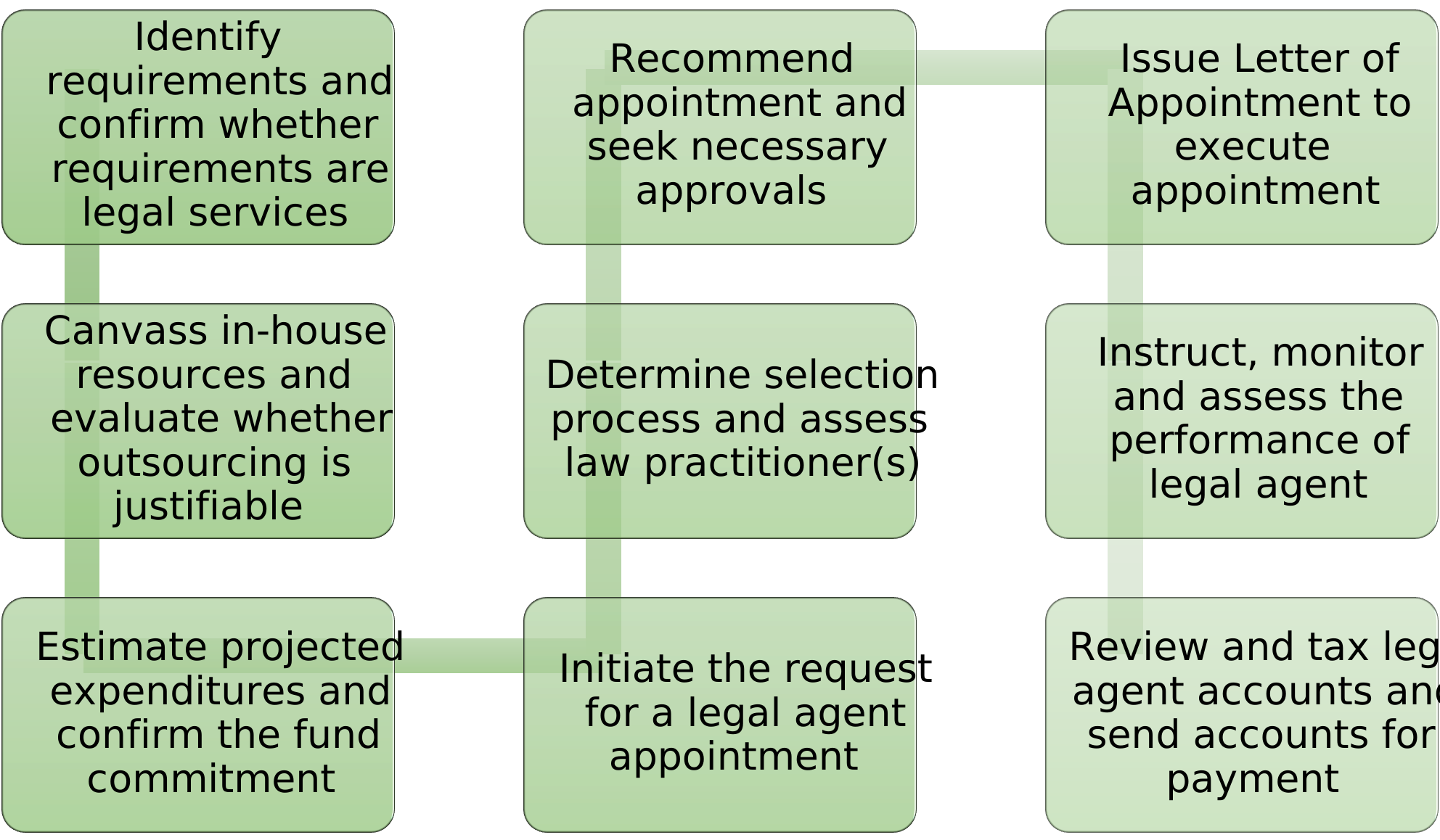
Figure 1: Legal Agent appointment lifecycle – Text version
A step-by-step process flow for the appointment lifecycle for Legal Agents. The steps are shown as distinct text elements, listed in procedural order:
- Identify requirements and confirm whether requirements are legal services
- Canvass in-house resources and evaluate whether outsourcing is justifiable
- Estimate projected expenditures and confirm the fund commitment
- Initiate the request for a legal agent appointment
- Determine selection process and assess law practitioner(s)
- Recommend appointment and seek necessary approvals
- Issue Letter of Appointment to execute appointment
- Instruct, monitor and assess the performance of legal agent
- Review and tax legal agent accounts and send accounts for payment
Oversight of legal agent appointments is carried out through multiple layers of approval and governance. Key roles in this process include the Deputy Minister, the Assistant Deputy Attorney General (ADAG), the Deputy Assistant Deputy Attorney General (DADAG), NLS, Regional Directors General (RDG), National Portfolio Heads, and Requesting Managers. These stakeholders are responsible for establishing and maintaining a management control framework for the selection and appointment of legal agents, recommending and approving appointments, providing functional direction, assessing internal controls, and determining what type of appointment to proceed with, based on operational needs.
In accordance with the TBS’s Guide to the Proactive Disclosure of Contracts, the Department publishes quarterly reports on legal agent appointments made by the Minister of Justice and Attorney General of Canada. These reports include contracts for legal services where the aggregate value of legal agent invoices approved by the Department exceed $10,000 in the fiscal year. The annual expenditures reflect the amount approved by Justice Canada, not the amounts actually paid, because a large portion of these are paid by other government departments. By June 30th following the end of each fiscal year, the Department releases a summary of total annual expenditures by firms. This process ensures transparency while respecting solicitor-client and litigation privilege. Overall, the Department proactively disclosed contracts for legal services of $31,414,101.14 in 2022–23, $31,069,041.29 in 2023–24, and $36,384,407.20 in 2024–25. Although most of these costs were paid directly by client departments, Justice Canada was responsible for a small amount. Around one to four percent of files during these years were paid by the Department.
4 Findings, recommendations and management response and action plan
This section provides the findings and recommendations resulting from the audit work carried out. The audit was conducted based on the lines of enquiry and audit criteria identified during the planning phase, which are presented in Appendix A of this report.
4.1 Governance over the management of Legal Agents
The Department had a solid governance framework for legal agents, but users struggled to understand requirements, given the need to navigate a policy suite with many interdependent documents.
Governance for legal agents was maintained through the approved policy suite, a robust appointment and amendment process, and ADAG and DADAG supervision.
Legal agent appointments are exempt from standard procurement requirements under the Government Contract Regulations and Treasury Board policies that other contracting activities are subject to. It is nonetheless important to have strong governance practices in place to ensure that appointment and remuneration decisions are consistent and justified, that the risks of conflicts of interest are managed, and that expenditures on outsourced legal services clearly support departmental and Government of Canada objectives.
During the audit review period, governance over the management of legal agents at Justice Canada was supported by the approved legal agents policy suite, a robust appointment and amendment process, and senior-level oversight by the ADAG and DADAG. Although there was no formal strategic or advisory function in place to review legal agent activity, examine trends in expenditures, or discuss department-wide issues, the policy instruments and approval levels provided a defined structure for how legal agents were selected, appointed, and managed, and set out financial controls and oversight expectations that were aligned with government-wide procurement requirements. Additional layers of approval were required depending on financial factors or levels of risk and sensitivity. For instance, appointments and amendments with planned expenditures over $150,000, or remuneration rates exceeding departmental rate guidelines, had to be authorized by the ADAG or DADAG, which created a clear escalation protocol. Files of higher risk or sensitivity, such as appointments involving former public servants or matters of national significance, required approval from the Deputy Minister or even the Minister of Justice. This structure helped ensure that the most significant appointments followed a rigorous review process at the appropriate senior level.
The Legal Agent policy requirements and guidance were detailed in many interconnected documents, which could be simplified to help new and sporadic users.
Clear and concise guidance is essential to help the requesting managers and instructing counsel who use legal agents correctly interpret and apply the Department’s requirements without having to be experts in financial management, contracting, or internal control.
For requesting managers and instructing counsel who only used legal agents sporadically, processes could seem administratively heavy, roles and responsibilities unclear, and policy documents hard to understand and repetitive in nature. Audit interviews further revealed that familiarity with financial management and approval requirements varied among users.
Requirements related to legal agents were set out in a detailed but highly interconnected policy suite. Users had to navigate several directives and standards to understand what was required of them. For example, the Directives on Outsourcing Legal Services, Selecting and Appointing Legal Agents, Managing Legal Agent Appointments, and Taxing Legal Agent Accounts all indicated that requesting managers and instructing counsel should use prescribed forms and document their files in accordance with the Standard on Documenting Legal Agent Appointment Files. However, these directives provided little context on the purpose of the forms, when they should be used, or how they fit into the overall process. For instance, while the Directive on Outsourcing Legal Agents indicated that section 32 approval under the Financial Administration Act was required when the Department was responsible for payment, it did not clearly explain that this approval could be captured through the Legal Agent Appointment Request Form. Although a process flow map was developed in 2011, at the time of the audit, there was no user guide that presented the legal agent appointment lifecycle in a simple, step-by-step manner. From interviewees’ point of view, confusion around the existing policy and guidance material could lead to inconsistent application and additional back-and-forth with the LPMC. This increased the risk that users misinterpreted requirements, overlooked key controls, or rely heavily on ad hoc support. It could also make it more difficult for the Department to demonstrate that legal agent appointments were being managed in a controlled, transparent, and defensible way.
4.2 Oversight in practice
LPMC policy clearly defined roles and responsibilities. However, oversight across sectors, regions or units varied widely.
Oversight practices for legal agents at the sector or regional level varied significantly in type, frequency, and purpose.
Effective oversight requires consistent monitoring of expenditures, activities, and performance, to support responsible stewardship and decision-making, to maintain alignment between legal work and departmental and Government of Canada objectives, and to exercise accountability through control and transparency. Oversight of legal agents encompasses the processes used by instructing counsel, requesting managers, regional offices, and sectors to monitor legal agent expenditures, track appointment activities, review performance, and report to senior management. This includes financial tracking, forecasting, reporting on status, documenting work, and reporting on significant matters such as fee increases or amendments. Legal Agent policy instruments define expectations for monitoring, analyzing, and reporting on legal agent activities and expenditures, as well as data-capture requirements in Justice’s Legal File Management System (LEX) such as fees, disbursements, and appointment dates. However, the practical application of these requirements varied considerably across the Department.
At the sector level, reporting practices differed in both formality and frequency. One sector provided structured dashboards or briefings directly to its Assistant Deputy Minister’s Office (ADMO), while others relied on more informal mechanisms, such as paralegals providing expenditure updates to RDGs, client-counsel meetings involving legal agents, periodic updates to senior counsel and clients, or ad hoc briefings to Legal Services Unit (LSU) heads or Assistant Deputy Minister (ADM)-level authorities. The sector that regularly provided reports to its ADMO also shared those reports with LPMC.
Where reporting existed at the sector, regional, or LSU level, it generally focused on financial and operational aspects of legal agent management. Examples included:
- Financial reports: Quarterly and monthly reports detailing expenditures, invoiced amounts, remaining contract balances and budget utilization. Some reports included percentage thresholds, which helped to indicate when amendments may have been required.
- Appointment tracking: Spreadsheets listing active files, legal agents, contract amounts, hourly rates, and amendments.
- Briefing notes: Notes used to escalate significant matters to senior management, including requests for fees increases, retroactive payment, and expenditure approvals.
- Performance and activity information: For some legal agent files, there was limited evidence of reporting on legal agent performance or work products, at times due to solicitor-client privilege constraints.
The frequency of reporting ranged from consistent monthly or quarterly reporting using established templates, to ad-hoc or event-driven updates with no defined schedule. While LPMC policies set out high-level monitoring expectations, they did not clearly articulate how often oversight activities should occur, what reporting should include, or how expenditures and activities should be tracked. Discussions with requesting managers and instructing counsel highlighted an appetite for practical and user-friendly tools to support consistent oversight, particularly in relation to expenditure forecasting and tracking. While interviewees acknowledged that resources for users have expanded in recent years, they expressed a common desire for more detailed and operational guidance to support day-to-day management of legal agents.
During the audit, the engagement team found several examples of supplementary tools, templates, and processes developed by regional offices and LSUs that could serve as models for other offices. Some of these examples included:
- Excel spreadsheets to track legal agent expenditures, activities, invoices, and disbursements.
- Standard operating procedures and guidance documents clarifying roles, responsibilities, and step-by-step processes for appointing or amending appointments.
- Quarterly or monthly reporting templates used to brief ADMOs.
- Cost-to-projection mapping processes to track forecasted, actual, and projected costs across multiple work categories, including justifications for overruns.
- Email templates for seeking expressions of interest from legal agent firms.
- Client confirmation emails or forms to document client agreement for appointing and paying legal agents.
- Work plans and detailed statements of account to track legal agent activities.
Leveraging the tools, templates, and practices already developed by certain regional offices and LSUs could help promote a more consistent and practical approach to oversight across the Department. Clearer, user-focused guidance would support users in exercising consistent oversight.
Project expenditures and work products were not always proactively monitored.
The 39 files reviewed during the audit revealed that not all offices were proactively tracking and forecasting expenditures. Requests to increase projected expenditures were often made when funds were nearly or fully depleted. Of 25 amendments related to expenditure increases, 17 were initiated when 10% or less of funds remained. Eight amendments were approved after invoices exceeding the approved amount had already been received. These patterns suggest that, in some cases, expenditure monitoring and forecasting were reactive rather than proactive.
A similar observation was made with respect to oversight of legal agent performance and work products. While requesting managers and instructing counsels indicated that they exercised oversight by reviewing work products and receiving updates on file progress, the extent and formality of this oversight, once again, varied significantly. Due to solicitor-client privilege, the audit team could not independently validate evidence of supervision over work products within most sampled files. In follow-up audit consultations, most users indicated that they used local LEX files to document correspondence and work products, but the materials received and methods used for oversight differed. For instance, some units required structured updates, such as formal work plans, fee estimates, or detailed progress reports submitted to assigned counsel or directors. Others relied primarily on informal discussions, ad hoc emails, or invoice narratives. In certain cases, particularly where advice was provided directly to clients outside the Department, no work plans or status updates were available to the Department.
Variability in monitoring and reporting practices can result in uneven application of controls, reactive expenditure management, resulting in cost overruns, out of scope work being completed, and reduced visibility for senior management over emerging pressures or trends. When amendments are initiated late in the funding cycle or after funds have been exceeded, the Department’s ability to manage budgets proactively and avoid funding gaps is diminished.
Recommendation # 1
The LPMC should improve the clarity of its current policies and guidance and streamline its processes for requesting offices by developing a user-friendly toolkit, with the goal of reducing administrative burden by making tasks and steps well defined and easy to understand, even for occasional users. This toolkit could include elements such as:
- a workflow document with embedded forms that connect policy and legislative requirements to each step of the process;
- up to date requirements for all types of legal agent appointments and amendments; and
- examples of templates and management practices already in use by offices that manage legal agents.
Management Response and Action Plan
Agreed.
Office of Primary Interest
Assistant Deputy Attorney General (ADAG), National Litigation Sector (NLS), Litigation Practice Management Centre (LPMC)
Actions:
The LPMC has already taken steps in that direction, for instance:
- In the fall of 2025, the LPMC piloted a modernized and streamlined legal agent request form and developed a legal agent amendment form. Both forms provide users with a streamlined approach and contain details on requirements for each appointment process type and for various common amendment processes.
The LPMC will develop and implement a user-friendly Legal Agent Process Toolkit that clearly guides requesting offices through the end-to-end appointment and amendment process. The toolkit may include:
- A visual workflow linking each step to relevant policy and legislative requirements.
- Integrated and standardized legal agent request and amendment forms.
- Up-to-date requirements for all appointment amendment types.
- Examples of templates and management practices used by experienced users.
The LPMC will communicate the updated guidance to all legal agent users across the Department and will publish it on its DW website.
Deliverable:
- New toolkit to guide requesting offices through the end-to-end legal agent appointment and amendment process.
Due Date
March 2027
4.3 Compliance and rationalization of controls
While internal controls over financial compliance and segregation of duties were operating as intended, process changes could strengthen verification activities and streamline amendment requirements.
Internal controls over financial compliance were applied as intended.
Effective compliance frameworks depend not only on the existence of controls, but also on controls that are clear, relevant, and practical for users to apply. Controls that align with operational realities and user needs help ensure that policy requirements are implemented consistently and that risks related to financial management, procurement exemptions, and legal agent activities are mitigated.
Overall, the audit found that key financial compliance controls related to the management of legal agents were applied as intended. File testing of 39 appointments and 53 amendments revealed a high level of compliance with applicable financial policies and internal controls. All requests for legal agent appointments that required endorsement by the sector or regional head of the requesting office had the appropriate endorsements on file. Similarly, all appointments and amendments followed the correct processes and were approved at the levels required by policy. Letters of Appointment were present on file for all initial appointments reviewed, as required. While amendments do not always require an amended Letter of Appointment, documentation supporting amendments was consistently maintained.
For client-paid appointments, most files included documentation confirming that services had been provided and recommending payment to the client department. Specifically, 89 percent of applicable files contained copies of letters sent to client departments to certify services rendered and recommend payment. However, these letters were not always sent within the expected timeframe of 30 days following receipt of the related invoice.
For appointments paid directly by the Department of Justice (JUS-paid), all individuals exercising section 34 authority had the appropriate financial delegation to approve expenditures related to legal agents. Minor administrative discrepancies were observed in a small number of cases. For example, in two instances the cost centre recorded on the payment voucher did not match the individual’s specimen signature card, and in one instance the vendor address on the payment voucher matched the invoice but differed from the address recorded in the financial system (IFMS). These issues were isolated and did not indicate systemic weaknesses.
Broader departmental oversight mechanisms provided additional assurance over compliance.
Oversight of legal agent payments was also supported through complementary monitoring and verification mechanisms designed to assess control effectiveness and compliance with financial policies. The Ongoing Monitoring Program for Internal Controls over Financial Management (ICFM) assesses key financial processes chosen through a multi-year rotational risk assessment cycle. Legal Agents were assessed as a moderate risk area based on factors such as impact, volume of activity, and susceptibility to loss. As a result, Legal Agent processes are expected to be assessed approximately every four to five years under the current monitoring plan.
In addition, the Annual Account Verification Plan provided regular quality assurance reviews to ensure compliance with financial policy and control requirements. Under this plan, high-risk transactions were subject to full pre-payment account verification, while lower-risk transactions were reviewed post-payment. Legal Agent transactions were classified as high risk due to their complexity, high dollar values, and sensitivity, and therefore all JUS-paid Legal Agent payments underwent full pre-payment account verification. Reviews conducted under these oversight mechanisms are to be documented, reported to advisory bodies or high-level officials, and followed by corrective actions where necessary.
While overall compliance levels were high, control testing identified several areas where existing processes presented potential risks or opportunities for improvement.
Section 33 Account Verification for JUS-Paid Appointments.
With regard to Legal Agents, the taxation process refers to the review of invoices to confirm that services were rendered in accordance with the terms and conditions of appointment. One of these conditions concern hourly rates at which legal agents are paid. The Accounting Operations Division (AOD) personnel indicated that they were not always able to fully verify contracts’ terms and conditions when exercising section 33 authority because they had limited access to Letters of Appointment, which often contain solicitor-client privileged information. As a result, accounting personnel were not always able to confirm whether invoice rates and conditions aligned with the approved terms. This limitation was reflected in file testing. Among the 16 JUS-paid appointments reviewed, two instances were identified where payments were not consistent with the approved rates outlined in the terms and conditions of appointment. In one case, the discrepancy was identified and addressed by the LPMC and the requesting office. In the other case, a legal agent who was not named in the Letter of Appointment billed at a rate different from the approved rate. There was no evidence that this discrepancy was identified during invoice taxation by the requesting office.
L9 Authority in Place for Acting Appointments.
In the context of managing legal agents, L9 authority refers to a delegated authority level within the Department that authorizes the Director of LPMC, the DADAG, and the ADAG to approve legal agent appointments, amendments, and related administrative actions. This delegation is formally documented through a specimen signature card. File testing identified three appointments and three amendments that were approved by individuals in acting roles who did not at the time have an active on-demand L9 Agent Affairs Specialist specimen signature card, which is the source of functional authority for legal agent appointments. These cases highlight the importance of ensuring that delegation instruments remain current and consistently applied.
Verification of Client Department’s Willingness to Pay Agents.
The audit examined how requesting offices confirmed that client departments were willing and able to fund legal agent costs for client-paid appointments. Of the 21 applicable files reviewed, 18 did not contain direct written confirmation from the client department that funds were available. Instead, these files contained confirmation from Justice personnel indicating that the client had agreed to pay the costs, primarily through text contained in intake forms, approval memos, endorsement memos, or related correspondence. While current LPMC policy does not require direct client confirmation, reliance on indirect confirmation may present risks, particularly for high-cost appointments.
Approval of Contract Amendments.
Amendments to legal agent appointments occurred relatively frequently. In the sample of 39 appointments, 25 files included in scope amendments, resulting in a total of 53 amendments reviewed. All amendments included clear operational justifications and followed required approval processes. However, 28 amendments (53 percent) involved changes only to the terms and conditions of the appointment, including 19 amendments made solely to update the composition of the approved legal team. Six of these personnel amendments were issued retroactively to allow legal work to proceed before formal approval was finalized. While retroactive approvals can support operational flexibility, the frequency of personnel-related amendments suggested an opportunity to streamline certain administrative processes. For example, the LPMC could consider clarifying the Department’s risk tolerance for delegating authority to LSU or regional heads for certain types of legal team changes or encouraging requesting managers to negotiate rates for broader legal categories during the appointment process. Such approaches could reduce the administrative burden associated with repeated amendment requests while maintaining appropriate oversight.
Recommendation # 2
To better support the application of existing internal controls so that they are focused on the needs of users, the LPMC should:
- work with the Accounting Operations division to determine what adjustments could be made to existing forms so that their role may be appropriately carried out.
- work with Justice Canada senior management to determine how best to obtain direct evidence that clients are willing to pay legal agent costs, to mitigate financial risk related to costly legal agent appointments.
- work with LSUs and regional offices that manage high value and long-standing legal agent files to determine whether adjustments to the standard terms and conditions could better support their financial forecasting and oversight needs.
Management Response and Action Plan
Agreed.
Office of Primary Interest
ADAG, NLS, LPMC
Actions:
LPMC will identify and implement adjustments to forms, tools and guidance to better support the application of internal controls and the management of financial risks associated with legal agent appointments. The review will include:
- Reviewing forms and processes related to legal agent appointments and amendments to enable the AOD to effectively fulfill the responsibilities under section 33.
- Exploring a standardized mechanism for obtaining and retaining documented evidence that client departments agree to pay legal agent fees.
- Reviewing tools, guidance, and LEX File Standards to better support financial forecasting and oversight for high-value and long-standing files.
The LPMC will communicate the updated guidance to all legal agent users across the Department and will publish it on its DW website.
Deliverables:
- Implemented adjustment(s) to existing legal agent processes and forms to enable the AOD to effectively fulfill its responsibilities under section 33, as required.
- Implemented standardized mechanisms for obtaining and retaining direct and documented evidence that client departments are informed and agree to pay legal agent fees, as required.
Updated tools, guidance or standard terms and conditions to support the financial forecasting and oversight needs, as required.
Due Date
October 2027.
Recommendation # 3
The LPMC should look into how best to reduce barriers to business productivity in relation to streamlining the amendment process for terms and conditions that relate to legal team changes, for example by encouraging LSUs to negotiate and include within Letters of Appointment generic categories with associated compensation rates, so that personnel changes can be approved by LSU heads.
Management Response and Action Plan
Agreed.
Office of Primary Interest
ADAG, NLS, LPMC
Actions:
The LPMC is already encouraging measures to reduce barriers to business productivity. For instance:
- It encourages private sector law practitioners to propose streamlined legal agent teams and alternative billing arrangements.
- It continues to approve generic resource categories for junior team members (for instance, paralegals, students, junior counsel), when this approach aligns with how private sector law practitioners structure their practice.
Additionally, LPMC will also review approval thresholds for amendments to determine how best to streamline amendment approvals and will communicate updated guidance to all legal agent users and publish it on its DW website to ensure consistent application across the department.
Deliverable:
- Updated guidance on the amendment process.
Due Date
March 31, 2027
4.4 Reporting information for decision-making
The LPMC used captured data to report on overall Legal Agent expenditures, but to date has only used ad hoc reporting to generate information and insight into trends, patterns, and anomalies.
The LPMC centrally coordinated standard Legal Agent reporting.
Effective reporting is essential to support informed decision-making, oversight, and resource management. Providing senior management with clear, reliable, and consolidated information on Legal Agent activities and expenditures can help identify trends, monitor financial pressures, and support strategic decisions regarding the use of external legal services. Under departmental directives and guidelines, the LPMC is assigned specific reporting responsibilities, including recording and reconciling taxed legal agent account information in IFMS and LEX, reporting on Legal Agent expenditures and preparing proactive disclosure reports. To carry out these responsibilities during our in-scope period, the LPMC collected and relied on financial and administrative data primarily from IFMS and LEX.
LPMC used the data it collected to support routine proactive disclosure reports, to support compliance with Treasury Board proactive disclosure requirements, and provide visibility into Legal Agent appointments and expenditures. Collected data was also used for the LPMC’s internal program monitoring, such as purchase order limit reports, used to identify Legal Agent files with limited or no recent billing activity, and LEX data quality reports, used to identify missing or incomplete file information. These internal reports allowed the LPMC to follow up with requesting managers or instructing counsel regarding anomalous activity or missing information.
Regular reports were not designed to deliver a clear, consolidated snapshot of Legal Agent activity at the departmental or sector level and therefore did not perform a strategic function.
Regular and easy to understand snapshots of active legal agent files can provide senior management with ongoing assurance and understanding of trends and patterns, both within their own sectors and across the Department. However, reporting related to legal agent activities was not systematically shared with officials responsible for oversight, budgeting, or strategic decision-making, such as portfolio heads. While the LPMC’s reports contained administrative and financial information related to legal agent activities, the content was largely descriptive and not strategically focused. The reports did not present trend analyses, budget pressure indicators, performance information, or insights to inform policy or management decisions. In December 2025, the LPMC developed new dashboard templates in Excel. These dashboards included lists of information such as hourly rates by legal agent, estimated cost, total disbursements, last invoice dates, and recent appointment and amendment activity for active and inactive files. The information in these dashboards has the potential to support more in-depth analysis of legal agent appointments and expenditures and form the backbone of strategically oriented reporting.
Ad hoc reports demonstrated an appetite for more strategic information on legal agents.
Audit work revealed several ad hoc analytical reports produced by the LPMC and by an LSU. These included, for example, work done to compare legal agent costs versus in-house costs and answer questions such as the range of approved legal agent rates, legal agent costs per client over time, and portfolios were managing which files. One such analysis supported a business case to hire additional full-time employees within a particular LSU, as in-house employees were found to be more cost-effective. These ad hoc reports demonstrate there was an appetite to better understand information related to the use of legal agents by the Department and that such information could be used to support cost-effective decision-making.
Recommendation # 4
The LPMC should develop strategic reports that can provide a consolidated view of active legal agent activities across the Department, with information grouped and analyzed to facilitate big picture understanding and proactively provide these reports to sector and regional heads for their information on a regular schedule.
Management Response and Action Plan
Agreed.
Office of Primary Interest
ADAG, NLS, LPMC
Actions:
The LPMC has already taken steps towards implementing this recommendation:
- LPMC has been working actively to improve JUS access to legal agent data since 2020.
- LPMC has also been working with the LEX and IFMS teams to improve reporting capabilities and the inclusion of additional data elements.
The LPMC will continue to refine strategic reports providing a consolidated and analyzed view of active legal agent activities across the Department. These reports will use LEX and IFMS data and will be proactively distributed to sector and regional heads on a regular schedule.
Deliverable:
- Strategic reports providing a consolidated and analyzed view of active legal agent activities across the Department.
Due Date
- Draft reports to ADAGO and NLS management, for final comment: October 2026.
- Additional quality assurance reviews of data: November 2026.
- First portfolio-level report: January 2027.
5 Audit opinion
The Department maintained effective program-level governance of legal agents through a comprehensive and up-to-date policy suite; however, oversight of individual legal agent appointments varied across sectors and regions, indicating a need for practical tools and guidance to promote greater consistency. Although progress was made in improving data capture, reporting, and guidance materials, the absence of consistent, strategically oriented reporting tools limited the Department’s ability to maintain a complete and comparable understanding of legal agent activities. Financial controls—including segregation of duties—were functioning as intended, with some identified potential for improvements, and LPMC’s policy suite supported strong compliance, though opportunities remain to clarify workflow steps for users, streamline processes, and strengthen templates. Overall, audit results point to a sound control environment where targeted improvements could be made to enhance consistency, efficiency, and monitoring.
Appendix A: About the audit
Audit objective:
The objective of the audit was to determine whether Justice Canada maintained oversight over the management of legal agents across all sectors and regions and complied with relevant financial policies in a consistent manner.
Audit scope:
The period under examination included fiscal years 2022–23; 2023-24; and 2024–25.
The scope included all relevant departmental controls, governance structures, frameworks, policies, processes, and procedures as they existed at the time of this engagement, related to the management of legal agents by the LPMC, and applied by selected legal services units (LSUs) and regional offices.
This audit did not assess the quality of legal advice or representation provided by legal agents or any contracting activities outside the Agent Affairs Program.
Audit approach:
The audit examined:
- Mechanisms in place to track, oversee, analyze, and report on legal agent activities, to assess completion of work, spending, and compliance with the terms and conditions of appointment across sectors and regions, and for higher-level strategic decision-making.
- The management, documentation, and accessibility of legal agent information needed to support effective oversight, informed decision-making, reporting, and compliance with information management policies.
- The operationalization of financial policies and internal controls related to the management of legal agents, in particular legal agents paid by Justice Canada.
A sample of 40 legal agent files was selected for examination from a list of appointments and amendments approved within our period under examination. All apparent Justice Canada-paid files that were approved or amended during this time frame were included in the sample, for a total of 19 Justice Canada-paid files. The team then judgmentally selected 21 client-paid files to obtain a mix of files from different LSUs and regions. The sample also included files from both foreign and domestic legal agents. During testing, the audit team discovered that what appeared in the data to be two separate files in the Justice Canada-paid portion was in fact just one file, and two others were in fact client-paid, bringing the sample numbers to 16 Justice Canada-paid files and 23 client-paid files, for a total of 39 legal agent files. Within the 39 files in our sample, 25 contained in-scope amendments. These 25 legal agent files contained a total of 53 in-scope amendments, which the audit also examined. When looking at elements of financial compliance relating to invoice payments, the audit’s emphasis was on services paid by Justice Canada. The audit also examined internal controls and elements relating to the management of legal agents for services paid by both Justice Canada and client departments.
Audit lines of enquiry and criteria:
Line of enquiry 1: Governance and Oversight
- 1.1 The Department had governance and oversight structures in place to provide strategic direction and support for the transparent management of legal agents both within the program authority and across selected legal services units and regional offices.
- 1.1.1 There was a governance structure in place to support strategic decision-making in relation to the management of legal agents.
- 1.1.2 The Department had oversight mechanisms in place to monitor, analyze, and report on legal agent activities, to facilitate effective compliance and performance management.
Line of enquiry 2: Compliance
- 2.1 The Department consistently adhered to applicable financial policies and internal controls in the management of legal agents, supported by documented reviews and corrective actions, where required.
- 2.1.1 The Department consistently adhered to applicable financial policies and internal controls in the management of legal agents.
- 2.1.2 The financial management of legal agents was supported by documented reviews and corrective actions where required.
Appendix B: List of acronyms
- ADAG
- Assistant Deputy Attorney General
- ADM
- Assistant Deputy Minister
- ADMO
- Assistant Deputy Minister’s Office
- AOD
- Accounting Operations Division
- DADAG
- Deputy Assistant Deputy Attorney General
- ICFM
- Internal Controls over Financial Management
- IFMS
- Integrated Financial and Materiel System
- LEX
- Justice’s Legal File Management System
- LPMC
- Litigation Practice Management Centre
- LSU
- Legal Services Unit
- NLS
- National Litigation Sector
- RDG
- Regional Director General
- TBS
- Treasury Board Secretariat
- Date modified: