
What We Heard from First Nations
While we hosted separate engagement sessions for First Nations from each region across the country—British Columbia, Prairies, Ontario, Québec, Atlantic, and North—, the themes that we heard in each of these targeted dialogue sessions were recurring.
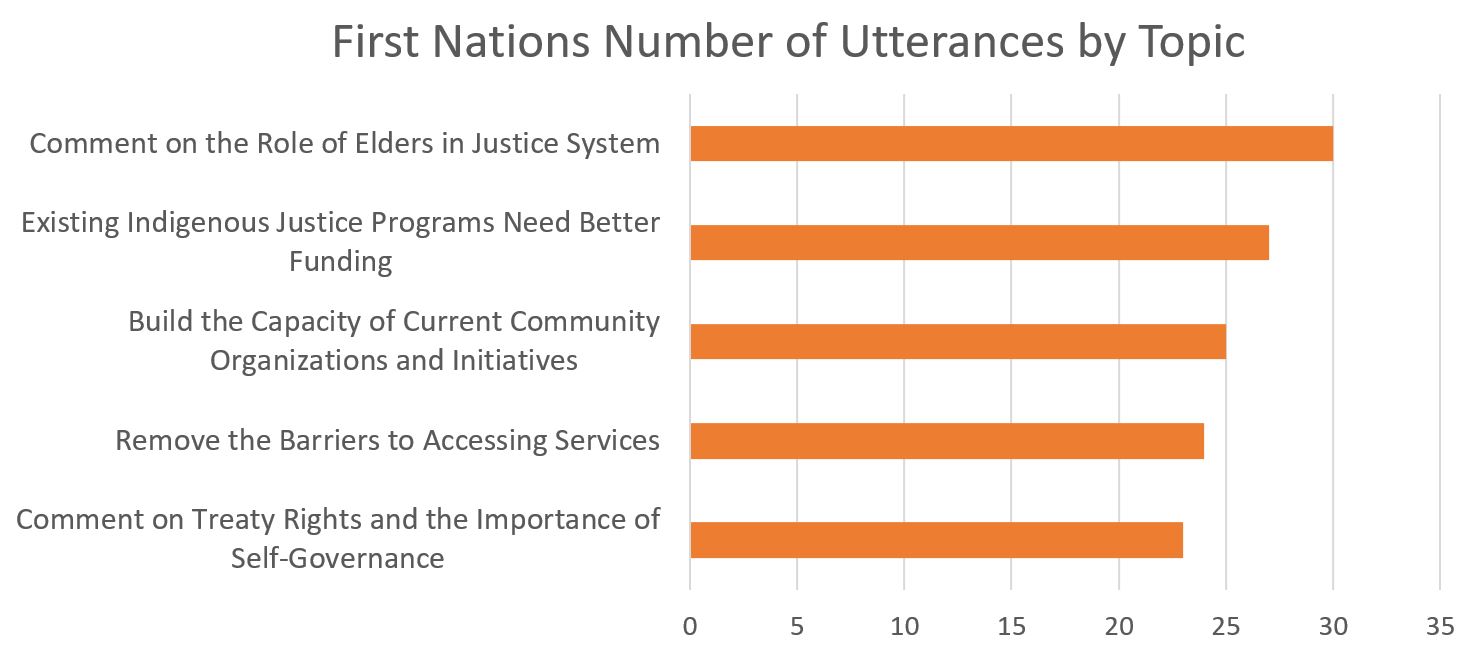
The chart below shows the most commonly coded themes across all First Nations dialogues.
Text version
Bar chart presenting the number of times 5 common themes were raised in engagement sessions with First Nations:
- Comment on the role of Elders in the justice system: 30 times
- Existing Indigenous justice programs need better funding: 27 times
- Build the capacity of current community organizations and initiatives: 25 times
- Remove the barriers to accessing services: 24 times
- Comment on treaty rights and the importance of self-governance: 23 times
Participants were consistent in acknowledging that the IJS cannot be pan-Indigenous, nor can it be implemented province by province, or region by region. The language, traditions, cultures, and needs of individual communities and nations must be taken into account by the IJS, and the IJS must be adaptable to the conditions of each individual nation. These calls went hand-in-hand with conversations regarding self-governance and treaty rights, as attendees agreed that nations need to have sovereignty over their own security and justice needs.
Participants discussed the legality of land claims and treaty rights and were vocal about their desire to see Indigenous rights upheld by the Canadian government as per the UN Declaration and the TRC-CTAs. Many people talked about the role that Elders play in remembering the ways in which nations traditionally handle the justice needs of their communities. There was a call for there to be respect for the knowledge that has been kept and passed on by Elders; for recognition of this knowledge as legitimate; and for this knowledge to inform the development of Indigenous justice solutions and the merging of traditional and existing justice systems.
“For myself and I was always told this by my Elders, our treaty documentation are some of the most important, if not under the eye of justice, the most important document in which we assert our rights to governance sovereignty, justice, health, education, homes. Because we have to work from a legality standpoint. It is the scope of which I was always told to work through from first and from that, if we're to determine ourselves in this country as a First Nations body, we need to set up our own governance systems.”
The need for more stable funding of Indigenous programs and partnerships was also a central theme heard throughout the meetings hosted with First Nations. In particular, participants made note of the limitations of short-term funding and that inconsistent and unpredictable funding models make program development and sustainability a recurring issue. Over and over again, we heard calls for two things: 1) more stable and longer-term funding of programs and 2) funding structures that leave those same programs under the purview of Indigenous organizations and communities to provide the services that are needed, in the way that they are needed.
- Date modified: