
What We Heard from Inuit
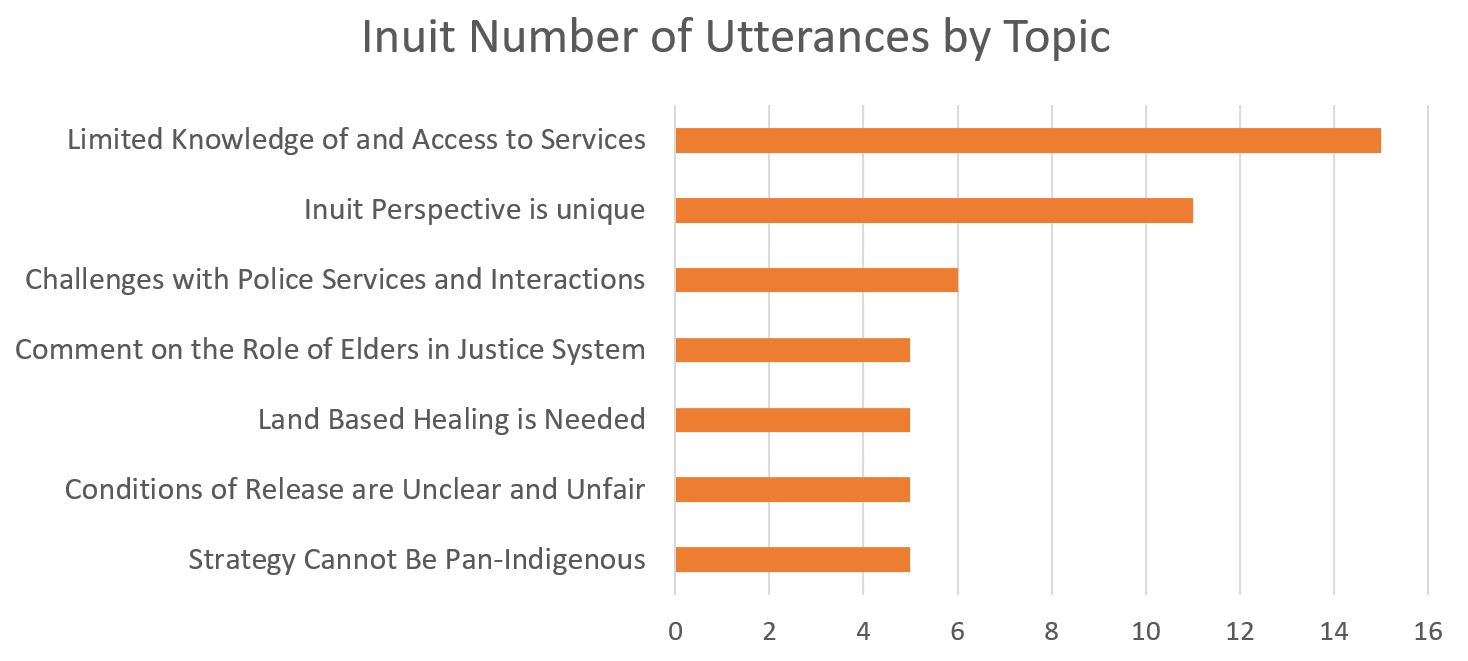
The following chart shows the top eight themes coded from the three Inuit dialogue sessions, not including the key themes identified across all distinctions.
Text version
Bar chart representing the number of times 7 common themes were raised during engagement sessions with Inuit:
- Limited knowledge of and access to services: 15 times
- Inuit perspective is unique: 11 times
- Challenges with police services and interactions: 6 times
- Comment on the role of Elders in the justice system: 5 times
- Land based healing is needed: 5 times
- Conditions of release are unclear and unfair: 5 times
- Strategy cannot be pan-Indigenous: 5 times
Participants were invited to attend three Inuit-specific discussions where participants highlighted that 25% of Inuit do not live in Inuit Nunangat (“the place where Inuit live”) and that 15% live in major urban centres. This contextualized the conversations, as participants discussed both the unique challenges and needs of Inuit living in the North but also stressed the importance of services and programs being available for Inuit living in the South—echoing the calls that the Strategy not be “pan-Indigenous”.
“We face the same challenge within federal corrections, where oftentimes Inuit are just assumed to be part of this umbrella term ‘Indigenous’. Same culture, same practices, same history, same ceremony. So oftentimes, Inuit, working with their case management, will be offered smudge or various other ceremonies that are typically performed by First Nations. And even correctional programing that is geared towards First Nations so for Inuit within the federal correction system, that's also a challenge.”
Inuit participants were vocal about the lack of services available for Inuit who come into contact with the justice system. It was generally felt that services were far sparser in the North, and that often individuals have to travel thousands of kilometers to access services that help support personal development, addictions, healing, and reintegration. Justice Canada was urged to develop and support programs and services in many regions across the northern territories to ensure equitable justice outcomes.
“Correctional Services Canada has an obligation, a fiduciary obligation to meet the demands of the Inuit. We have to hold Canada accountable to providing the services that are (sic) offered in the rest of Canada. We need to have these housing services, transitional housing services in each of the Nunavut communities, so that anyone, who are released from their homes can go back into their communities and work and provide for their families and for themselves.”
Building on these insights, reintegration into the community post-incarceration was a key theme heard throughout our conversations with Inuit participants. There was general agreement that contact with the justice system often leads to being removed from one’s home community, both to attend court and serve sentences. It is felt that upon release, many Inuit are not given the support they need to return to, and thrive in, their home communities. In particular, participants stressed the need for addictions services, employment support, housing services, and reconnection to culture.
Police services and interactions with the police were also top of mind for participants throughout the Inuit dialogues. There was a general agreement that Inuit communities are over-policed and that the police are tasked with many roles that would be better served through mental health supports and social workers. The challenging historical interactions between Indigenous people and the Royal Canadian Mounted Police (RCMP) can make the available policing resources feel unsafe and adversarial rather than supportive. Participants stressed the need for policing to be more culturally aware and open to alternative justice models.
“It's sort of in line with the defund police movement, but taking a different approach and I want to say re-tasking. In the historical context of how RCMP operated historically, that when responding to emergency situations, whether it's a mental health crisis or anything like that, RCMP still respond first. That's not really the appropriate response to somebody who's having a mental health crisis.”
- Date modified: