
What We Heard from Elders
We invited Elders to attend the very first engagement dialogue regarding the Indigenous Justice Strategy and share their stories and insights regarding justice challenges and opportunities for Indigenous people from coast to coast to coast. We hosted two discussions specifically for Elders, one on each of the two key themes of Wave 1. These meetings were cross-Distinction and cross-regional meetings, bringing together Elders from all demographics to share their insights.
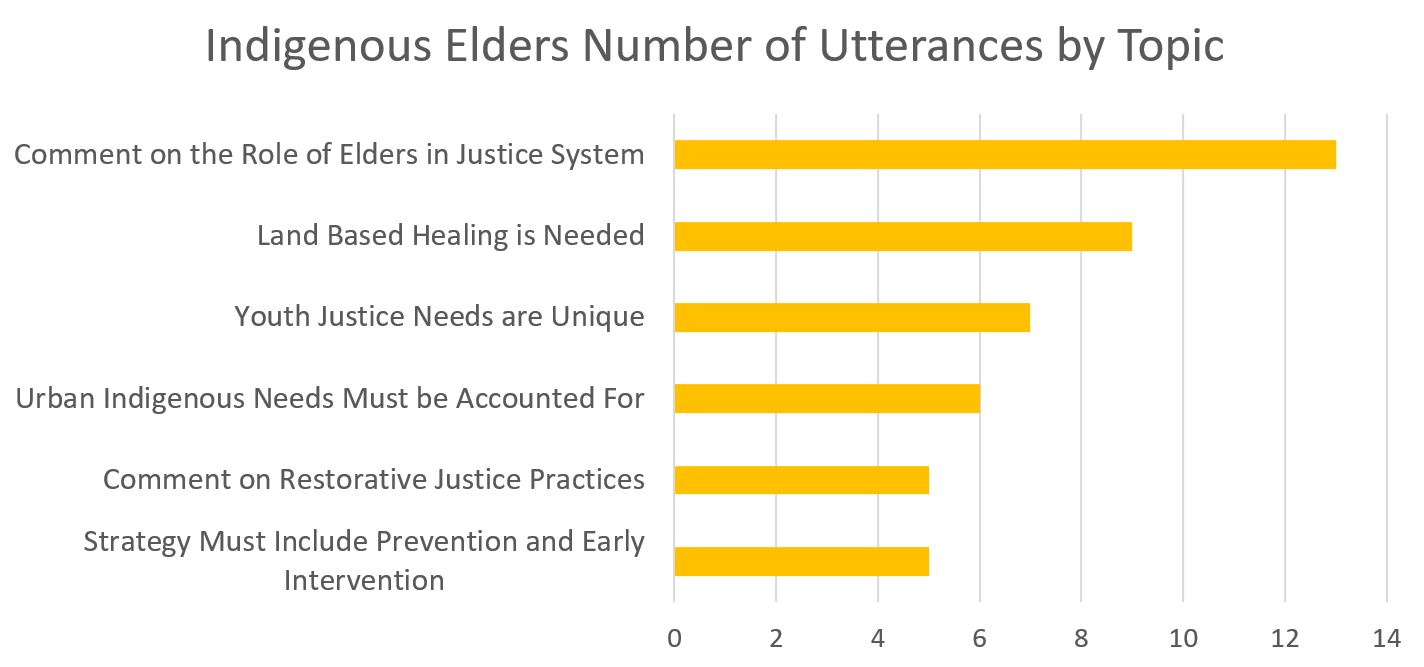
The following chart indicates the top themes discussed by Elders across both meetings, after removing the general themes already indicated in this report.
Text version
Bar chart representing the number of times 6 common themes were raised during engagement sessions with Elders:
- Comment on the role of Elders in the justice system: 13 times
- Land based healing is needed: 9 times
- Youth justice needs are unique: 7 times
- Urban Indigenous needs must be accounted for: 6 times
- Comment on restorative justice practices: 5 times
- Strategy must include prevention and early intervention: 5 times
Attendees of the Elders sessions made particular mention of youth and the unique justice challenges that youth face both in the home and in the colonial system. Elders repeatedly noted that youth come into contact with the justice system because of issues related to intergenerational trauma and the legacy of residential schools.
“For me, it comes down to the root cause of our identity, meaning dealing with that intergenerational trauma, that trauma that still to this day affects our young people. And not just our young people, but all ages.”
The Elders also shared their concerns around the long-term impacts of the loss of cultural connection and how this leads youth down the wrong path. They identified the need for more spaces and programs that foster the reconnection of Indigenous youth to their heritage, language, lands, and customs. Elders stressed that without these connections, youth fall through the cracks. Instead, they should be referred to culturally appropriate supports or enter a system that recognizes their traumas and the social determinants of justice that brought them into contact with the system in the first place.
“Something that's (sic) really important is creating that connection for our young people in our communities. Because a lot of our people are coming into the institutions, and they have no cultural connections. They don't know about their culture, who they are, their communities. And I'm not saying that's everybody, some actually do, and they strayed away from their teachings. But it seems to me that there's a lot of importance that needs to be put on our… youth because a lot of our young people are falling between the cracks. And they're getting lost there. And eventually, unfortunately, a high majority of those ones that fall through the cracks are going to come into places like [corrections].”
Many Elders also took the time to emphasize the perspective of the urban Indigenous population, and to stress the need for the IJS to meet the needs of Indigenous people living away from their communities and in urban centres. Elders recognized that many urban Indigenous people are not connected to their home territories or nations, and do not have access to the programs and supports that are found in Indigenous communities. Furthermore, there were discussions around the need to connect urban Indigenous people to their culture and traditions before they come into contact with the criminal justice system. Supporting urban Indigenous programming serves to both prevent individuals from criminal activities and offers early intervention when an individual is in need of support or help.
“If you're off reserve, depending upon the family, depending upon the history, you may not be able to access those resources. There's not places where an Indigenous person can go for access to housing, access to medical, access to lawyers, reconnecting to family of origin, different homes and travel supports and medical and all things that we get on our reserves. None of the services that we receive on reserve tends to follow us off reserve.”
Early intervention was also top of mind for Elders. In particular, they noted that Indigenous people who are accused of committing crimes often end up being convicted and given harsher sentences than non-Indigenous persons interacting with the justice system. It was generally felt that intervention prior to charges being laid or—at the very least—support and intervention at the moment that an Indigenous person has to begin navigating the criminal justice system would help ensure that Indigenous offenders are treated fairly and equally.
- Date modified: