
What We Heard from Youth
Youth are often overlooked and unheard. One of the central themes that emerged in discussions with youth is that the justice system often treats Indigenous youth as adults. The circumstances of their arrest and the ensuing court processes are rarely explained in plain English. We heard that plain language must be used, or legal jargon must be defined so that youths can understand proceedings and be made fully aware of their rights.
While Indigenous youth are considered adults in the eyes of the courts, they are treated like children once placed in institutions. They are not afforded the opportunity to learn life skills, and once released into the community, they are left on their own without proper knowledge and understanding of the world they are trying to reintegrate into.
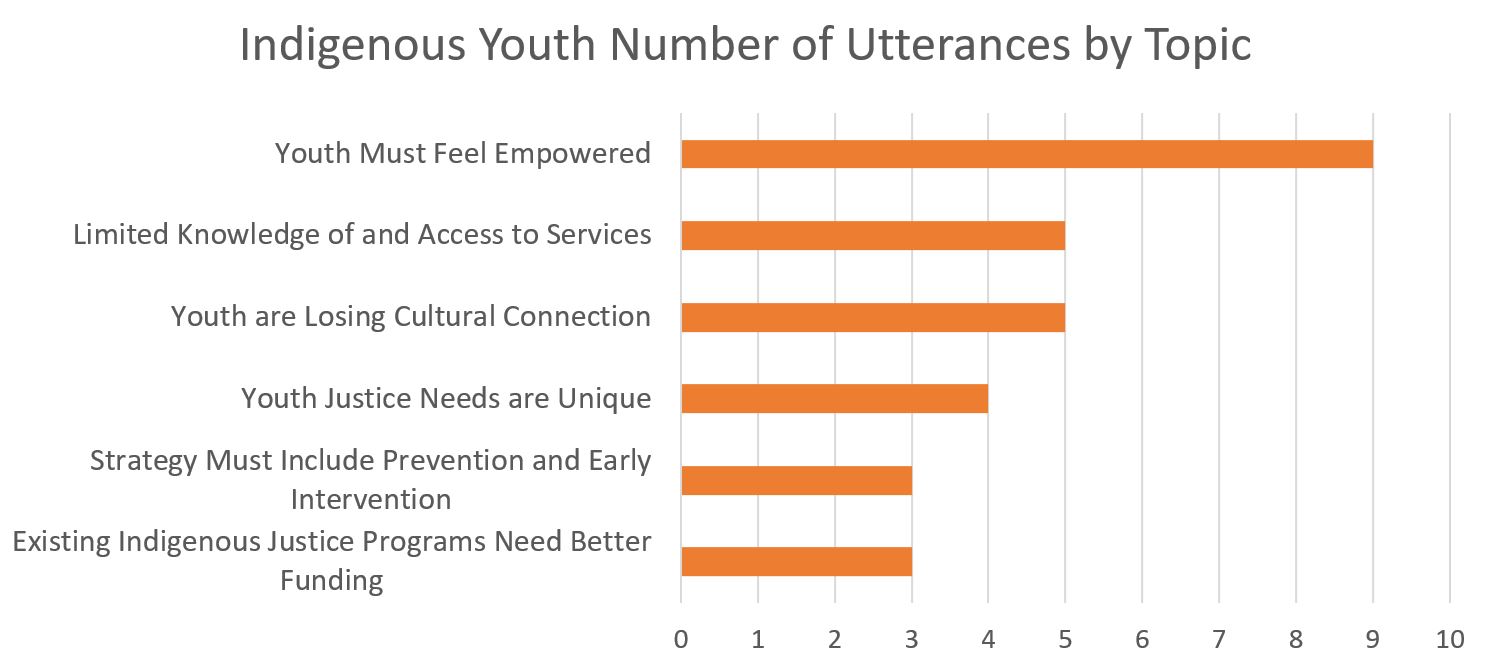
The chart below shows unique topics brought up by youth throughout the engagement session.
Text version
Bar chart representing the number of times 6 common themes were raised during engagement sessions with Youth:
- Youth must feel empowered: 9 times
- Limited knowledge of and access to services: 5 times
- Youth are losing cultural connection: 5 times
- Youth justice needs are unique: 4 times
- Strategy must include prevention and early intervention: 3 times
- Existing Indigenous justice programs need better funding: 3 times
It was emphasized that early intervention and preventative programming are essential. This includes programs that help keep youth off the streets and invested in their culture and community, but most youth focused on the interventions that occur once first contact with the criminal justice system has been made: programs that divert charges, focus on community service, and allow youth to continue pursuing educational opportunities rather than incarceration. The many challenges of youth are that they might not be exposed to healthy lifestyles without violence or addictions, and growing up in dysfunction can lead to more dysfunction. The youth called for funding for early interventions and prevention programs that employ traditional healing methods, on-the-land experiences and connection to culture through Elders and Knowledge Keepers. Participants suggested that education programs regarding youth justice could focus on reducing social disparities, such as education, and addiction treatment centres be designed for youth and life skills programs. Referenced by various youth in the session was a need for more resources, which could be provided through friendship and community centres.
Youth spoke to the fact that they feel they need to be empowered while being guided by Elders and youth organizations. We heard that youth want to better understand the roles of Elders in the community. Some youth mentioned that not all Elders are supportive or create safe spaces, particularly for 2SLGBTQI+ youth. They felt that a vetting process needs to be adopted to ensure that the services that youth are accessing are healthy and safe, as well as creating easier access to resources.
“I think a gentler and more open approach with youth helps with empowerment, like more access (sic) to ceremony, also harm reduction approach. Going to ceremony is directly tied to my sobriety, but I was not sober when I first began getting involved with ceremony. Harm reduction and being open and more welcoming to our LGBTQIA2S members as well, we need to grow to accommodate our members who may not be sober and may not be living a healthy life because the end goal is that they do. And then also welcoming of like all identities.”
From the one session that was hosted for Indigenous youth, we were able to gain valuable insight. It became clear from listening to participants that there is a need for access to resources, consistent treatment, the adoption of plain language, and to better understand the roles of Elders in their community.
- Date modified: