
4 Findings
This report is based on twenty in-depth interviews with people of Chinese descent in British Columbia. The goal of this study is to present the lived experiences of these twenty individuals to give insight into some of the challenges that people of Chinese descent might face when experiencing serious legal problems.
4.1 Demographic Profile of ParticipantsFootnote 4
The description below is based on aggregate information from 19 participants. For some of the demographic questions the total responses (n) is less than 19, which means that some participants chose not to answer the question. See also figure 2.
- Gender and Sexual Orientation: Thirteen (68%) participants identified as female, and six (32%) as male. None identified as trans. Three of the women identified as bisexual or queer.
- Age and Disability: Participants were between 28 and 66-years-old with a mean of 44. Thirteen (68%) were between 30- and 60-years-old, two were 60+ and three were younger than 30. Generally, the women were younger (mean of 33) than the men (mean of 52). Two participants identified as having a disability.
- Marital Status: Nine (47%) of participants were married or in a domestic partnership, six (32%) were divorced or separated, two were single. On average, participants’ household size included 2.6 individuals (range = 1 to 6).
- Immigration Category and Current Immigration Status: While anyone of Chinese descent was eligible to participate, all participants were immigrants. Twelve participants immigrated to Canada as economic immigrants (60%), five arrived as temporary residents and two arrived through the family class category. In terms of citizenship, 11 participants currently had Canadian citizenship (58%).
- Years in Canada: At the time of being interviewed, 14 participants had been in Canada for longer than 10 years (74%). Two were newcomers and had been in Canada for less than 5 years.
- Country of Birth and Mother-Tongue: All but two (89%) of the participants were born in China, one was born in Taiwan, another in Hong Kong. All but one of them (95%) had Mandarin as a mother tongue, one spoke Cantonese.
- Language Skills: Sixteen participants (84%) reported that they speak Mandarin at home, one spoke Cantonese, three participants shared that they also speak English at home. Eight participants requested an interpreter for the interview. Thirteen participants (68%) reported that they felt comfortable or very comfortable speaking English and were able to communicate sufficiently for their needs or comparably to a native English speaker. Four where somewhat comfortable and able to make themselves clear in simple situations, two said that they were not comfortable speaking English and would struggle to make themselves clear.
- Education and Work: Ten participants (53%) reported having an undergraduate or trades degree, six had a graduate degree (32%), and one had less than high school education. Twelve participants (63%) were employed full-time, part-time, or they were self-employed. Four participants were students and two were homemakers. One participant was unemployed and looking for work, and one was retired.
- Housing and Food Security: Ten participants (53%) shared that in the last five years they had experienced some level of housing insecurity, for example: they worried about paying their rent or mortgage, needing to downsize, or facing eviction. Some reported that they lived with friends or family or stayed in a shelter or transition house for some time. Most participants (74%) had not experienced food insecurity in the past five years, but five of them did: they had to skip meals, rely on food banks or on family and friends for food.
Figure 2 – Demographic Summary of Participants
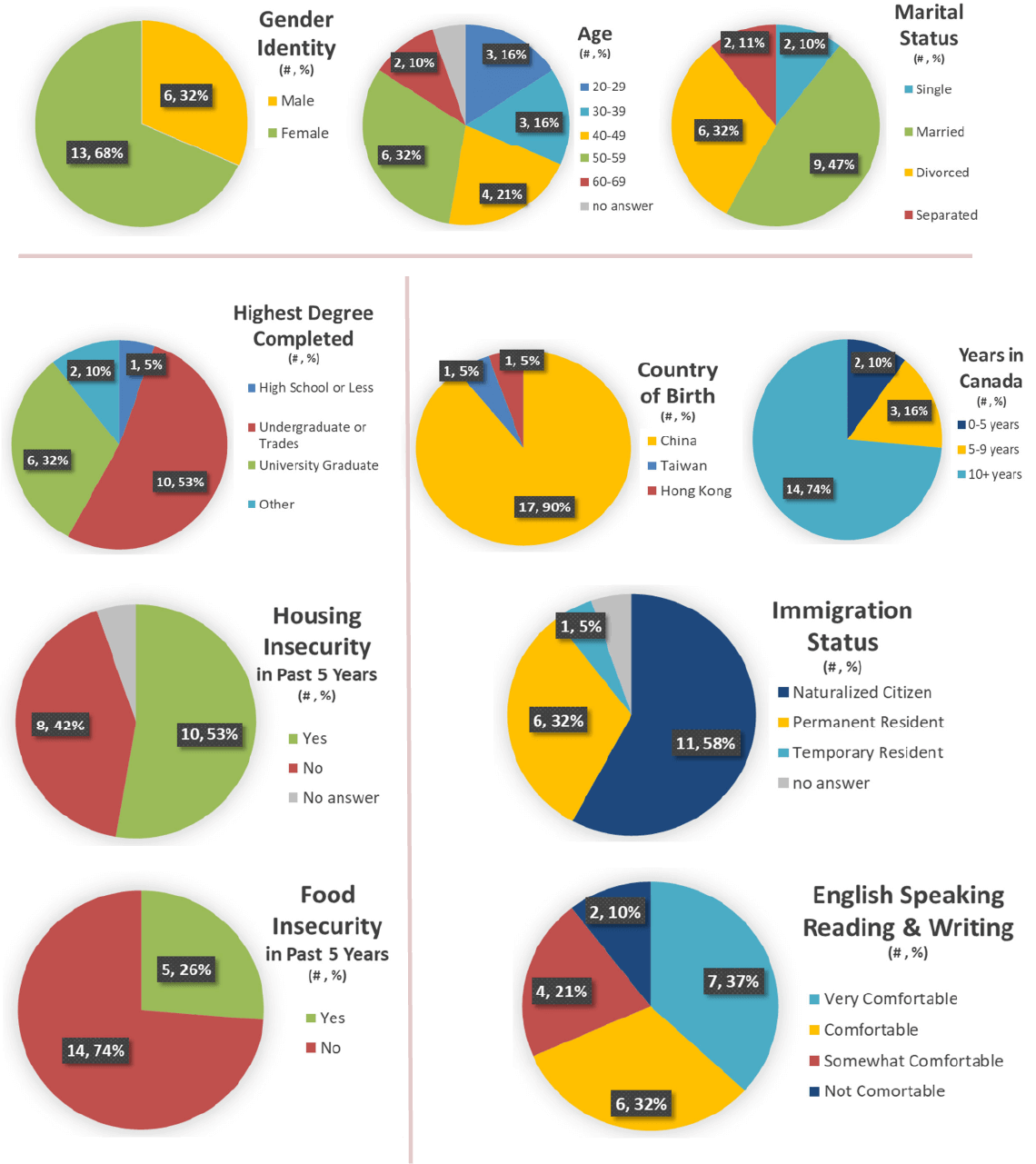
Figure 2 – Demographic Summary of Participants – Text version
This graph shows 10 separate pie charts on the demographic profiles of participants.
1. Gender Identity
- The chart shows two categories:
- Female: 13 participants, 68%
- Male: 6 participants, 32%
2. Age
- The chart shows six categories:
- 20–29 years: 3 participants, 16%
- 30–39 years: 3 participants, 16%
- 40–49 years: 4 participants, 21%
- 50–59 years: 6 participants, 32%
- 60–69 years: 2 participants, 10%
- No answer
3. Marital Status
- The chart shows four categories:
- Single: 2 participants, 10%
- Married: 9 participants, 47%
- Divorced: 6 participants, 32%
- Separated: 2 participant, 11%
4. Highest Degree Completed
- The chart shows four categories:
- High School or Less: 1 participants, 5%
- Undergraduate or Trades: 10 participants, 53%
- University Graduate: 6 participants, 32%
- Other: 2 participant, 10%
5. Country of Birth
- The chart shows three categories:
- China: 17 participants, 90%
- Taiwan: 1 participant, 5%
- Hong Kong: 1 participant, 5%
6. Years in Canada
- The chart shows three categories:
- 0–5 years: 2 participants, 10%
- 6–10 years: 3 participants, 16%
- More than 10 years: 14 participants, 74%
7. Housing Insecurity in Past 5 Years
- The chart shows three categories:
- Yes: 10 participants, 53%
- No: 8 participants, 42%
- No answer
8. Food Insecurity in Past 5 Years
- The chart shows two categories:
- Yes: 5 participants, 26%
- No: 14 participants, 74%
9. Immigration Status
- The chart shows four categories:
- Naturalized Citizen: 11 participants, 58%
- Permanent Resident: 6 participants, 32%
- Temporary Resident: 1 participant, 5%
- No answer
10. English Speaking, Reading & Writing
- The chart shows four categories:
- Very Comfortable: 7 participants, 37%
- Comfortable: 6 participants, 32%
- Somewhat Comfortable: 4 participants, 21%
- Not Comfortable: 2 participants, 10%
4.2 Types of Serious Legal Problems
The twenty participants interviewed shared a total of 44 legal problems. Thirteen participants (65%) reported experiencing multiple legal problems at the same time or in succession, with many of the problems being related. For example, in many cases those experiencing domestic violence experienced multiple legal problems: e.g., they would report that they experienced family violence, divorce and custody problems that involved contact with the police as a victim of such violence, and as a result, some of those individuals would experience housing insecurity as well.
When accounting for such multi-layered and complex legal problems, there are 20 separate primary cases (10 of which experienced multiple related problems) across five categories (see figure 3):
Figure 3 – Primary Legal Problems
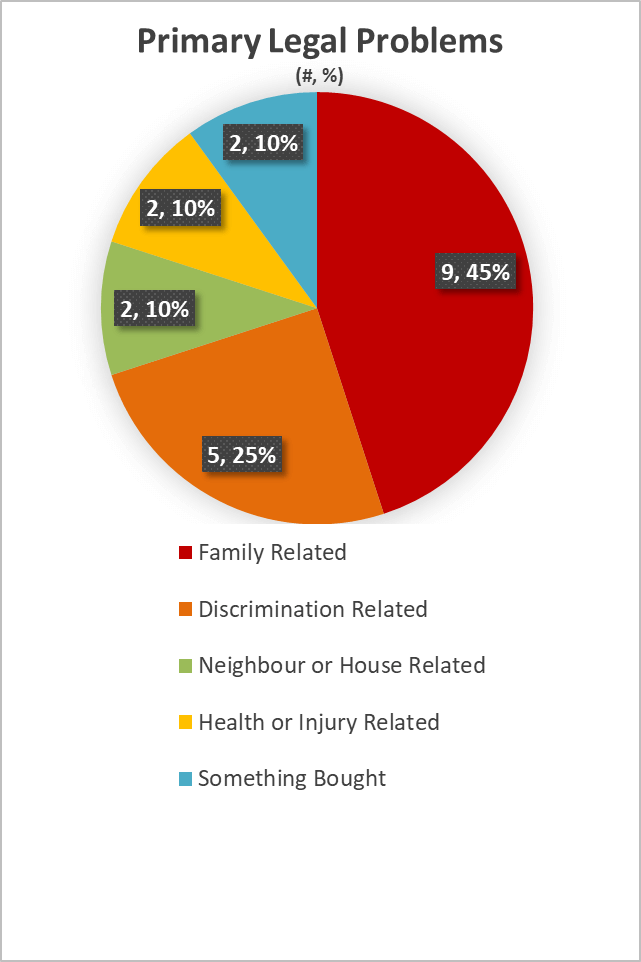
Figure 3 – Primary Legal Problems – Text version
The pie chart illustrates the distribution of primary legal problems reported by participants. There are five categories:
- Family Related: 9 participants, representing 45% of the total. This is the largest segment of the chart.
- Discrimination Related: 5 participants, representing 25% of the total.
- Neighbour or House Related: 2 participants, representing 10% of the total.
- Health or Injury Related: 2 participants, representing 10% of the total.
- Something Bought: 2 participants, representing 10% of the total.
- Family Related Problems (9)
Including problems such as domestic violence, harassment, divorce, custody problems, contact with the police as a victim or suspect, and housing problems during a separation. - Discrimination or Harassment Related Problems (5)
Including discrimination by neighbours, landlords, employers, or a service provider and contact with the police because of such discrimination or harassment. - Neighbour or House Related Problems (2)
Including problems related to being a tenant or a landlord. - Health or Injury Related Problems (2)
Including dealing with the aftermath of an accident and consequences for the ability to work. - Something Bought (2)
Including scams and insurance services.
Family related problems and discrimination or harassment related problems stand out as the two most often reported and complex legal problems that were reported by participants.
4.3 Strategies for Resolving Legal Problems
When facing serious legal problems, how did participants find information, attempt to resolve the problem, and how useful was help they received?
a. Strategies for finding information
By far, the most popular strategies for finding information were (see figure 4):
- Searching online (13),
- Talking to friends and family (11),
- Receiving information from police services after experiencing an emergency (8).
Figure 4 – Information Sources
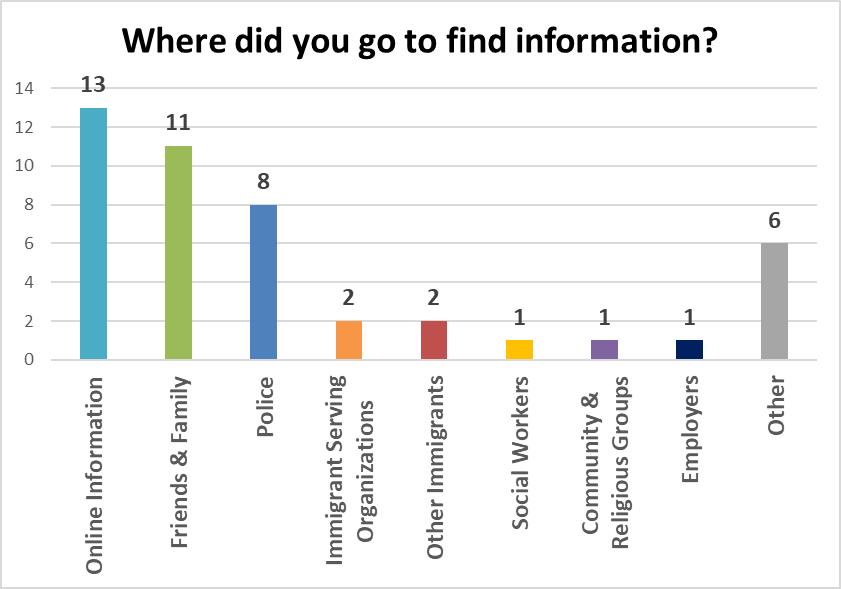
Figure 4 – Information Sources – Text version
The chart is a vertical bar graph showing the number of participants who used different sources to find information. The x-axis lists the sources, and the y-axis shows the number of participants, ranging from 0 to 14. Each bar represents a source and its corresponding count:
- Online Information: 13 participants, the highest count.
- Friends and Family: 11 participants.
- Police: 8 participants.
- Immigrant Serving Organizations: 2 participants.
- Other Immigrants: 2 participants.
- Social Workers: 1 participant.
- Community and Religious Groups: 1 participant.
- Employers: 1 participant.
- Other: 6 participants.
Among other responses, participants shared that they had obtained information from the Insurance Corporation of BC (ICBC), a bank, the BC Human Rights Tribunal, and a strata councilFootnote 5.
In terms of the helpfulness of the three top strategies for finding information, online information and information from family and friends was mostly found to be somewhat helpful, whereas information received from police emergency teams and victim services was more often found very helpful (figure 5).
Figure 5 – Helpfulness of Information
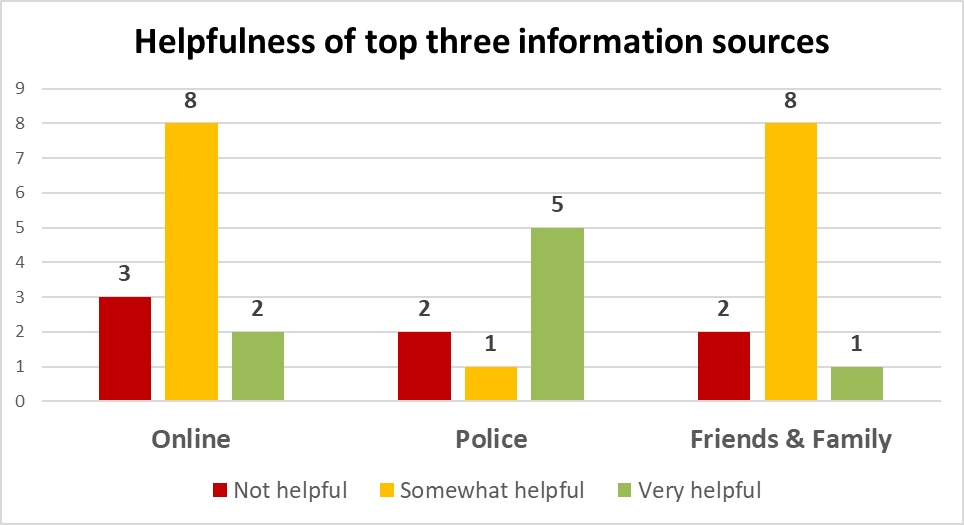
Figure 5 – Helpfulness of Information – Text version
The chart is a grouped vertical bar graph comparing the perceived helpfulness of three information sources: Online, Police, and Friends & Family. The y-axis represents the number of participants, ranging from 0 to 9. Each group contains three bars representing levels of helpfulness: Not helpful, Somewhat helpful, and Very helpful.
Online Information:
- Not helpful: 3 participants
- Somewhat helpful: 8 participants
- Very helpful: 2 participants
Police:
- Not helpful: 2 participants
- Somewhat helpful: 1 participant
- Very helpful: 5 participants
Friends & Family:
- Not helpful: 2 participants
- Somewhat helpful: 8 participants
- Very helpful: 1 participant
b. Strategies for resolving a legal problem
Of the 20 participants, the majority (65%) took legal recourse which included seven who settled out of court, four who went to court and two who were at the very start of the process (Figure 6).
Figure 6 – Strategies for Resolving Legal Problem
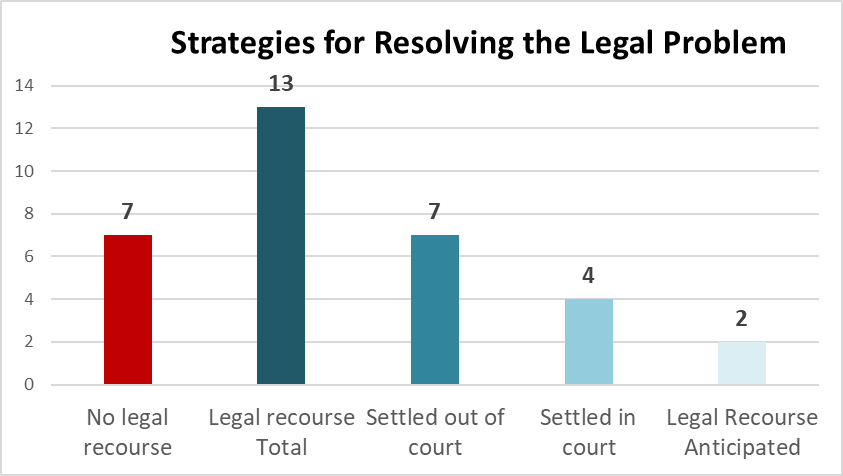
Figure 6 – Strategies for Resolving Legal Problem – Text version
The chart is a vertical bar graph showing the number of participants who used different strategies to resolve their legal problem. The y-axis represents the number of participants, ranging from 0 to 14. The x-axis lists five categories, each represented by a single bar:
- No legal recourse: 7 participants.
- Legal recourse total: 13 participants
- Settled out of court: 7 participants.
- Settled in court: 4 participants.
- Legal recourse anticipated: 2 participants.
Most of those experiencing complex legal problems sought legal recourse. That is, of the 10 participants who experienced complex legal problems, eight sought legal recourse and two did not. Complexity was defined as experiencing multiple related legal problems at the same time.
Seven individuals did not take any legal action.
Legal recourse
Figure 7 contains an overview of participants that sought legal recourse, the main type of problem they faced (including the number of related problems), the kind of recourse sought, and the status of their cases.
Eight of nine (89%) family related problems that were reported in this study were addressed through some form of legal recourse, whereas only one of the five (20%) discrimination related problems was addressed through the formal legal system.
Of the seven who had the case resolved through legal resource, only two thought the resolution was very fair, one thought it was somewhat fair and five considered it not fairly resolved.
Figure 7 – Type of Legal Problem, Legal Recourse, and Status of the Problem
| Main problem category | # of legal problems | Kind of Legal Assistance | Court | Resolved? | Closed? |
|---|---|---|---|---|---|
| Family related | 5 | Legal Aid | yes | no | no, ongoing |
| Family related | 4 | Defense Counsel | yes | yes | yes |
| Family related | 2 | Legal Aid Mediator |
yes | no | yes |
| House related | 1 | RTB | yes | yes | yes |
| Family related | 4 | Legal Aid | no | no | no, ongoing |
| Injury Related | 3 | Lawyer | no | no | no, ongoing |
| Family related | 2 | Legal Aid | no | yes | yes |
| Family related | 2 | Legal Aid Crown Counsel |
no | yes | yes |
| Discrimination related | 2 | ICBC | no | yes | yes |
| Family related | 1 | Legal Aid | no | yes | yes |
| Injury related | 1 | Lawyer | no | yes | yes |
| Family related | 1 | Future | n/a | n/a | n/a |
| Family related | 1 | Future | n/a | n/a | n/a |
Accessing help: Among participants who sought legal recourse, six obtained Legal Aid and two a lawyer. Two reached out to Crown or Defense counsel, one dealt with ICBC, one to the Resident Tenancy Branch (RTB). Three reached out to the BC Human Rights Tribunal but did not obtain support through them.
Of the participants who sought legal recourse, the majority (9) had difficulty accessing legal help citing: cost (7), language (3), and time (3) as barriers.
Figure 8 – Helpfulness of Legal Support
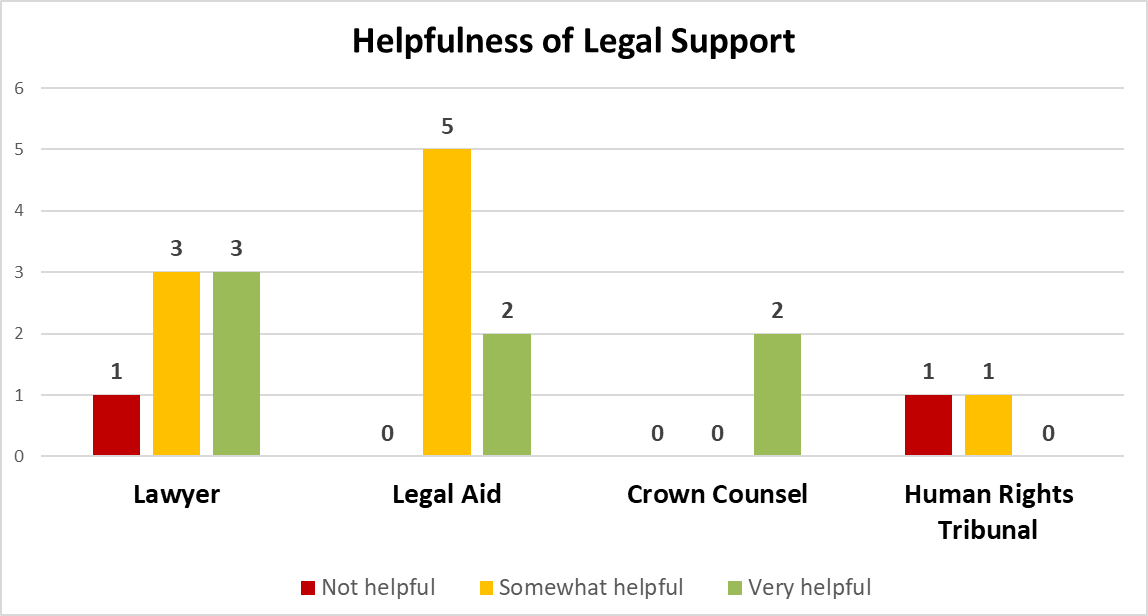
Figure 8 – Helpfulness of Legal Support – Text version
The chart is a grouped vertical bar graph comparing the perceived helpfulness of four types of legal support: Lawyer, Legal Aid, Crown Counsel, and Human Rights Tribunal. The y-axis represents the number of participants, ranging from 0 to 6. Each group contains three bars representing levels of helpfulness: Not helpful, Somewhat helpful, and Very helpful.
Lawyer:
- Not helpful: 1 participant
- Somewhat helpful: 3 participants
- Very helpful: 3 participants
Legal Aid:
- Not helpful: 0 participants
- Somewhat helpful: 5 participants
- Very helpful: 2 participants
Crown Counsel:
- Not helpful: 0 participants
- Somewhat helpful: 0 participants
- Very helpful: 2 participants
Human Rights Tribunal:
- Not helpful: 1 participant
- Somewhat helpful: 1 participant
- Very helpful: 0 participants
Usefulness of help: When tracking the kind of legal assistance sought and the helpfulness of that information (see figure 8), support from the Crown counsel was always seen as very useful. Legal aid was often seen as somewhat useful. Receiving help from a lawyer had a wider range of either being very helpful or not being helpful.
Of interest is that approaching the Human Rights Tribunal was never rated as very helpful. Participants reported that the difficulty contacting the Tribunal, and the long timelines involved, was a barrier.
“Even when you send an email, they don’t have any answer for you… my sister, she said: ‘Oh no, those are, you know, very high level. They don’t take a look at your small case’.” [Research participant]
“How could you help a family if you already set the timeline between 1 to 1½ year… the choice they provide to the public is not logical because if you think about reality, the students in the school got bullied or got discriminated on a daily basis. And you [Human Rights Tribunal] said it’s legal support for between 1 and 1 ½ year… it’s not compatible at all.” [Research participant]
No legal recourse - Other responses and strategies:
The seven participants who did not take any legal action reported 12 legal problems between them, some of which were related. Some participants felt alone trying to navigate the problem:
“If it is about a personal thing, I don’t feel like there is a lot of help on the way. Yeah, they usually ask you to solve it yourself first, but it is already hard to solve, personal relationship is hard… Maybe your heart might be hurt, but it’s not physical harm. So we didn’t ask for legal help.” [Research participant]
Problems for which no legal recourse was sought are summarized in figure 9:
Figure 9 – Problems for which no legal recourse was sought
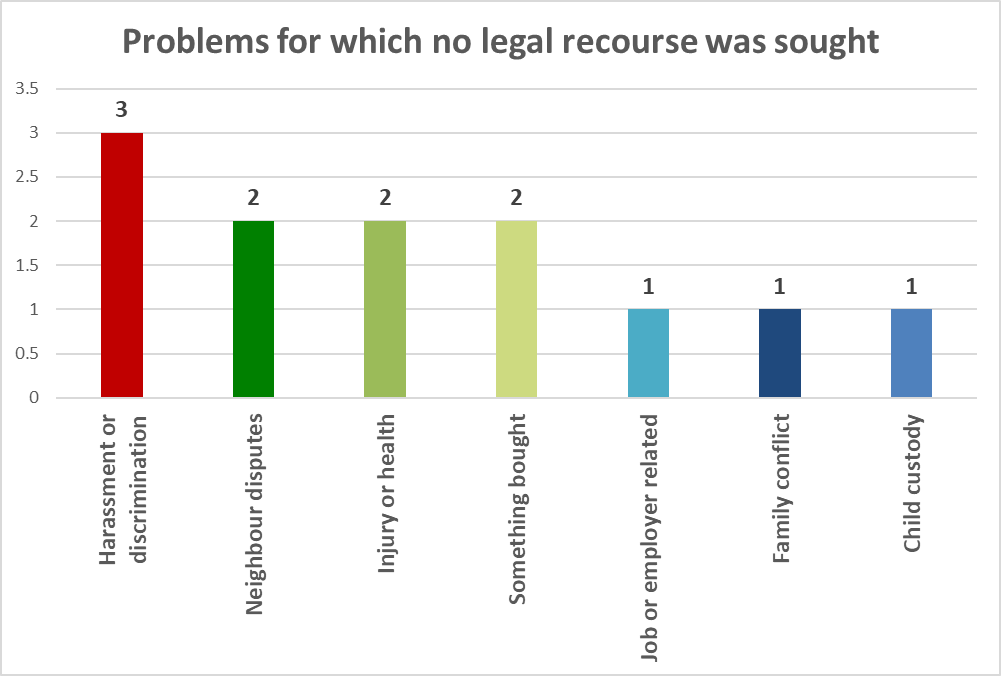
Figure 9 – Problems for which no legal recourse was sought – Text version
The chart is a vertical bar graph showing the number of participants who did not seek legal recourse for different types of problems. The y-axis represents the number of participants, ranging from 0 to 3.5. The x-axis lists seven categories, each represented by a single bar:
- Harassment or discrimination: 3 participants (highest count).
- Neighbour disputes: 2 participants.
- Injury or health: 2 participants.
- Something bought: 2 participants.
- Job or employer related: 1 participant.
- Family conflict: 1 participant.
- Child custody: 1 participant.
Reasons for not seeking legal help were that the cost of legal representation was not worth the cost of what was lost, or that the process was too long or not effective. A participant who experienced discrimination said:
“Maybe I can talk to the manager, but the manager is always on the supervisor’s side, you know… It’s just a waste of my time. I can do it on the internet or something, but I just don’t bother doing that, I just rather take a rest. You know they won’t beat me physically or something, no. Just inside my heart is not very free.” [Research participant]
Some of these individuals took alternative approaches such as referring to an internal reporting system, turning to a strata council, school board, bank, receiving online advice, negotiating with the party involved, or have a friend mediate.
Accessing help: All seven participants who did not seek legal recourse reported having difficulties accessing information, reporting that they did not know where to go to find help. The most used resources for help were:
- Friends or family (6)
- Online resources (4)
Four of these individuals tried to resolve the problem they experienced by negotiating with the other person(s) involved.
Usefulness of help: None of the participants who did not seek legal recourse found the information they obtained very useful. Most shared that the information found was:
- Somewhat useful (5)
- Not useful at all (2).
Of those who negotiated directly with the parties involved, three said this had not been a successful strategy; for one participant it had been somewhat successful.
Resolution of problems: For most participants who did not seek legal recourse, the problem was not resolved and in three cases the problem was ongoing:
- Not resolved (5)
- Resolved (2)
“It’s just something like you couldn’t solve. And that is the only thing you can do: like you leave. It’s like running, running away from a problem. It’s not really solving a problem.” [Research participant]
4.4 Health, Economic, and Social Impacts
Experiencing serious legal problems can have severe impacts on someone’s life. Among the twenty participants, impacts on health and on social lives were most often reported. Almost half of participants also reported financial strain or housing insecurity after or during the time that the problem was faced (see figure 10).
a. Health consequences
Almost every participant described some level of being stressed (19), anxious, fearful, or sad because of the legal problems that they experienced. Needing medical assistance after an injury, or sustained counselling after experiencing excessive stress, depression and anxiety were health concerns that most seriously affected well-being. Effects on one’s mental health were often described as affecting their dignity as a human being:
“Psychologically it imposed a lot of shadow and pressure on me.” [Research participant]
“I just have not felt human in so long.” [Research participant]
“I feel like I’m not a live person…And when I look back, I think that’s the time period my condition was at the bottom because I got sick all the time…when I look back now, I knew it was because of the stress.” [Research participant]
Figure 10 – Consequences of facing legal problems
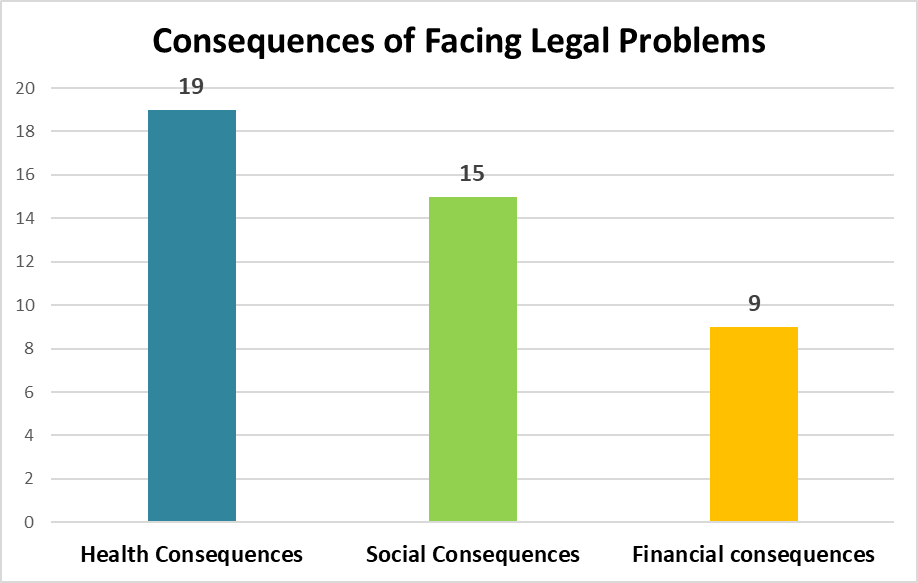
Figure 10 – Consequences of facing legal problems – Text version
The chart is a vertical bar graph showing the number of participants who experienced different types of consequences due to facing legal problems. The y-axis represents the number of participants, ranging from 0 to 20. The x-axis lists three categories, each represented by a single bar:
- Health Consequences: 19 participants (highest count).
- Social Consequences: 15 participants.
- Financial Consequences: 9 participants.
b. Social consequences
Fifteen (75%) respondents felt that the legal problems they experienced affected their relationships with people around them, their friends, and their family. Isolation, or not having friends and family around, was also what made some of the problems much harder to overcome from the start. Many participants mentioned that the lack of family made it harder to navigate life in Canada.
Not surprisingly, in family law cases and custody problems which involved a loss of a child, a family, or a community, the sense of being alone was most strongly felt. In those cases, the health-related concerns were also the most severe.
Gender seemed to affect the social consequences the participants experienced: 92% of the women reporting that their social lives were affected by the legal problem they experienced.
c. Economic consequences
Almost half of participants (9 or 45%) reported some financial hardship in response to their legal problems. Because of legal aid, for most the actual legal fees stayed low. The main economic burden was expressed instead as an effect or loss of work (7 participants) or study (5 participants). Six individuals lost housing and three moved to a shelter after housing loss while one individual stayed with friends or family for a while.
Concerns about finances, and loss of housing, also complicated the day-to-day routines of individuals and families. Participants stressed that these common and “trivial” problems were also important in the context of facing a legal problem:
“I don’t want to leave this property [after a divorce]… because my baby’s daycare is just on the corner of the street, it’s like 3 minutes walking distance. She is only little and it’s hard for me to get her into another daycare.” [Research participant]
“When I was moving, I figured that contacting a moving company and to complete the whole moving process was quite challenging, and also for some of the renting information…and I would say that while we consider them trivial, they are actually quite central to our well-being.” [Research participant]
4.5 Barriers to Justice
Participants shared six main barriers to justice. While each of them is discussed separately below, many participants experienced multiple related barriers at the same time. Barriers that are specific to our participant group are discussed first (cultural barriers, immigration status, language). Barriers that are more common across populations (lack of information or knowledge, time and cost, perceived chance of success) are discussed after. The top four barriers are represented in figure 11.
a. Endurance as Cultural Barrier
In half of the interviews (10), endurance was mentioned as a cultural expectation within the Chinese community. Within these communities there is a perception that it is better to not create trouble, and to carry one’s suffering alone or to think of something as “just a family issue.” This idea that one should endure what is painful in one’s life could lead to people avoiding seeking help from friends and family or from official legal and social services.
“I think I’ve really noticed with Asian Culture is that we like endurance… when you suffer you just endure it, you don’t seek help, you don’t tell people you need help… and I think deep down they really want to seek help… cry for help but then instinctively you want to hold yourself back and just endure it and suffer quietly.” [Research participant]
“Especially for Chinese [people], we just want to be a quiet person and have our own life.” [Research participant]
“There is a kind of cultural background [in China], as trying to do things on our own.” [Research participant]
Some participants turned this idea of endurance around and encouraged others to seek out help earlier and not to be afraid of asking for such help:
“I missed the chance of really kind of asking for that immediate help from the people who I can trust the most…[Now] I would say… don’t be shy about asking from help from people who you are familiar with and lend a hand.” [Research participant]
Misinformation or lack of trust was also mentioned as inhibiting confidence in government information and resources:
“But at that time in the concept of the Chinese community, we thought that if the government is involved, that there could be something or someone being taken away… we were particularly worried that the kids are going to be taken away. [Therefore] we were refusing for help.” [Research participant]
b. Immigrant Status and Related Intersectional Vulnerabilities
Belonging to an equity denied group, especially along different intersectional identities such as being a newly arrived racialized immigrant, might stop someone from taking legal action or being informed enough to notice deception:
“But interesting, I never thought about looking for legal help. Probably it’s because we are immigrants and we did not want to get into trouble…and the other thing is we did not really know where to start.” [Research participant]
“They won’t step up to do something… they are afraid of their visa and maybe the manager said ‘oh you’re no good… we stop your permit.’” [Research participant]
“As I was quite new to Canada, [I] did not know much about this area…And it’s quite easy you know for a business to have some deceptive practice that just scam people’s money.” [Research participant]
Several women also shared that being a single newcomer mother dealing with a serious legal problem affects one’s capacity to such an extent that little energy remains to fully take charge of the problem:
“I was so busy maintaining the safety of our health and then trying to keep up with the study of the kids, I feel like the whole time I was just on the survival level. I did not really have any more energy to get into more details…I just tell myself, I can’t collapse.” [Research participant]
c. Language and Trust in Translated Information
In six cases (30%), English language ability, or the ability to read complex information on official websites, was explicitly mentioned as a barrier to justice. But language as a barrier and accessibility to reliable information was a general theme that was mentioned by most participants. In many cases participants shared that they trusted the English language more than any translated resource or information. Most participants (14) preferred to read information in English, or they strategically chose English:
“This is a tricky question because for sure… Mandarin will be the easiest way for me to absorb the information. But we are in Canada, so if you want more accurate and on time, updated information, then English is the only choice.” [Research participant]
“Information may be lost during translation, right? Because English is the most original source.” [Research participant]
Even when looking at the six participants that listed language as a barrier to information, only one person in that group stated that they preferred to read online information in Mandarin, the others would prefer it in English for the reasons stated earlier.
d. Lack of Information
A large majority, 17 participants (85%), reported that they had difficulty accessing information about their problem. They shared that they were unfamiliar with the Canadian legal system; they did not know where to go; who to talk to; they did not know what to do or that there was something you could do; what services and organizations were out there to help; nor how to interpret information on official government websites.
Figure 11 – Top barriers to justice
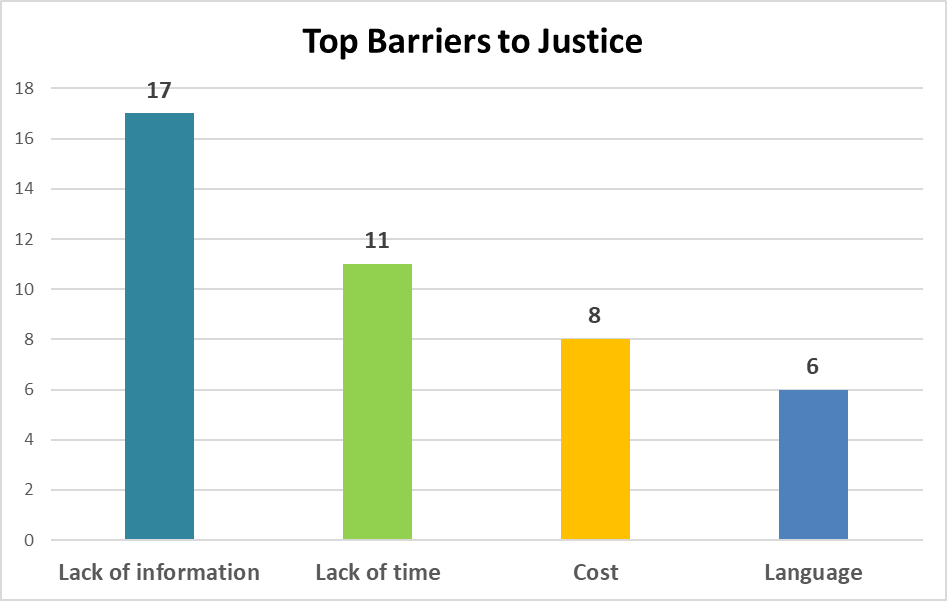
Figure 11 – Top barriers to justice – Text version
The chart is a vertical bar graph showing the number of participants who identified different barriers to accessing justice. The y-axis represents the number of participants, ranging from 0 to 18. The x-axis lists four categories, each represented by a single bar:
- Lack of information: 17 participants (highest count).
- Lack of time: 11 participants.
- Cost: 8 participants.
- Language: 6 participants.
Finding information was compounded as well by being overwhelmed by the problem itself:
“There were so many things going on at the time, it was really hard for me to actually know where I could go to get professional information about the steps I could take to help me with my situation.” [Research participant]
One participant explained that in some cases simple introductory information is available in brochures in different languages but that there is a need for more complex information to be shared:
“Yes they [the brochures] identify the problem, but the next steps, if [you] were hoping to find more of a deeper understanding of the problem and then to find out how to resolve those problems after stepping away from those shallow introductory kinds of information… like, what is the next step in order to gain better knowledge?” [Research participant]
Careful reading of information is important especially in cases where the incorrect way of following of steps and procedures might jeopardize everything:
“Yeah, I could only follow the steps and instructions provided by them. And if anytime I miss one step, I have to restart again for them to review the whole case. Sometimes if I miss, like, one single step, I might miss the whole case.” [Research participant]
e. Time and Cost
Time was mentioned explicitly by 11 individuals as a barrier to finding information and specifically to finding legal help. For example, one participant mentioned not having time or capacity to select the best process or lawyer until it is too late:
“I was focused on recovering, not so much for like, let’s pick a lawyer that works the best or let’s see what other resources are available… and then it was too late.” [Research participant]
Or in response to a lack of trust in an internal reporting system for discrimination in the workplace, a participant noted that it would be a waste of their time. Finally, time was specifically mentioned when talking about the process of bringing a case to the Human Rights Tribunal:
“How do you help a family if you set a timeline of 1.5 years to go to court?” [Research participant]
Staff turnover at legal aid services was also identified by one individual as a factor extending the amount of time needed to address a legal case.
The cost of pursuing legal action was mentioned specifically by eight individuals and was the most frequent answer to the question of what constituted a barrier to finding legal help specifically. Cost was a barrier on its own, or because the cost of a lawyer would be more than the financial setback people had experienced. Cost, time, and capacity all together might especially feel like too high of a barrier to scale:
“The first thing come to my mind is it’s time consuming and it’s going to cost you a lot, a lot to money. And certainly, I, in my situation, I didn’t have that energy, the time to deal with this problem.” [Research participant]
f. Perceived Chance of Success
Specifically in the case discrimination and harassment, participants perceived their chance of success so low that it would not be worth further pursuing. Similarly, if the cost of legal representation outweighed the financial setback of the legal problem, participants did not choose to pursue the case.
Several participants mentioned that they worried that legal aid lawyers would not be taken as seriously in court as other lawyers. In addition, there was a worry that speaking another language than English or having a lawyer with an accent or a lawyer not from a European Canadian background might also lead to the court not giving the same weight to the arguments presented. While people valued having someone with cultural proximity advocate for them, they also worried that the legal system might not appreciate these advocates as much as they would.
4.6 Other Factors Affecting Experiences and Outcomes
a. Gender
Type of problem: Men and women reported different legal problems. Among the 13 women in the study, the most frequently reported problems were family conflict (7) and contact with police as a victim (5) with problems with housing, discrimination, child custody, and neighbours following (all at 3).
Among the six participant men, discrimination was the top mentioned problem (3) followed by problems with employers, an injury, and ICBC (2). None of the men reported family conflict or contact with the police as a victim or accused as one of their legal problems; one man reported a conflict about child custody.
This gender difference in the type of problem faced matches our 2021 legal needs study among immigrants (Verhage 2022). While these studies are small, they fit with data that shows that immigrant women are have complex needs when experiencing divorce and domestic violence (Fonteyne et al. 2024; Tabibi et al. 2018).
Gender and Housing: Six women reported that they lost housing because of the legal problems they experienced. In comparison, one man reported losing housing due to facing a legal problem.
Gender and Social Connections: Women more often approached friends and family for help when experiencing a legal problem: seven women (54%) did so while no man reported the same. Women also reported more social consequences than men: two men (40%) reported that they experienced social isolation. Twelve women (92%) mentioned that their legal problem(s) contributed to them losing friends or family and to feeling more isolated:
“There was a sense of prejudice against the single, single mothers… they [other mothers] didn’t say but I can feel they don’t want to connect with me like before.” [Research participant]
Gender and Health: All women (13) and almost all men (6) reported experiencing mental health problems because of the legal problems they were facing. Mental health problems were reported equally by men and women, but when asked about experiencing physical and mental health consequences at the same time, far more women reported experiencing such complex health concerns (10 women vs. 2 men).
b. Agency
In many stories (13), the importance of maintaining agency and control over a situation and having a voice is a top concern of participants that is related to feeling valued and dignity:
“I will try my best and fight for my dignity and justice.” [Research participant]
This is expressed in working hard to keep on top of the problem they are facing and taking some sort of control over the situation. For example, a participant who had to deal with a long waiting period shared: “it’s not that I’m just waiting, I have been actively collecting information and knowledge.” Another participant celebrated finding legal support that was the result of them showing up to a legal office in person which helped get an immediate referral to legal aid that otherwise did not seem available:
“Before I barely [have] legal knowledge, but when I take approach myself, I feel that they are always there to help.” [Research participant]
The desire to maintain agency is also expressed as being able to have a choice and not feel subject to a process without input:
“If I have the option, I would like to shop around, see which one I connect better [with], then I make a decision.” [Research participant]
“I feel like a responsible adult in the society… and as a newcomer, I do see my value and I feel I’m needed somewhere in the society. So I want to be physically and mindfully strong for my small family…for the country where I choose to stay.” [Research participant]
c. Multiple Legal Problems and Serious Effects
Thirteen participants experienced multiple serious legal problems and for ten of them the problems were connected. Those who were more vulnerable because they experienced more legal problems in combination with experiencing multiple barriers to justice also reported higher number of serious health, economic, and social consequences (figure 12). To track this, “most serious consequences” were determined to include the following:
- Needing significant medical attention or counselling
- Housing and food insecurity
- Being or becoming a single parent
- Losing custody of a child
Figure 12 – Vulnerable groups and serious consequences
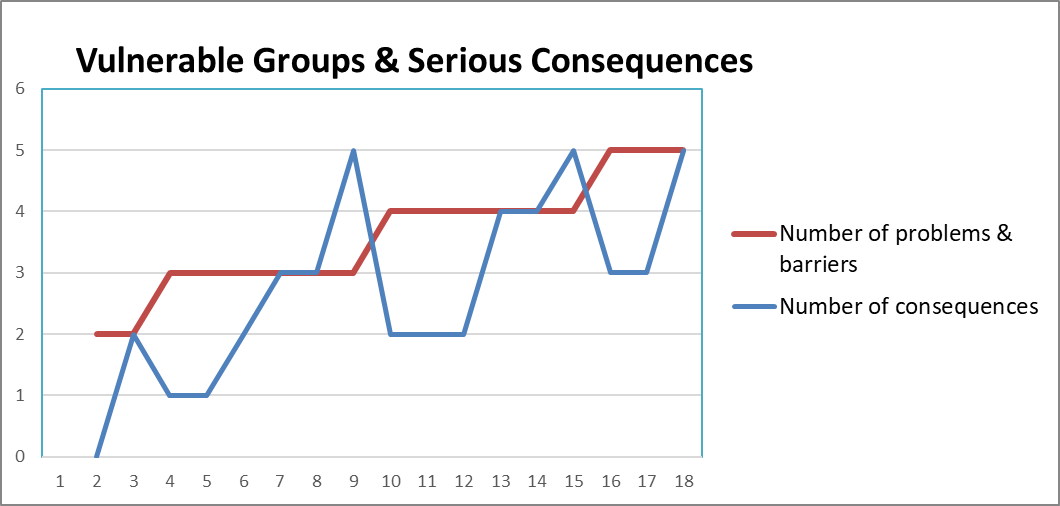
Figure 12 – Vulnerable groups and serious consequences – Text version
The chart is a line graph comparing two measures across 18 data points:
- Number of problems and barriers (represented by one line).
- Number of consequences (represented by another line).
The x-axis shows positions from 1 to 18, and the y-axis ranges from 0 to 6. Both lines fluctuate over time, showing increases and decreases in the counts.
Overall, the chart suggests that while problems and barriers steadily increase over time, consequences fluctuate more dramatically, with two peaks at points 9 and 15.
4.7 Recommendations for Governments and (Legal) Support Services
To reduce barriers and the impact of experiencing serious legal problems, participants shared the following recommendations:
- Provide multilingual information on what to do when facing serious legal problems. Engage immigrants directly to inform them about the differences of the Canadian legal system and their countries of origin, with an emphasis on different legal pathways.
- Ensure there are Mandarin and Cantonese speaking people, along with those who understand immigrant experiences, in the legal system (consultants, lawyers, navigators, judges) and generally legal support services with lived-experience.
- Effectively collaborate and make use of other contact points (such as schools and community services) to increase understanding of government processes and support (such as the Ministry of Children and Family Development [MCFD]).
- Ensure people have direct access to trained professionals who can listen, give information, make a difference (whether service providers, legal advisors, navigators, or other roles), possibly through a chat.
- Encourage accountability, especially in cases of discrimination. Understand that in many cases something “more than [anti-racist] education is needed” [research participant] in workplaces and the legal system itself.
- Manage expectations and address misinformation by making effective use of (social) media campaigns to provide education about the legal system and expectations about what a legal process might look like.
- Educate communities on what sources of information can be trusted and how to evaluate the effectiveness, expertise, and best fit of a legal service provider (legal aid, lawyers). Ensure that people understand the options they have and support people’s agency and decision making.
- Ensure a faster process to obtain access to legal support by reducing wait times and increase access.
- Provide parent-specific and child-centred supports to families facing serious legal problems.
- Ensure that general information about relocation or other legal adjacent information is included. E.g., finding reliable information on finding rentals, moving trucks, moving school districts, can be crucially important for one’s mental health and for reestablishing oneself after facing a serious legal problem.
- Date modified: