
Annual Report to Parliament 2023-2024: Access to Information Act
Information contained in this publication or product may be reproduced, in part or in whole, and by any means, for personal or public non-commercial purposes, without charge or further permission, unless otherwise specified.
You are asked to:
exercise due diligence in ensuring the accuracy of the materials reproduced;
indicate both the complete title of the materials reproduced, as well as the author organization; and
indicate that the reproduction is a copy of an official work that is published by the Government of Canada and that the reproduction has not been produced in affiliation with, or with the endorsement of the Government of Canada.
Commercial reproduction and distribution is prohibited except with written permission from the Department of Justice Canada. For more information, please contact the Department of Justice Canada at: www.justice.gc.ca.
© His Majesty the King in Right of Canada, represented by the Minister of Justice and Attorney General of Canada, 2024.
Table of Contents
- Introduction
- Purpose of the Access to Information Act
- Mandate of the Department of Justice
- Launching the Modernization of ATIP at the Department
- Outreach & Collaboration
- Procedures and Policies
- Training Updates
- Improved Analytics and Technology
- Recruitment and Retention Initiatives
- Commitment to Diversity and Employment Equity
- Complaints
- Organizational structure
- Delegation order
- Performance and statistics
- Number of Requests
- Compliance Rate, Completion Times and Extensions
- Deemed Refusal Rate
- Outstanding Requests
- Disposition of Completed Requests
- Requests, Exemptions and Exclusions
- Informal Requests
- Sources and Types of Requests
- Format of Information Released
- Consultations
- Active Complaints
- Fees and Costs
- Training and awareness activities
- Policies, guidelines, procedures and initiatives
- Complaints, investigations and federal court cases
- Monitoring compliance
- Annex A – Delegation order
- Annex B – Proactive publications requirements table
Introduction
We are pleased to table the Annual Report to Parliament on the administration of the Access to Information Act (the Act) for fiscal year 2023-2024, as required under section 94 of the Act. This report is also prepared and tabled in accordance with section 20 of the Service Fees Act.
A word from the Director
This past year has been one of transition, innovation, change, and careful consideration. We launched a multi-phased modernization of our Access to Information and Privacy (ATIP) Office to position ourselves to meet the growing, challenging and evolving current and future demands and expectations of our stakeholders for years to come.
Phase 1 of our modernization plan focused on people and service delivery as well as putting in place the building blocks for phase 2 which will capitalize on the integration of emerging new technologies like the ATIPXpress case management system and innovative new practices such as collaborating with the Department’s Paralegal Services Centre and making use of the Department’s litigation management tool (NUIX) to assist with responding to complex and voluminous ATIP requests.
This report provides a comprehensive summary of our accomplishments and implementation of Phase 1 of our ATIP modernization journey.
We look forward to the future with great enthusiasm as we are excited about the positive impact this modernization has already had and will continue to have in the years to come.
Purpose of the Access to Information Act
The Act was proclaimed into force on July 1, 1983.
The Act gives Canadian citizens, permanent residents and any person and corporation present in Canada the right to seek access to federally controlled information and records, subject to specific and limited exceptions. The Act complements but does not replace existing procedures for obtaining government information. It is not intended to limit in any way the access to government information that is normally available to the public upon request. Section 94 of the Act requires that the head of every government institution prepare for submission to Parliament an annual report on the administration of the Act within the institution during each fiscal year.
This 41st Annual Report on the administration of the Act is intended to describe how the Department of Justice (hereinafter referred to as “the Department”) administered its responsibilities during the 2023-2024 fiscal year (hereinafter “during the reporting period”).
Mandate of the Department of Justice
The Department of Justice has the mandate to support the dual roles of the Minister of Justice and the Attorney General of Canada.
The Department supports the Minister of Justice in his responsibilities for 49 statutes and areas of federal law by ensuring a bilingual and bijural national legal framework principally within the following domains: criminal justice (including youth criminal justice), family justice, access to justice, Indigenous justice, public law and private international law.
The Department also supports the Attorney General as the chief law officer of the Crown, both in terms of the ongoing operations of government and of the development of new policies, programs, and services for Canadians. The Department provides legal advice to the Government and federal government departments and agencies, represents the Crown in civil litigation and before administrative tribunals, drafts legislation and responds to the legal needs of federal departments and agencies.
Launching the Modernization of ATIP at the Department
During the first phase of our modernization strategy, we focused on improving the ATIP Office’s collaboration with all Offices of Primary Interest (OPIs), liaison officers as well as analysts within the ATIP Office to ensure they are well supported and have the tools required to meet the growing challenges of the ATIP practice.
Our goal is to build a more effective internal process framework for handling Access to Information and Privacy requests to increase agility at all steps of the treatment of requests by using new technology such as ATIPXpress, while enhancing our internal practices to enable collaboration and cooperation amongst all stakeholders.
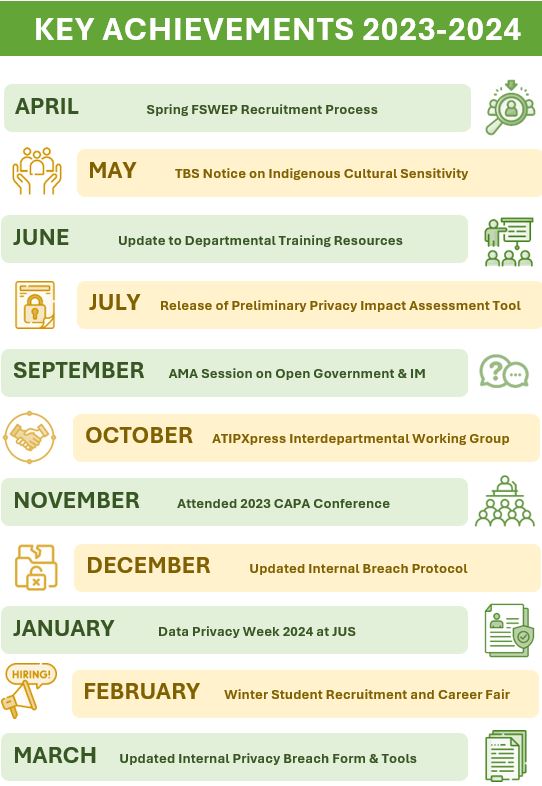
Text version
April: Spring FSWEP Recruitment Process
May: TBS Notice on Indigenous Cultural Sensitivity
June: Update to Departmental Training Resources
July: Release of Preliminary Privacy Impact Assessment Tool
September: AMA Session on Open Government & IM
October: ATIPXpress Interdepartmental Working Group
November: Attended 2023 CAPA Conference
December: Updated Internal Breach Protocol
January: Data Privacy Week 2024 at JUS
February: Winter Student Recruitment and Career Fair
March: Updated Internal Privacy Breach Form & Tools
Outreach & Collaboration
Consultations with stakeholders
As part of the ATIP Modernization Strategy, we collaborated with the Change Management and Business Transformation team (CMBT) that led a series of one-on-one and group sessions with the ATIP Office employees and OPIs with the objective of charting out a path forward to gain efficiencies based on stakeholder needs and business requirements as well as to foster employee well-being. The sessions led by CMBT helped provide an understanding of the underlying issues and concerns to be addressed through the modernization of the ATIP Office.
These sessions have led us to identify several topics and areas for wellness training to assist the ATIP staff. These sessions have also been scheduled over the course of 2024-2025.
Currently, the ATIP Office at the Department is actively working to foster better communication strategies and relationships amongst all OPIs, liaison officers, and analysts within the ATIP Office. To accomplish this goal, the ATIP Office devised strategies and created a series of tools to refine our communications with our clients and to enhance our collaboration.
For example, in September, the ATIP Office hosted an Ask Me Anything (AMA): Open Government, Information Management session and ATIP session. This event focused on fostering proper information management practices, such as Open by Default and the new Standard on Managing Digital Information in the Digital Workspace and the LEX legal case management system, while also supporting open government, access to information and privacy principles such as transparency and collaboration. This event offered the Department’s employees the opportunity to have their privacy and access-to-information-related questions directly answered by one of the members of our team.
In November, several members of the Department’s ATIP Office’s team attended the 37th annual Canadian Access and Privacy Association (CAPA) conference. The event offered training, as well as valuable insight and updates from privacy leaders, public servants, journalists as well as consultants and experts in the private sector.
In January, the ATIP Office celebrated Data Privacy Week. To mark the annual global event, the ATIP Office released a publication in our departmental weekly newsletter and posted a variety of resources from the Office of the Privacy Commissioner throughout the department. These resources aimed to better inform employees of privacy risks at home and in the workplace, as well as their rights and responsibilities regarding privacy and the handling of information and data.
Procedures and Policies
Finding Efficiencies in our Procedures and Policies
Based on these collaborations, our ATIP Office updated its policies and procedures to reflect what was heard through consultations to enhance productivity and to find efficiencies in the processing of ATIP requests. Our goal is to provide the OPIs and liaison officers with a repository where they can find several tools and guidance materials to help them with the processing of ATIP requests.
These improvements will enhance knowledge sharing and clarify roles and responsibilities in the processing of ATIP requests to gain efficiencies.
Training Updates
The ATIP Office continues to ensure employees receive training to support their development, success, and wellbeing. Along with internal standard operating procedures and policies, ATIP Office employees must also complete mandatory departmental training on issues such as security and cultural sensitivity.
Improving Service to Indigenous Clients and Cultural Sensitivity in the Workplace
In compliance with the Treasury Board of Canada Secretariat’s Access to Information and Privacy Implementation Notice 2023-01: Advancing Reconciliation with Indigenous Peoples by Providing Culturally Appropriate Services, the ATIP Office updated its training offerings and built capacity to meet the needs of all our clients.
We have added new mandatory and recommended training requirements for employees and ATI and Privacy professionals to facilitate access to government information and personal information by Indigenous Peoples.
This includes new mandatory training courses such as:
- Reflecting on Cultural Bias: Indigenous Perspectives (IRA101)
- The Uncomfortable Truth: A Brief History of the Relationship Between Indigenous Peoples and the Government of Canada (IRA102)
- Cultural Competency: Indigenous Perspectives (IRA142)
As well as the following, optional but strongly encouraged training courses:
- First Nations in Canada (IRA103)
- Métis in Canada (IRA104)
- Inuit in Canada (IRA105)
- Reconciliation Begins with Me (IRA141)
The ATIP Office also conducted a gap analysis of its current intake process of Access to Information Privacy requests to identify areas where services to Indigenous requesters could be improved. This gap analysis provided us with a greater understanding of the diverse Indigenous cultures and perspectives, and helped us develop the cultural competencies needed to build respectful relationships with Indigenous Peoples while respecting their right to access information and data sovereignty. Several recommendations were made following the gap analysis and are pending further review prior to being implemented in the 2024-2025 fiscal year.
Employee Well-Being and Professional Development
We offered training to our employees on diverse topics and issues including Emotional Intelligence & Mental Health, Vicarious Trauma, Harassment Prevention, Discussed/Warned of Exposure to Explicit & Sensitive Material, Civility & Respect Training, Service Excellence & Difficult Conversations Training.
Formal language training, as well as other training to develop employee competencies and knowledge in ATIP, networking, technology and program-specific information were also regularly provided to employees throughout the year.
Finally, ATIP Office employees participated in many internal and interdepartmental training sessions, conferences, information sessions and seminars organized by the Treasury Board Secretariat (TBS) and by various associations on matters relating to both access and privacy. They included GCCollab broadcasts, InfoBlitz and Privacy communities’ sessions by the TBS and Access to Information and Privacy Communities Development Office. These exchanges provided updates to employees on ATIP and addressed trends in this area, contributing to the modernization of our team and the bolstering of best practices.
Improved Analytics and Technology
The Department’s ATIP Office is currently in the process of integrating a modernized case management system, which will replace the antiquated AccessPro Case Management (APCM) system. Employees have participated in training sessions with the vendor, OPEXUS, to better understand how the system operates as well as to familiarize themselves with its various functions.
The ATIP Office is currently leading the ATIPXpress Modernization and Privacy Subworking Group, an interdepartmental working group established to exchange gaps, best practices, and identify areas for collaboration in the new case management system.
Several other departments have been collaborating with our office to develop resources such as workflows and process maps, as well as to discuss the modernization project. The key objective of these meetings and working sessions has been to discuss how best to operationalize ATIPXpress within the multiorganizational ATIP ecosystem and to workout any bugs that might arise. There has also been a focus on refining existing activities and functions in APCM, rather than reinventing them, and being mindful of anticipated legislative changes to the Privacy Act.
Recruitment and Retention Initiatives
The ATIP Office has attended recruitment events throughout the reporting period, with a specialized focus on Indigenous, student and Francophone recruitment. These recruitment events included academic institutions such as the Cégep de l’Outaouais and the Université du Québec en Outaouais. The Department’s ATIP Office also attended the Ottawa Indigenous Student Career Fair and participated in the Federal Student Work Experience Program (FSWEP) recruitment process in the spring, resulting in the hiring of three FSWEP students.
The ATIP Office continued its recruitment efforts to stabilize its workforce at full complement by also conducting recruitment campaigns on GCCollab. This led to hiring an additional six full time employees.
Commitment to Diversity and Employment Equity
The Department of Justice and ATIP Office believe that to be able to serve the public effectively, its workforce needs to accurately reflect the diversity of the Canadian population. We actively recruit members of Employment Equity designated groups and encourage them to self-identify when they apply and begin their employment.
Complaints
Reduced Complaints
During the reporting period, the dedicated complaints team continued its efforts to reduce the number of complaints. Moreover, we focused on strengthening our relationship with the Office of the Information Commissioner (OIC) through meaningful and open dialogue. Through these efforts, the total number of complaints decreased from 55 during the previous reporting period to 33 during this reporting period.
Elimination of Formal OIC Orders
Notably, the Department successfully eliminated formal orders issued by the OIC during this reporting period. In the past three years, there were 11 such orders, but in 2023-24, this number was reduced to zero.
Organizational structure
In 2023-24, the ATIP Office underwent a change to its reporting structure. In April 2023, the ATIP Office moved from the Information Solutions Branch structure to the Legal Practices Branch (LPB). The Director of the ATIP Office now reports to the Senior General Counsel and Director General of the Legal Practices Branch under Management Sector to better align it to deliver on its modernization initiative, benefit from additional legal and analytics services within LPB. The Director is accountable for the development, coordination and implementation of effective policies, guidelines, systems, and procedures to efficiently process requests under the Act.
During the reporting period, the Department’s ATIP Office had a total of 25.17 fulltime equivalent (FTE) positions working on access to information requests and privacy files, as well as a total of three consultants. To support the administration of the Access to Information Act, the Operations Division had a total of 18.650 FTE positions and one consultant. The ATIP Office committed to reducing its reliance on consulting services. We began exploring alternatives to consultants by for example using the services of the Paralegal Services Centre, making use of the Department’s litigation management system providing additional training to our staff and OPIs and implementing the new ATIPXpress system. We have begun to see very positive results that should be even more evident in the future as the modernization project is concluded.
The ATIP Office is organized into three units:
- The Operational Unit works with the department to process incoming access to information and privacy requests.
- The Privacy, Policy and Programs Unit develops ATIP policies, provides advice on privacy related matters, updates annual reports and other statutory reports.
- The Complaints Unit processes complaints and works closely with the OIC and the Office of the Privacy Commissioner.
In addition, the ATIP Office is currently working on modernizing its ATIP management system to achieve better performance and is building a team with information technology experts. The team will ensure a smooth transition to the new platform.
Under section 96 of the Act, institutions reporting to the same minister can partner to share request-processing services. The Department of Justice has not entered into any such service sharing agreements.
The Department’s ATIP Office is comprised of a dedicated workforce committed to access to information and the protection of privacy. This work includes:
- The timely processing of requests under the Act and assisting clients in accordance with the principles for assisting applicants.
- Processing consultation requests submitted by other federal institutions on Department of Justice documents located in their files and on records that may be subject to solicitor-client privilege.
- Providing advice and guidance to senior management and all employees of the Department on ATIP-related matters, as well as training and awareness sessions.
- Responding to complaints and negotiating with the Information Commissioner and Privacy Commissioner.
- Liaising on behalf of the Department with TBS, the Information and Privacy Commissioners of Canada and other government departments and agencies regarding the application of the Act.
- Coordinating, reviewing, approving and publishing statutory reports such as the Annual Reports to Parliament.
- Developing, coordinating and implementing policies, procedures and guidelines for the orderly implementation of the Act by the Department.
- Modernizing ATIP processes and the ATIP Management Technologies by building a small team that evaluates new digital solutions that can reduce business processes, reduce time needed for requests, increase quality and helps all stakeholders more easily engage in the process.
The work of the ATIP Office is supported by 26 OPI offices within the Department. These offices are responsible for locating and providing the records responsive to requests and providing recommendations about the disclosure of records in compliance with the provisions of the Act.
Special Interlocutor’s Office
Over the 2023-2024 fiscal year, the ATIP Office also assisted the Special Interlocutor’s Office to respond to ATIP requests and contribute to building a relationship of trust and respect between Canada and First Nations, Inuit and Métis. The Independent Special Interlocuter will assist in identifying needed measures and recommending a new federal framework to ensure the respectful and culturally appropriate treatment of unmarked graves and burial sites of children associated with former residential schools.
The ATIP Office received two requests regarding the Office of the Independent Special Interlocutor. Due to a large number of records, and the fact that the Special Interlocutor’s office had limited resources, the Paralegal Services Centre assisted the office with its material gathering process.
Delegation order
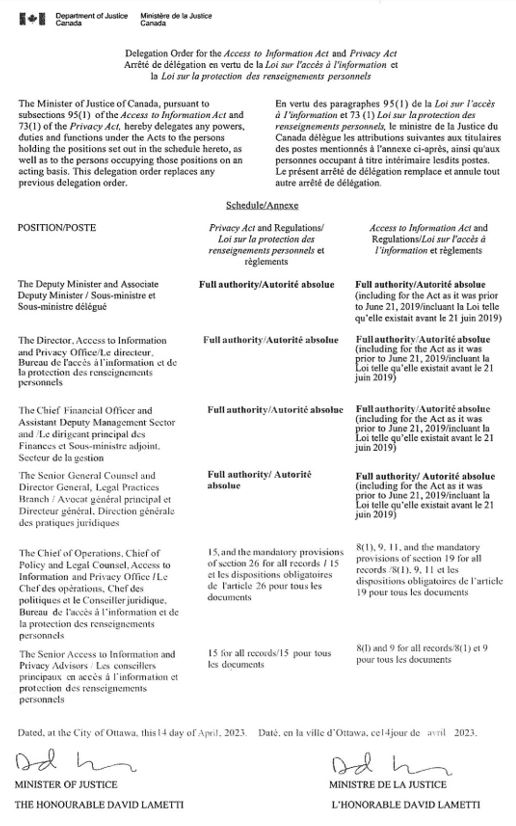
The ATIP Director has full authority delegated by the Minister for the administration of the Act.
For the purpose of increased executive oversight, full authority is also conferred to the Deputy Minister, the Associate Deputy Ministers, the Assistant Deputy Minister and Chief Financial Officer, Management Sector and the Senior General Counsel and Director General, Legal Practices Branch. A copy of the Department’s Delegation Order is at Annex A of this report.
Performance and statistics
The Department is committed to transparency and accountability under the Act and continues to work to improve its performance to deliver the highest standards of service for access to information requests.
Number of Requests
| Fiscal Year | Number of Requests Received | Number of Requests Completed | Number of Pages Processed | Number of Pages Released |
|---|---|---|---|---|
| 2023-2024 | 392 | 291 | 134,074 | 9,905 |
| 2022-2023 | 392 | 308 | 76,344 | 21,074 |
| 2021-2022 | 440 | 403 | 143,828 | 14,763 |
The Department received 392 requests during the reporting period, which remains the same as the previous reporting period. In addition, 450 outstanding requests from previous years were carried over for a total of 842 active requests in 2023-2024. This is a significant increase, partially due to various delays in closing more complex requests within legislated timelines. As a result, the amount specifically carried over beyond legislative timelines also increased significantly, from 360 to 488 requests during the reporting period.
During the reporting period, 291 requests were completed, representing a slight decrease compared to the previous reporting period (308 requests), due to the complexity of the requests received during this reporting period. In addition, 551 requests were carried forward into fiscal year 2024-2025. Responding to formal access to information requests involved the review of 134,074 pages, of which 9,905 pages were partially disclosed. This represents a significant increase compared to the previous reporting period, however, 84,939 (62%) of the 134,074 pages were abandoned by the requester. As a result, 49,135 pages were assessed, which is a decrease from the total pages processed in the previous reporting period.
The number of pages processed in this reporting period only captures pages from closed files. In 2023-2024, a large number of pages were processed on files that are not yet closed. These will be captured in future reports. Additionally, no pages were processed and released informally.
Compliance Rate, Completion Times and Extensions
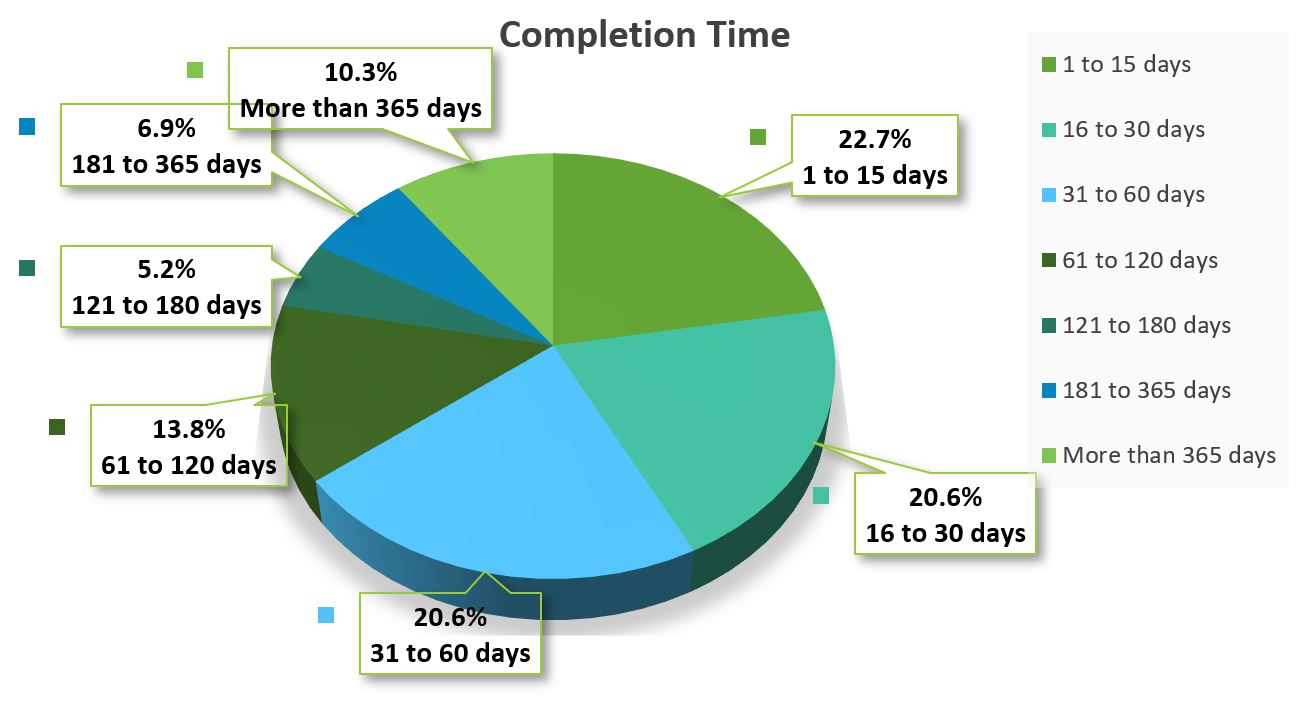
Of the 291 requests, 201 were completed within the legislated timelines under the Act. The compliance rate for this reporting period remains mostly unchanged at 69%, compared to the previous reported period (69.5%). During the reporting period, the Department closed a total of 66 requests in 15 days or less (22.7 %), 60 requests within 16 to 30 days (20.6%), 60 requests within 31-60 days (20.6%), 40 requests within 61-120 days (13.8%), 15 requests within 121-180 days (5.2%), 20 requests within 181-365 days (6.9%), and 30 requests took over 365 days to complete (10.3%). The chart below represents the number of requests completed (with percentage) per completion time for all completed requests.
Text version
Pie chart displaying completion times of requests as follows:
- 22.7% of requests took 1 to 15 days to complete;
- 20.6% of requests took 16 to 30 days;
- 20.6% of requests took 31 to 60 days;
- 13.8% of requests took 61 to 120 days;
- 5.2% of requests took 121 to 180 days;
- 6.9% of requests took 181 to 356 days;
- 10.3% of request took more than 365 days.
The Department had to seek extensions in 155 requests. Of these, of which 87 extensions were taken under section 9(1)(a) for interference with operations, relying heavily on this extension in comparison to the 58 requests using this section in the previous report period. Sixty-five extensions were also invoked under section 9(1)(b) for required consultations, and three extensions were taken under section 9(1)(c) for third party consultations.
This reflects the significant increase in pages, as well as the increased demand on the OPI and ATIP Office to process the pages subject to the Act.
Deemed Refusal Rate
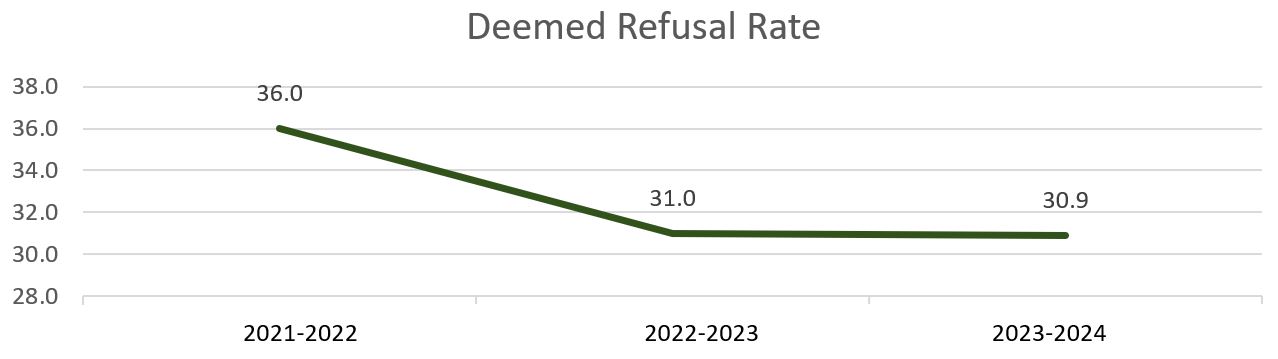
The Department’s deemed refusal rate in this reporting period (i.e., the percentage of Access to Information requests that received a response beyond the deadline required under the Act) was 30.9%, which means that 90 requests were closed past legislative timelines. This remains virtually unchanged from the previous reporting period, with a similar distribution in the number of requests past legislated timelines, with 28 requests being within the first 15 days, and 47 beyond 180 days.
The deemed refusal rate for the 2023-2024 reporting period decreased by less than 1% by (0.32%) compared to 5% in the 2022-2023 reporting period.
Text version
The deemed refusal rate was:
- 36.0 in 2021-2022
- 31.0 in 2022-2023
- 30.9 in 2023-2024
Outstanding Requests
TBS collects statistical data from specific institutions (the Department is one of these) on the volume of their outstanding access to information requests and requests for personal information. The department carried forward 551 requests or 65.4% of requests over to the next reporting period, due to the varying nature and complexity of new requests received, and previously outstanding requests from past reporting periods.
The Department saw an increase of 194% in closed complaints. The ATIP Office dedicated and prioritized these files during the reporting period. This significantly decreased the number of files carried forward as the 101 closed complaints represent a large volume of files completed within the institution.
| Fiscal year open requests were received | Open requests that are within legislated timelines as of March 31, 2024 | Open requests that are beyond legislated timelines as of March 31, 2024 | Total |
|---|---|---|---|
| Received in 2023-2024 | 85 | 92 | 177 |
| Received in 2022-2023 | 12 | 79 | 91 |
| Received in 2021-2022 | 5 | 103 | 108 |
| Received in 2020-2021 | 1 | 68 | 69 |
| Received in 2019-2020 | 0 | 60 | 60 |
| Received in 2018-2019 | 0 | 29 | 29 |
| Received in 2017-2018 | 0 | 13 | 13 |
| Received in 2016-2017 or earlier | 0 | 4 | 4 |
| Total | 103 | 448 | 551 |
Disposition of Completed Requests
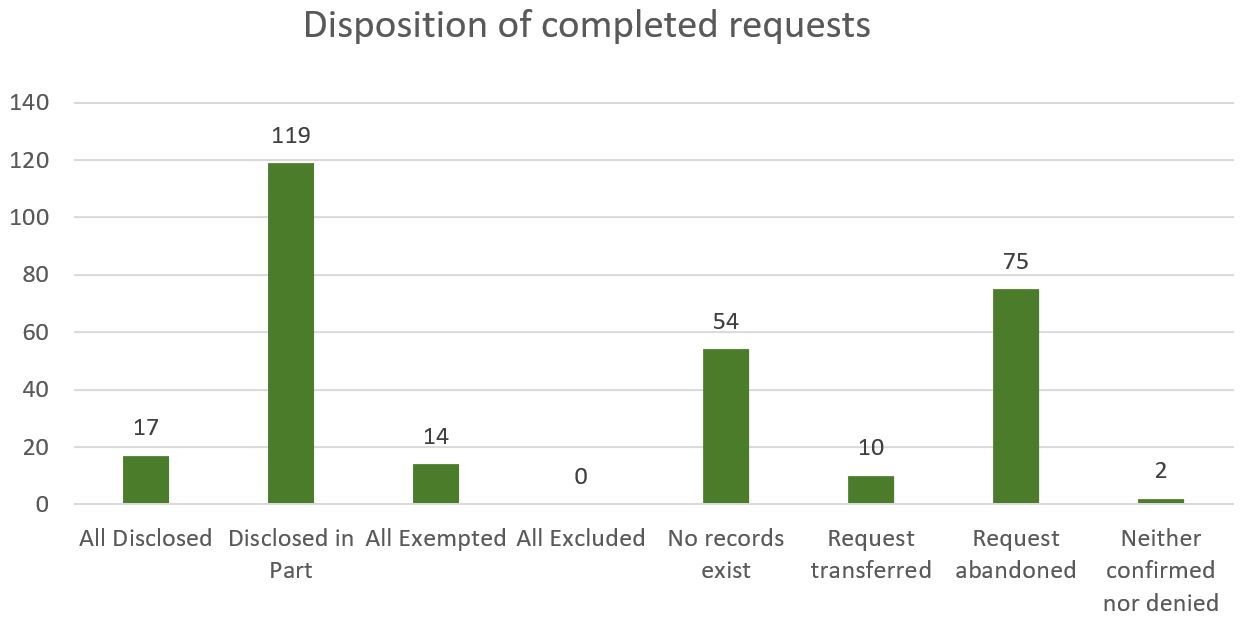
Of the 291 requests completed this reporting period:
- 54 requests (18.6%) did not have responsive records;
- 75 requests (25.8%) were abandoned by the applicant.
The remaining 162 requests were completed as follows:
- 17 requests (10.5%) were fully disclosed.
- 119 requests (73.5%) were partially disclosed.
- 14 requests (8.6%) were exempted in their entirety.
- 2 requests (1.2%) were neither confirmed nor denied.
- 10 requests (6.2%) were transferred to other government departments.
Text version
Bar graph displaying the disposition of completed requests, as follows:
- All disclosed: 12
- Disclosed in part: 119
- All exempted: 14
- All excluded: 0
- No records exist: 54
- Request transferred: 10
- Request abandoned: 75
- Neither confirmed nor denied: 2
Requests, Exemptions and Exclusions
Exemptions invoked
The Department used exemptions 337 times under the Act for 291 requests. The majority of exemptions invoked fell under three sections of the Act:
- Section 23, which exempts information relating to solicitor-client privilege, was used in 95 files;
- Section 19, which exempts any records that contain personal information, was used in 69 files; and
- Section 21, which exempts information relating to the internal decision-making processes of government was used in 65 files.
Of note, more than one section of the Act (exemption) can be applied to a specific access request.
Exclusions Cited
Exclusions were invoked in seven requests pursuant to section 68 of the Act (published material or material available for purchase by the public) and in 45 requests pursuant to section 69 (confidences of the King’s Privy Council for Canada) of the Act.
Informal Requests
The Department proactively published on the Open Government Portal summaries of completed access to information requests that do not contain personal or third-party information. Members of the public can submit informal requests for a copy of the previously released information without having to pay the application fee.
During the 2023-2024 reporting period, the ATIP Office received 290 informal requests, 11 were outstanding from previous reporting periods for a total of 301 informal requests. The ATIP Office completed 293 requests, which represents a slight increase of 1.1% from the 297 informal requests completed during the 2022-2023 reporting period. The ATIP Office re-released 38,585 pages which is a significant decrease from the last reporting year of 152,622 pages. This number does not include emails or telephone calls from potential applicants that the ATIP Office responded to or redirected to other institutions.
Sources and Types of Requests
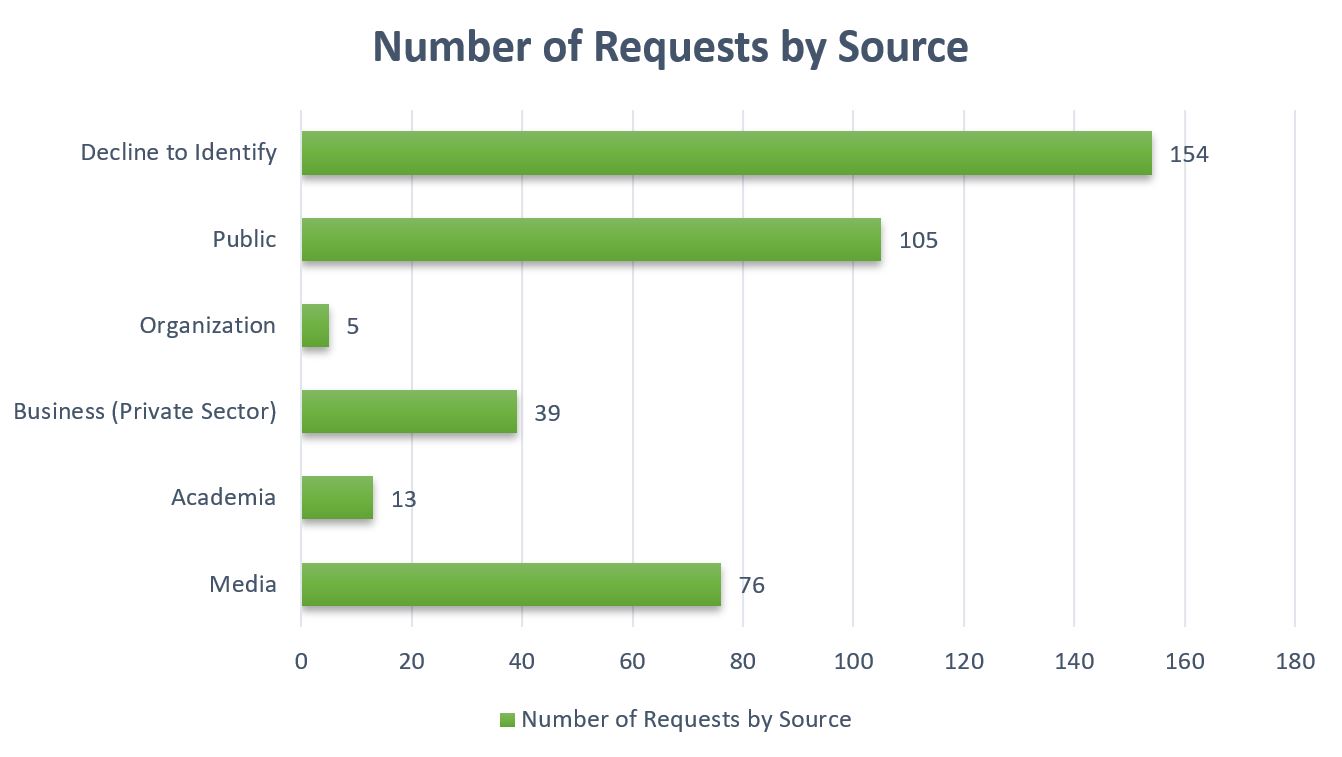
During the 2023-2024 reporting period, the Department received the majority (85.5%) of its 392 access to information requests from three sources: 154 requesters who declined to identify themselves (39.4%), 105 requests by members of the public (26.7%) and 76 requests by members of the media (19.4%).
Text version
Bar graph displaying the number of requests by source, as follows:
- Declined to identify: 154
- Public: 105
- Organization: 5
- Business (Private Sector): 39
- Academia: 13
- Media: 76
Format of Information Released
Most applicants chose to receive information in an electronic format at no extra charge as the Department continued to use the delivery via Epost Connect, a service offered at no charge to the applicant which is now the office’s primary method of record delivery. It allows for secure delivery of records in an electronic format and circumvents the issue of email size restrictions and the need for the recipient to have a compatible device to access the records.
Consultations
During the 2023-2024 reporting period, the Department received 196 consultations from other government institutions and two from organizations for a total of 198 consultations for records relating to the Department’s activities. There were 103 consultations outstanding from previous years, which were carried over for a total of 298 consultations from other government institutions and three from other organizations to process.
The volume of consultations decreased in terms of requests, from 335 requests in the previous reporting period to 198 requests in the 2023-24. However, the Department significantly increased its total pages reviewed, from 25,877 in the previous reporting period to 35,596 in 2023-24.
| Fiscal Year | Number of Requests Received | Number Pages to review | Number of Requests Completed | Number of Pages Reviewed |
|---|---|---|---|---|
| 2023-2024 | 198 | 20,417 | 204 | 21,355 |
| 2022-2023 | 250 | 20,614 | 236 | 9,885 |
| 2021-2022 | 211 | 4,093 | 209 | 4,988 |
| 2020-2021 | 167 | 3,327 | 188 | 11,347 |
Of the 198 consultations, 204 were completed during the reporting period and the remaining 103 were carried forward to be completed in fiscal year 2024-2025 which represents an increase of 14% over last fiscal year. The completion times for the 204consultations were the following:
- 48 consultations were completed between 1 to 30 days;
- 63 were completed within 31-60 days;
- 36 were completed between 61 to 120 days; and
- the remaining 57 were completed past 121 days.
Active Complaints
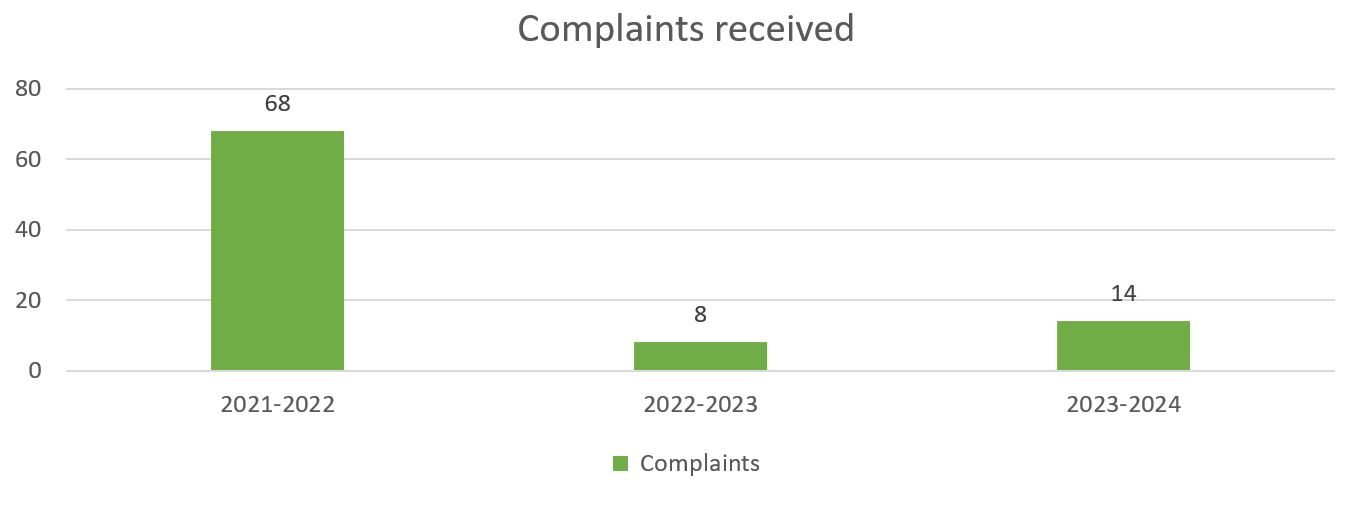
The chart below represents the number of active complaints with the OIC that are outstanding from previous reporting periods, broken down by fiscal year in which they were received. A total of 43 complaints remain active after the 2023-2024 reporting period. Most complaints that remain active were received in the last two reporting periods, 2021-2022 and 2022-2023.
Text version
Bar graph displaying the number of complaints received, as follows:
- 68 in 2021-2022
- 8 in 2022-2023
- 14 in 2023-2024
Fees and Costs
The Service Fees Act requires a responsible authority to report annually to Parliament on the fees collected by the department.
With respect to fees collected under the Access to Information Act, the information below is reported in accordance with the requirements of section 20 of the Service Fees Act.
Fees Collected
In accordance with the Interim Directive on the Administration of the Access to Information Act, issued on May 5, 2016, and the changes to the Act that came into force on June 21, 2019, the Department may only charge an application fee of $5.00, as set out in paragraph 7(1)(a) of the Regulations.During the 2023-2024 reporting period, the Department collected the application fee in 304 requests for a total revenue of $1,520 with no refunds.
Fees Waived
Pursuant to section 11 of the Act, institutions can waive the application fee as deemed appropriate. In addition, the Department waives all fees, other than the $5 application fee, that may have been applicable to requests received prior to June 21, 2019. This is in accordance with the Interim Directive on the Administration of the Access to Information Act that was in effect May 5, 2016, to July 12, 2022. During the 2023-2024 reporting period, fees were waived for 83 requests.
Cost of Operating the Program
The total cost for administering the Act during the 2023-2024 reporting period was $2,371,740. This cost includes $1,894,202 in salaries and overtime, as well as operating costs totaling $477,538, which include $370,800 in professional service contracts.
These costs do not include resources expended by the Department’s other sectors to meet the requirements under the Act.
Training and awareness activities
Training Sessions
The Department of Justice and ATIP Office continuously provides employee training to enhance well-being and professional development.
Some training sessions are provided on an ad-hoc basis, while others are scheduled routinely throughout the fiscal year.
The employees of the ATIP Office also regularly provide advice and informal training on the application of ATIP legislation to departmental employees who must review relevant records requested under the Act. Formal awareness information sessions are offered to other sectors within the Department to address the specific business and operational needs of the individual groups. Particular emphasis is placed on those aspects of the Act that are directly related to the employees’ areas of responsibility.
The ATIP Office recently updated their training resources and training decks during the reporting period. Departmental informal training sessions will be provided throughout 2024-2025 fiscal year.
Along with internal standard operating procedures and policies, ATIP Office employees must also complete mandatory departmental training on issues such as security and cultural sensitivity.
The Centre for Information and Privacy Law, in the Public Law and Legislative Sector of the Department, is responsible for providing legal advice to all departments on the interpretation and application of the Access to Information Act and Privacy Act. It offered training to departmental employees, and to employees from other government departments.
ATIP training is part of the recommended courses under the values and ethics component of the Department’s Roadmap for new managers. An electronic orientation deck is posted on the Department’s Intranet site as a resource for employees.
The Department’s ATIP Office employees participated in collective awareness sessions with ATIP counsel to review recent jurisprudence and case law related to the Act. The ATIP counsel participated in monthly ATIP Practice Group meetings during which information was exchanged and solutions proposed. The Practice Group is open to all departmental counsel, including those from Legal Services Units, and its mandate is to discuss questions such as the right of access to information or privacy issues.
In addition to mentorship and partnership relationships, workshops and presentations were regularly provided within the ATIP Office on various topics concerning the application of the Act and related policy and procedures. This allowed ATIP Office employees to benefit from each other’s experience and knowledge. In addition, internal training initiatives offered to the ATIP Office staff this year included proactive publication workshops offered by an experienced manager within the ATIP Office’s team.
Policies, guidelines, procedures and initiatives
Throughout the fiscal year, the ATIP Office monitored guidelines and service standards for the federal government ATIP community that clarify the ATIP Office’s role in requests that have been received by other federal government institutions pursuant to the Act.
The ATIP Office also continued to develop internal guidance documents, internal procedures and tools to ensure consistency within the office and document best practices and lessons learned. In addition, the Department continued to share best practices with other government institution.
Proactive Publication
During the 2023-2024 reporting period, the Department met its obligations under Part II - Proactive Publication.
Proactive Publication Procedures
The ATIP Office has several procedures and processes in place to meet proactive publication requirements to facilitate a 100% compliance rate. These include internal operating procedures and schedules which ensure information is published within the legislated timelines.
For example, the ATIP Office created procedures in the Department to ensure that proactive publication responses are received on time. A scheduled follow up is sent by analysts at the beginning of each month to ensure information on proactive disclosures is sent by the 15th of each month to be published on time.
See Annex B: Proactive Publications Requirements Table.
Departmental Policy Updates
The Department’s ATIP Office participated in implementing several procedures and guidance documents which were developed and updated by the LBP and the Department of Justice. These resources for employees covered various subjects to ensure consistency, clarity on expectations, communication standards and training.
These updates included creating process maps for internal and external clients, reducing dependency on consultants for specific programs, as well as developing new onboarding and training programs for employees and OPIs.
There was also a focus on enhancing internal efficiency and well-being through weekly and quarterly workload management meetings, the implementation of updated standard operating procedures, and the establishment of Specific, Measurable, Achievable, Relevant, and Time-Bound (SMART) objectives for employees’ Performance Management Agreements. The Department amended work descriptions to reflect trauma risks, as well as a formal, safe processes for reporting trauma.
The Department and ATIP Office also engaged with the Change Management and Business Transformation team to develop communication and engagement plans, establish team norms, and develop standardized ATIP Communication and Process templates.
Advice
The ATIP Office acted as a resource on several occasions for departmental officials, as well as those from other government institutions, offering advice and guidance on the provisions of the legislation and related policies.
Complaints, investigations and federal court cases
Complaints Filed
The ATIP Office restructured its team to manage complaints, serving as the primary liaison between the Department and the OIC. The team also has implemented a new dedicated mailbox to streamline complaints. The team continued to work to strengthen relationships and improve the Department’s ATIP Office’s program performance.
During the 2023-2024 reporting period, the Department received 32 new Notices of Intention to investigate from the OIC, which represents a 38.46% decrease relative to the 2022-2023 reporting period in which 52 notices were received. The reasons for the complaints were as follows:
- 5 related to delay
- 10 related to the extension
- 9 concerned the exemption or exclusion of information
- 5 had no records found
- 3 were related to other
Completed investigations
A total of 58 investigations were completed during the reporting period, some of which had been carried forward from previous years. Of the 58 investigations, 17 complaints were not well founded, 11 were well founded, 6 were discontinued, 23 ceased to investigate and one was resolved. No key issues were raised as a result of these complaints. Complaint findings are defined as follows:
Well-founded with recommendations: If the head of the institution accepted the OIC recommendations and remedial action was taken by the institution to the satisfaction of the OIC, the matter is considered resolved and no further action by the OIC is necessary.
Well-founded without recommendations: The institution took remedial action to the satisfaction of the OIC during the course of the investigation. The OIC did not need to provide a recommendation to the head of the institution.
Well-founded with order: The OIC has found the complaint well-founded and has issued an order to the institution to take certain actions to address the complaint.
Not well founded: As a result of the investigation, the OIC found that the institution applied the Access to Information Act correctly.
Discontinued: The complaint was withdrawn or abandoned by the complainant before allegations were fully investigated. In some cases, the complainant did not respond to the OIC’s request for representations within a reasonable time or cannot be located.
Resolved: The complainant is satisfied with the resolution achieved through the OIC's intervention or the matter central to the complaint is no longer at issue before the complaint has been fully investigated.
Review by the Federal Court of Canada
No new applications were filed before the Federal Court pursuant to section 41 of the Act during the 2023-2024 reporting period.
Monitoring compliance
The ATIP Office regularly monitored compliance with statutory requirements and timeliness associated with the processing of requests through ongoing communication with senior management and OPIs.
The workload was assessed daily, through the ATIP Case Management System, to ensure that workload was evenly distributed and effectively managed to meet statutory deadlines.
The reading rooms at the Department’s headquarters in Ottawa and those located in the regional offices across Canada make available to the public the most recently published version of Info Source, as well as departmental publications and manuals. Many of these publications can be found on the Department’s website and the Treasury Board Secretariat’s websites.
Annex A – Delegation order
Text version
The Department of Justice’s Delegation Order for the Access to Information Act and Privacy Act
The Minister of Justice of Canada pursuant to subsections 95(1) of the Access to Information Act and 73(1) of the Privacy Act, hereby delegates any powers, duties and functions under the Acts to the persons holding the positions set out in the schedule hereto, as well as to the persons occupying those positions on an acting basis. This delegation order replaces any previous delegation order.
Schedule
Position: The Deputy Minister and Associate Deputy Minister
Privacy Act and Regulations: Full Authority
Access to Information Act and Regulations: Full Authority (including for the Act as it was prior to June 21, 2019)
Position: The Director, Access to Information and Privacy Office
Privacy Act and Regulations: Full Authority
Access to Information Act and Regulations: Full Authority (including for the Act as it was prior to June 21, 2019)
Position: The Chief Financial Officer and Assistant Deputy Management Sector
Privacy Act and Regulations: Full Authority
Access to Information Act and Regulations: Full Authority (including for the Act as it was prior to June 21, 2019)
Position: The Senior General Counsel and Director General, Legal Practices Branch
Privacy Act and Regulations: Full Authority
Access to Information Act and Regulations: Full Authority (including for the Act as it was prior to June 21, 2019)
Position: The Chief of Operations, Chief of Policy and Legal Counsel, Access to Information and Privacy Office
Privacy Act and Regulations: 15, and the mandatory provisions of section 26 for all records
Access to Information Act and Regulations: 8(1), 9, 11, and the mandatory provisions of section 19 for all records
Position: The Senior Access to Information and Privacy Advisors
Privacy Act and Regulations: 15 for all records
Access to Information Act and Regulations: 8(1) and 9 for all records
Dated, at the City of Ottawa, this 14 day of April, 2023.
Signed by the Honourable David Lametti, Minister of Justice.
Annex B – Proactive publications requirements table
| Legislative Requirement | Section | Publication Timeline | Institutional Requirement | Links to published proactive publication | Number of Requests/Reports | Compliance |
|---|---|---|---|---|---|---|
| Travel expenses | 82 | Within 30 days after the end of the month of reimbursement | All programs |
Travel and Hospitality Expense Reports (justice.gc.ca) Employees Listing - Travel and Hospitality Expense Reports (justice.gc.ca) Search Government Hospitality Expenses | Open Government - Government of Canada |
12 | 100% |
| Hospitality expenses | 83 | Within 30 days after the end of the month of reimbursement | All programs |
Travel and Hospitality Expense Reports (justice.gc.ca) Employees Listing - Travel and Hospitality Expense Reports (justice.gc.ca) Search Government Hospitality Expenses | Open Government - Government of Canada |
20 | 100% |
| Reports tabled in Parliament | 84 | Within 30 days after tabling | Ministerial Secretariat | 11 | 72.72% |
| Legislative Requirement | Section | Publication Timeline | Institutional Requirement | Links to published proactive publication | Number of Requests/Reports | Compliance |
|---|---|---|---|---|---|---|
| Contracts over $10,000 | 86 | Q1-3: Within 30 days after the quarter Q4: Within 60 days after the quarter |
Finance |
Search Government Contracts over $10,000 (canada.ca) |
4 | 100% |
| Grants & Contributions over $25,000 | 87 | Within 30 days after the quarter | Finance | 4 | 100% | |
| Packages of briefing materials prepared for new or incoming deputy heads or equivalent | 88(a) | Within 120 days after appointment | ATIP | Open Government | Open Government, Government of Canada | 1 | 100% |
| Titles and reference numbers of memoranda prepared for a deputy head or equivalent, that is received by their office | 88(b) | Within 30 days after the end of the month received | ATIP | Open Government | Open Government, Government of Canada | 12 | 100% |
| Packages of briefing materials prepared for a deputy head or equivalent’s appearance before a committee of Parliament | 88(c) | Within 120 days after appearance | ATIP | Open Government | Open Government, Government of Canada | 16 | 100% |
| Legislative Requirement | Section | Publication Timeline | Institutional Requirement | Links to published proactive publication | Number of Requests | Compliance |
|---|---|---|---|---|---|---|
| Reclassification of positions | 85 | Within 120 days after appearance | Human Resources (HR) | Search Government Position Reclassifications | Open Government - Government of Canada | N/A | 100% |
| Legislative Requirement | Section | Publication Timeline | Institutional Requirement | Links to published proactive publication | Number of Requests | Compliance |
|---|---|---|---|---|---|---|
| Packages of briefing materials prepared by a government institution for new or incoming ministers | 74(a) | Within 120 days after appointment | ATIP | Open Government | Open Government, Government of Canada | 1 | 100% |
| Titles and reference numbers of memoranda prepared by a government institution for the minister, that is received by their office | 74(b) | Within 30 days after the end of the month received | ATIP | Open Government | Open Government, Government of Canada | 12 | 100% |
| Package of question period notes prepared by a government institution for the minister and in use on the last sitting day of the House of Commons in June and December | 74(c) | Within 30 days after last sitting day of the House of Common in June and December | ATIP | Open Government | Open Government, Government of Canada | 1 | 100% |
| Packages of briefing materials prepared by a government institution for a minister’s appearance before a committee of Parliament | 74(d) | Within 120 days after appearance | ATIP | Open Government | Open Government, Government of Canada | 16 | 100% |
| Travel Expenses | 75 | Within 30 days after the end of the month of reimbursement | All programs |
Travel and Hospitality Expense Reports (justice.gc.ca) Employees Listing - Travel and Hospitality Expense Reports (justice.gc.ca) Search Government Hospitality Expenses | Open Government - Government of Canada |
12 | 100% |
| Hospitality Expenses | 76 | Within 30 days after the end of the month of reimbursement | All programs |
Travel and Hospitality Expense Reports (justice.gc.ca) Employees Listing - Travel and Hospitality Expense Reports (justice.gc.ca) Search Government Hospitality Expenses | Open Government - Government of Canada |
20 | 100% |
| Contracts over $10,000 | 77 | Q1-3: Within 30 days after the quarter Q4: Within 60 days after the quarter |
Finance |
Search Government Contracts over $10,000 (canada.ca) |
4 | 100% |
| Ministers’ Offices Expenses *Note: This consolidated report is currently published by TBS on behalf of all institutions |
78 | Within 120 days following the fiscal year | Ministerial Secretariat | Open Government | Open Government, Government of Canada | 29 | 100% |
- Date modified: