
3. Overview of the Department
Overview of the Department of Justice
Deputy Minister and Associate Deputy Ministers’ Office
Deputy Minister

Shalene Curtis-Micallef
Deputy Minister and Deputy Attorney General of Canada
Appointed pursuant to subsection 3(1) of the Department of Justice Act, the Deputy Minister is responsible for the management and direction of the Department.
Under subsection 3(2) of the Department of Justice Act, the Deputy Minister is ex officio the Deputy Attorney General, except in respect of the powers, duties and functions that the Director of Public Prosecutions is authorized to exercise or perform under subsection 3(3) of the Director of Public Prosecutions Act.
The Deputy Minister supports the Minister to achieve the Government’s objectives through four broad roles: Manager of the Department, Chief Policy Advisor, Accounting Officer and Litigation.
Manager of the Department
As the Department’s top public servant, the Deputy Minister has overall responsibility for managing the Department of Justice.
In addition, as a member of the community of deputy ministers, the Deputy Minister of Justice shares responsibility with colleagues in other government departments for contributing to the overall leadership of the public service under the direction of the Clerk of the Privy Council.
Chief Policy Advisor
The Deputy Minister acts as principal policy advisor to the Minister on matters within the Minister’s responsibility and authority. She coordinates policy development and ensures the departmental implementation of the Minister’s initiatives and priorities. She also advises on coherent policy development for and management of the Minister’s portfolio.
Accounting Officer
The Financial Administration Act provides that deputy ministers and deputy heads of government entities are designated accounting officers for their organizations. Under the legislation, the responsibilities of accounting officers arise within the framework of ministerial responsibility and accountability to Parliament. Accounting officers are required to appear before the appropriate parliamentary committee to answer questions regarding a specified range of responsibilities and duties relating to departmental management. These responsibilities include managing departmental resources in accordance with government policies and procedures, maintaining effective systems of internal control and signing the departmental accounts.
Litigation
The Deputy Attorney General has important responsibilities in relation to litigation. She oversees and directs all civil and administrative litigation conducted by or on behalf of the Crown, as well as litigation under the Extradition Act and the Mutual Legal Assistance in Criminal Matters Act.
Following the creation of the Public Prosecution Service of Canada, the Deputy Attorney General retained a role as advisor to the Attorney General with respect to the exercise of powers reserved to the Attorney General under the Director of Public Prosecutions Act and may be called upon to intervene in proceedings raising questions of public interest or assume the conduct of a prosecution.
In addition, certain decisions in litigation matters involving international relations, national defence and national security are made by the Deputy Attorney General. This includes the delegation of authority to officials within the Department who may authorize disclosure of information under section 38 of the Canada Evidence Act. This provision governs the protection and disclosure of information that is sensitive or potentially injurious to international relations, national defence or national security if released.
While the Deputy Minister of Justice leads the Department and remains accountable for all decisions and actions taken within the Department, all sectors and portfolios report to the Deputy Minister and Associate Deputy Ministers. Although they each have specific areas of responsibility, their leadership approach enables any of them to lead as one on any issue at any given time.
Associate Deputy Ministers
Appointed pursuant to subsection 3(3) of the Department of Justice Act, the Associate Deputy Ministers have the rank and status of a deputy head of a department and performs such powers, duties and functions under the Deputy Minister.

Jean-François Fortin
Associate Deputy Minister

Isabelle T. Jacques
Associate Deputy Minister
Deputy Minister and Associate Deputy Ministers’ Office Team
Chief of Staff, Director & General Counsel
- Julie Adair
Legal Team
- Martha Butler, Manager & Senior Counsel
- Max Binnie, Acting Senior Counsel
- Karine Bolduc, Acting Senior Counsel
- Marie-Claire Le Van Mao, Acting Senior Counsel
- Kiernan Murphy, Acting Senior Counsel
- Laura Upans, Acting Senior Counsel
Ministerial Secretariat
- Yanike Legault, Senior Director, Ministerial Secretariat
- Zachary Healy, Director, Cabinet & Parliamentary Affairs
- Mélanie Bélanger, Manager, Ministerial Liaison Unit
- David Boucher, Acting Manager, Ministerial Correspondence Unit
Departmental Advisor in the Minister’s Office
- Charlotte Sully, Acting Senior Counsel
Executive Assistants
- Shawn Béchamp
- Clunie François-Maurice
- Kelly Butler
- Josiane Deslauriers
Business Centre
- Pamela Richmire, Director, Policy Sector and DM Cluster
- Danielle Vaillancourt, Manager, Business Management Services
Driver & Administrative Support
- Daniel Boileau
Key Weekly Meetings
Min-DM
The Min-DM is a weekly meeting between the Deputy Minister, the Associate Deputy Ministers, the Minister, the Minister’s Chief of Staff, the Minister’s office staff and the Departmental Advisor. Senior departmental managers and some experts may also participate by invitation to provide in-depth briefing on files and issues. It provides a forum for the constructive exchange of information and in-depth discussions on sensitive and emerging issues, as well as advice on the management and advancement of files.
Bilateral with the Minister
A weekly bilateral meeting between the Minister, Minister’s Chief of Staff, Deputy Minister, and Associate Deputy Ministers is scheduled to discuss emerging issues and files.
Bilateral with the Chief of Staff
The Deputy Minister and Associate Deputy Ministers meet weekly with the Minister’s Chief of Staff to discuss the management of files.
Meeting with Executive Committee Team
The Deputy Minister and Associate Deputy Ministers meet weekly with the Executive Committee and Deputy Minister’s Office Teams to discuss emerging issues and files.
Ministerial Secretariat
The Ministerial Secretariat is part of the Deputy Minister and Associate Deputy Ministers’ Office and plays a key role in supporting the Minister of Justice and Attorney General of Canada, Deputy Minister, Associate Deputy Ministers, and senior departmental officials by providing front-line services. The team is comprised of a multi-classification workforce that provides strategic advice, expertise and executive operational services in support of Cabinet and parliamentary business, legislation and regulation, the federal Budget exercise, portfolio issues coordination, Governor in Council appointments, correspondence and briefing needs, including ministerial invitations and trips. The Secretariat also supports various corporate activities such as proactive disclosure pertaining to briefing materials and parliamentary documents and transition-related activities.
The Secretariat is headed by the Senior Director’s Office, and is comprised of three units: the Cabinet and Parliamentary Affairs Unit, the Ministerial Liaison Unit and the Ministerial Correspondence Unit. Together, these units form the main point of entry into the Minister’s Office, and support the Minister, and Deputy Minister and Associate Deputy Ministers’ Office by working in close collaboration with them with a view to enhancing horizontal information sharing and supporting decision making across the Department.
Senior Director, Ministerial Secretariat
Yanike Legault
Director, Cabinet and Parliamentary Affairs Unit
Zachary Healy
Manager, Ministerial Liaison Unit
Mélanie Bélanger
Acting Manager, Ministerial Correspondence Unit
David Boucher
Cabinet and Parliamentary Affairs Unit (CPAU)
The CPAU supports the Minister in the Cabinet decision-making process and in the Minister’s legislative and parliamentary responsibilities by providing timely, comprehensive briefing materials and strategic advice and expertise. CPAU also establishes and maintains a network of contacts with Central Agencies, other government departments and Justice Portfolio organizations to closely monitor and coordinate Cabinet, parliamentary and legislative business of a horizontal nature and offer strategic advice.
The support provided by CPAU is achieved by, amongst other things:
- monitoring all Cabinet and parliamentary activities as well as acting as the primary liaison between the Minister’s Office and the Department on these matters;
- coordinating and managing the Department’s Cabinet and parliamentary agenda and providing strategic advice on parliamentary procedures and the Cabinet process;
- developing strategies, approaches and initiatives to advance the Cabinet, parliamentary and legislative agenda, including with regard to the Department’s overall strategic framework;
- coordinating the preparation of Memoranda to Cabinet and supporting documents, including the preparation of cover notes for the Minister and the development of Parliament Plans;
- preparing, coordinating and reviewing all briefing materials, including speeches and talking points, for the Minister’s use at Cabinet and before Parliament;
- coordinating and managing Parliamentary Returns and providing support for Question Period;
- coordinating and managing regulatory initiatives, including the Forward Regulatory Plan and the Regulatory Stock Review;
- coordinating the tabling before Parliament of annual reports and other special reports and documents such as Charter Statements;
- supporting the Minister’s Office with Governor in Council appointments processes by providing advice, managing changes, and developing new tools;
- leading the annual Budget submission exercise for Justice, including liaising with portfolio organizations.
Ministerial Liaison Unit (MLU)
The MLU serves as the primary liaison for information going to and coming from the Minister’s Office by:
- providing executive operational services with regard to ministerial and deputy head briefing needs;
- providing strategic advice and recommendations on the communication of information to the Minister’s Office and Deputy Minister and Associate Deputy Ministers’ Office and ensuring information is of the highest quality;
- organizing oral briefings with the Minister’s Office and managing information needs to support meetings between the Minister, Deputy Minister and Associate Deputy Ministers;
- supporting the organization and preparation of briefing materials for trips and meetings, including federal-provincial-territorial meetings.
Ministerial Correspondence Unit (MCU)
The MCU is responsible for the management, development and implementation of departmental systems, processes and procedures for the preparation, production, review, analysis and approval of replies to ministerial correspondence for the signature of the Minister of Justice and Attorney General of Canada, the Deputy Minister and the Associate Deputy Ministers.
MCU conducts research, monitors the news to provide input on existing or emerging trends, and identifies hot topics that may require special response actions. It provides strategic advice, recommendations and reports on all matters related to the management of ministerial correspondence including managing strategic assessments of incoming requests to the Minister, Deputy Minister and Associate Deputy Ministers from the public, federal-provincial-territorial representatives, Parliamentarians, and key stakeholders. MCU also supports outreach campaigns addressed to various stakeholders done via massive mail out exercises.
Communications Branch
The Communications Branch includes the Director General’s Office, Strategic Communications Division, and Digital and Corporate Communications. Employees of the Branch also work in four of the Department’s regional offices (Vancouver, Edmonton, Toronto and Montreal).
The Branch provides advice and planning services in media relations, media monitoring and analysis, Ministerial event support, internal and external communications, digital and social media, graphic design and speeches.
The Branch also coordinates issues management and external communications, and is responsible for coordinating paid advertising, public opinion research, consultations and publishing activities (print and digital).
Director General, Communications Branch
Shirley Anne Off
Deputy Director General, Strategic Communications
Charles Stanfield
A/Director, Digital, Corporate and Employee Communications
Carolyn Campbell
Public Affairs and Issues Management Unit
The Unit liaises closely with the Deputy Minister and Associate Deputy Ministers’ Office and the Minister’s Office to respond to media requests and address issues in the media.
The Unit provides journalists with necessary background information on departmental positions on justice issues, provides a detect-and-correct function, and promotes the activities and policies of the Department and the Minister. It also prepares media lines for the Minister and Department; coordinates media interviews and media technical briefings; provides operational and organizational support for news conferences, announcements and media events; and works horizontally with other government departments on joint initiatives and media responses.
Policy Communications Unit
The Unit provides strategic communications advice on policy, program, and legislative initiatives related to departmental and ministerial priorities.
The Unit advises and supports the Department on the communications component of regulatory initiatives, Memorandums to Cabinet and Treasury Board Submissions. Working closely with senior policy and program officials and the Minister’s Office, the Unit plays a lead role on announcements related to legislation, policy files and program funding by developing communications plans, news releases/statements, media lines, questions and answers, social media and Web content. The Unit also collaborates horizontally with other government departments and stakeholders on joint and multi-party communications activities.
United Nations Declaration on the Rights of Indigenous Peoples Team
The Team supports all communications activities specifically related to the United Nations Declaration on the Rights of Indigenous Peoples Act, including raising public awareness of the Declaration, and supporting the legislative process and engagement activities.
The Team works closely with senior policy and program officials and the Minister’s Office to develop communications plans, campaigns, news releases/statements, media lines, questions and answers, social media and Web content. It liaises and collaborates with other government departments, Indigenous organizations and other stakeholders on content and communications initiatives.
Regional Communications
Communications staff in the Department’s regional offices provide overarching strategic communications advice and coordination between Justice officials, litigation teams, Legal Service Units, and communications partners in client departments on emerging issues in the public environment and high-profile litigation. They also provide media relations, ministerial events planning and implementation, various regional and national initiatives and internal communications for regional offices.
Digital Communications
Digital Communications manages and coordinates the Department’s website content, as well as Justice Canada’s official social media accounts. These currently include Justice Twitter, Justice Facebook, and the Minister’s official Twitter account–one in each official language. The Team works with branch colleagues as well as the Minister’s Office to coordinate and monitor social and digital media, and to comply with official languages, accessibility, and Treasury Board guidelines. The Team also includes in-house designers, photographers, and videographers to develop creative content and provide support at Ministerial events.
Corporate Communications
Corporate Communications provides ministerial event coordination and support to the Minister’s Office. The Team maintains the Communications Planning Calendar that includes Ministerial, departmental and external events, as well as selected updates on litigation, access to information requests and proactive disclosures. Corporate Communications liaises with the Deputy Minister and Associate Deputy Ministers’ Office, the Policy Sector’s Programs Branch and within the Communications Branch to identify and support ministerial trips, public and closed-door meetings and events to raise awareness of government priorities.
Corporate Communications also provides strategic advice and planning for ministerial speeches. This includes speeches and video messages for the Minister or the Minister’s official delegate for public events, including press conferences, funding announcements, keynote remarks for major conferences and swearing-in ceremonies related to judicial appointments.
To support judicial affairs in the Minister’s Office, Corporate Communications prepares and coordinates judicial appointment news releases and social media.
The Team is also responsible for coordinating public opinion research and consultations, advertising, and departmental reporting for the Communications Branch, as well as providing communications assessments for proactive disclosures and translation and editing services for communications products.
Employee Communications
The Team manages internal communications to Justice Canada employees through internal web content and messages to all staff for all areas of the Department, including Accommodations, Employment Equity, Human Resources and Information Solutions. Employee Communications is responsible for ensuring all Justice employees can access the information they need to work effectively. The Team develops and coordinates Minister’s messages to all staff as required.
Members of the Executive Committee and their Areas of Responsibility
Business and Regulatory Law Portfolio

Andrew Saranchuk
Assistant Deputy Minister
The Business and Regulatory Law Portfolio (BRLP) provides a full range of strategic legal services to approximately 40 client departments, agencies, and other federal entities, through 12 Departmental Legal Services Units (DLSU). The DLSUs play a key role in supporting their clients’ policy, operational, and legislative priorities by providing integrated legal advisory services and litigation and drafting support services.
The 12 DLSUs are co-located with their respective client departments:
- Agriculture and Agri-Food Canada Legal Services;
- Canadian Heritage Legal Services;
- Competition Bureau Legal Services;
- Employment and Social Development Canada / Veterans Affairs Canada Legal Services;
- Environment Legal Services;
- Fisheries and Oceans Canada Legal Services;
- Global Affairs Canada Legal Services;
- Health Legal Services;
- Innovation, Science and Economic Development Canada Legal Services;
- Natural Resources Canada Legal Services;
- Public Services and Procurement Canada and Shared Services Canada Legal Services;
- Transport and Infrastructure Legal Services.
BRLP also includes two centres of expertise – one on business and technology law and the other in procurement law – as well as a specialized unit to coordinate legal advice on major resource development projects.
BRLP Centres of Expertise
The Centre for Business and Technology Law (CBTL) is a centre of expertise in business and technology law. CBTL provides legal advisory services in 1) corporate and commercial law; 2) intellectual property law; and 3) technology law, including artificial intelligence and digital government; and 4) federal real property and immovable. CBTL provides strategic legal advice and ensures consistency of legal positions and practices throughout federal departments and agencies in these four practice areas.
The Centre of Expertise in Procurement Law (COEPL), housed in the Public Services and Procurement Canada and Shared Services Canada Legal Services, has the exclusive mandate for providing procurement legal advice to all Department of Justice clients. The COEPL also conducts the litigation of procurement complaints before the Canadian International Trade Tribunal.
BRLP Specialized Unit
The Resource Development Coordination Unit (RDCU) is a specialized unit responsible for the coordination of the Department of Justice legal support on major resource development files. Given the multi-client and multidisciplinary nature of these files, RDCU works collaboratively with counsel in DLSUs to ensure that the Department of Justice is providing consistent and whole-of-government legal advice to its clients on resource projects.
Central Agencies Portfolio

Heather Beaton
Acting Assistant Deputy Minister
The Central Agencies Portfolio manages the legal issues related to several of the central agency functions of government.
The Portfolio provides advisory, legislative, and litigation services in a wide range of areas including financial institutions, private pension plans, federal financial transfers to the provinces and territories, tax policy, trade issues, securities and capital markets regulation, money laundering, terrorist financing, financial administration and Crown corporations, information and privacy, digital government, official languages, pensions and benefits, regulatory affairs, public service employment and labour law, as well as the development and implementation of the federal budget.
The Portfolio’s main clients are the Department of Finance, the Treasury Board Secretariat, the Public Service Commission, the Office of the Superintendent of Financial Institutions of Canada, the Financial Transactions and Reports Analysis Centre of Canada, and the Financial Consumer Agency of Canada. The Portfolio also provides specialized labour and employment litigation and advisory services to the entire core public administration as well as all separate agencies.
Communications Branch

Shirley Anne Off
Director General
The Communications Branch supports the Minister, Deputy Minister, Associate Deputy Ministers and senior departmental officials to ensure that communications with the public are well coordinated, effectively managed and responsive to the needs of the audience. The Branch provides a full range of external and internal communications services, including strategic communications advice, media relations, issues management, event coordination and digital engagement.
The Branch develops communications plans, news releases, media lines, speeches, graphic design and digital content across multiple platforms. The Branch also partners with other government departments and agencies to ensure that litigation communications are well coordinated, clear and effective in communicating the Crown’s position on legal matters.
Indigenous Rights and Relations Portfolio

Laurie Sargent
Assistant Deputy Minister
The Indigenous Rights and Relations Portfolio is a team of legal counsel, paralegals, policy analysts, legal assistants, administrative staff, and other professionals dedicated to advancing reconciliation through legal, policy, and business excellence. The Portfolio is comprised of the Assistant Deputy Minister’s Office, Aboriginal Law Centre, Reconciliation Secretariat, United Nations Declaration Act Implementation Secretariat, Indigenous Justice Revitalization Section, Crown-Indigenous Relations and Northern Affairs Canada/Indigenous Services Canada Legal Services Unit, and Strategic Planning and Business Management Unit. It provides expert legal services and legal policy advice on a wide range of Aboriginal law, Indigenous rights and policy issues, and Northern Affairs matters to the whole of government. The Portfolio plays a leadership role in coordinating and integrating Justice Canada’s advice on these issues across portfolios and sectors in the advisory, negotiations, litigation, and policy contexts. It also plays a key strategic client partnership role in supporting all policy, operational, and legislative priorities of their two major clients, Crown-Indigenous Relations and Northern Affairs Canada and Indigenous Services Canada, including managing legal and litigation risks.
Key areas of expertise:
- Reconciliation with Indigenous Peoples and monitoring and reporting on the Department’s response to the Truth and Reconciliation Commission’s Calls to Action, and the Calls for Justice from the National Inquiry into Missing and Murdered Indigenous Women, Girls and 2SLGBTQI+ people;
- Supporting the Deputy Minister’s participation in the Deputy Minister Committee on Indigenous Reconciliation;
- Providing advice and guidance to the Department on Indigenous-specific protocols;
- The constitutional framework for the Crown-Indigenous relationship, including Aboriginal rights and title and treaty rights protected by section 35 of the Constitution Act, 1982;
- United Nations Declaration on the Rights of Indigenous Peoples and United Nations Declaration on the Rights of Indigenous Peoples Act;
- Indigenous Justice Strategy and administration of justice in Indigenous communities;
- Duty to consult and principle of free, prior and informed consent;
- Fiduciary duties owed to Indigenous peoples;
- Self-government and modern treaty negotiations and implementation;
- Indian Act, First Nations Land Management Act, Act respecting First Nations, Inuit and Métis children, youth and families and other federal legislation in relation to Indigenous Peoples;
- Specific claims in relation to past wrongs against First Nations;
- Support to the Office of the Independent Special Interlocutor for Missing Children and Unmarked Graves and Burial Sites associated with Indian Residential Schools;
- Northern Affairs;
- Permanent Bilateral Mechanisms with First Nations, Inuit and Métis Nation leaders;
- Principles respecting the Government of Canada’s relationship with Indigenous peoples; and
- Supporting Justice Canada engagements with Indigenous communities and organizations.
Internal Audit and Evaluation Sector

Danielle Payant
Acting Chief Audit and Evaluation Executive
The Internal Audit and Evaluation Sector of the Department of Justice strengthens the accountability and improves the overall effectiveness and efficiency of departmental operations by determining whether the Department’s risk management, internal control and governance processes, as designed and represented by management, are adequate and functioning appropriately. The Sector also ensures that programs, policies, and initiatives continue to be relevant, effective, and efficient.
The Sector achieves its goals through the activities of its three branches:
Internal Audit Branch
The Internal Audit Branch conducts assurance and consulting engagements, which add value by assessing and contributing to the continuous improvement of the Department’s risk management, internal control, and governance processes.
Evaluation Branch
The Evaluation Branch carries out objective and credible evaluations of the Department’s policies, programs, operations and services, and provides advice regarding departmental and program-level performance measurement.
Professional Practices Branch
The Professional Practices Branch acts as the liaison between the Department and other assurance providers, conducts sector planning, and delivers the quality assurance program.
Management Sector

Bill Kroll
Assistant Deputy Minister
Chief Financial Officer
The Management Sector provides a suite of internal services to assist the Department in meeting its policy and program priorities, building a workplace of choice, and delivering high-quality legal services to the Government of Canada.
Finance and Planning Branch
The Finance and Planning Branch supports the Deputy Minister’s role as Chief Accounting Officer. It provides objective advice on the overall stewardship of the Department’s financial management and its performance, and it develops and provides guidance on corporate documents such as Memoranda to Cabinet, Treasury Board submissions, Departmental Plans, and Departmental Results Reports. The Branch is also responsible for procurement in the Department.
Human Resources Branch
The Human Resources Branch provides human resources management, including learning and leadership development, official languages, recruitment, compensation, labour relations, classification, and talent/performance management, and offers services to foster a respectful, healthy and safe environment.
Anti-Racism and Anti-Discrimination Secretariat
The Anti-Racism and Anti-Discrimination Secretariat supports Justice Canada in becoming a representative, diverse and inclusive organization by developing and implementing frameworks, processes, training and tools to eradicate systemic racism and discrimination in our organization and in the provision of services.
Legal Practices Branch
The Legal Practices Branch promotes and ensures consistency, efficiency, continuous improvement, and innovation in federal legal practices through the development of policies, tools, and analytics. The Branch supports the professional needs of Justice’s legal professionals, including timekeeping, reporting, case management, and Corporate Counsel Office services. The Legal Practices Branch also supports legal knowledge management, legal learning and development, paralegal services, and leads the department in the use of business analytics and artificial intelligence. Since April 1, 2023, the Branch also assumes responsibility for access to information and privacy services, including certain aspects of proactive disclosure.
Information Solutions Branch
The Information Solutions Branch provides advice, guidance and solutions to Justice Canada in the areas of Information Management, Information Technology, including its security, Library Services, and Open Government. Select services are also provided to the Public Prosecution Service of Canada, the Office of the Federal Ombudsperson for Victims of Crime and the Law Commission of Canada.
Corporate Services Branch
The Corporate Services Branch implements the Department’s Safety and Security Program and manages the Department’s accommodations and facilities nationally. It also provides a full range of integrated strategic and business management services to the Management Sector, and serves as an executive support mechanism for many of the Department’s corporate governance functions.
National Litigation Sector

Sarah Geh
Acting Assistant Deputy Attorney General
The National Litigation Sector supports the Government, mitigates risks and manages the law before, during, or as a result of litigation. The Attorney General of Canada has responsibility for all litigation for or against the Crown, any department, or Crown agent corporations, but not for criminal prosecutions, which are handled by the Public Prosecution Service of Canada. The litigation function within the Department of Justice is managed by the Sector at headquarters, the regional offices, and some specialized departmental legal services units. The Assistant Deputy Attorney General has functional and coordination responsibility for all litigation conducted by or on behalf of the Department of Justice.
The National Litigation Sector is also responsible for extradition; mutual legal assistance requests and related litigation; the review of alleged miscarriages of justice applications; national security litigation and coordination; class action and mass litigation to which Canada is a party; the Agent Affairs Program; and litigation support services and technology.
The Assistant Deputy Attorney General is the Government’s chief legal adviser in matters relating to litigation by and against the Crown.
National Litigation Sector

Christopher Rupar
Chief General Counsel
The Chief General Counsel reports directly to the Deputy Minister and works on significant and high-profile litigation within the Department, working closely with the Assistant Deputy Attorney General and portfolio leads. He serves as a direct resource to the Deputy Minister, offering briefings, advice, and strategic guidance on key legal issues from a whole-of-government perspective.
The Chief General Counsel’s role also includes mentoring counsel across the country; sharing his vast experience relating to oral and written advocacy; and supporting government departments and the interaction between litigation and government policy.
Regional Offices
The regional offices form part of the National Litigation Sector and provide litigation and advisory services to federal departments and agencies operating across the country.
Atlantic Region

David Hansen
Regional Director General
The Atlantic Regional Office, located in Halifax, provides legal services to federal departments and agencies in Nova Scotia, Prince Edward Island, New Brunswick, and Newfoundland and Labrador. The Regional Office’s areas of practice include litigation, Aboriginal law, commercial law, real property, public safety, defence, immigration, public law, regulatory law, and tax law services. Regional counsel represent the Government of Canada at various tribunals and all levels of court in the four Atlantic provinces.
Quebec Region

Valérie Tardif
Regional Director General
The Quebec Regional Office has an office in Montreal and another in Ottawa. It is composed of lawyers - members of the Quebec Bar, notaries - members of the Chambre des notaires, and other legal and administrative professionals. The Regional Office provides legal services to federal departments and agencies in Quebec. It represents the Attorney General of Canada in proceedings before Quebec provincial tribunals, administrative tribunals and the Federal Courts, as well as before the Supreme Court of Canada. It deals with cases involving issues in many areas of law affecting the Crown and falling under private law, governed by Quebec civil law, and/or Quebec public law.
National Capital Region - Civil Litigation Sector

Catherine Lawrence
Director General
The Civil Litigation Section, located in Ottawa, provides litigation services to federal departments and agencies. Its counsel appear before all levels of provincial, territorial and federal courts, commissions of inquiry, federal and provincial administrative tribunals, and international panels.
Ontario Region

Carla Lyon
Regional Director General
The Ontario Regional Office, located in Toronto, provides legal services to federal client departments and agencies in Ontario. The Regional Office’s areas of practice are civil litigation, immigration law, extradition, Aboriginal law, public law, tax law services, and advisory services.
Prairie Region

Stephen Zaluski
Regional Director General
The Prairie Regional Office provides legal services to federal departments and agencies operating in offices in Alberta (Calgary and Edmonton), Saskatchewan (Saskatoon), and Manitoba (Winnipeg). Its main areas of practice are civil litigation involving Aboriginal law, tax law, regulatory law, public law, immigration law, and extradition and advisory services. Counsel represent the Government of Canada at various tribunals and all levels of court.
British Columbia Region

Sandra Weafer
Regional Director General
The British Columbia Regional Office is located in Vancouver, with a sub-office in Victoria. The Regional Office provides legal services to more than 30 federal departments and agencies in British Columbia, as well as in other provinces and territories where the provincial counsel are the lead. The Regional Office’s areas of practice are Aboriginal law, tax law, public safety, defence and immigration, central agency, business and regulatory matters. Regional counsel represent the Government of Canada at various tribunals and all levels of court.
Northern Region

Alex Benitah
Regional Director General
The Northern Regional Office has offices in Yellowknife (Northwest Territories) and Whitehorse (Yukon); it also has lawyers co-located with Crown-Indigenous Relations and Northern Affairs Canada in Iqaluit (Nunavut). The Regional Office provides legal services to federal departments operating in the three northern territories. Its areas of practice are Aboriginal law, public safety, defence and immigration, business and regulatory matters, and tax law services.
Privy Council Office Legal Services Sector

Jodie van Dieen
Counsel to the Clerk of the Privy Council and Assistant Deputy Minister
The Privy Council Office Legal Services Sector provides legal advice and services to the Privy Council Office and its portfolio ministers, in support of Cabinet and whole-of-government decision-making.
The Sector advises the Privy Council Office on the operation of the Cabinet decision-making system as well as on a wide range of program, policy, legislative, and litigation activities. For example, the Sector supports the Privy Council Office on matters involving Governor-in-Council and Senate appointments, House of Commons and Senate agenda and activities, intergovernmental relations, and other policy matters facing the Government.
In addition, the Sector serves as a centre of expertise on legal issues surrounding confidences of the King’s Privy Council. In this regard, the Sector supports the Clerk of the Privy Council as custodian of confidences and in the exercise of the Clerk’s statutory duties in the context of judicial or quasi-judicial proceedings, and pursuant to requests for access to confidences.
The Sector also supports the Privy Council Office in litigation respecting their responsibilities such as Parliament (the Government House Leader), elections (the Minister of Democratic Institutions), intergovernmental matters (Minister of Intergovernmental Affairs), youth (Prime Minister), and Privy Council Office decisions under the Access to Information Act and Privacy Act. The Sector provides legal support as well to the Office of the Secretary to the Governor General.
Policy Sector
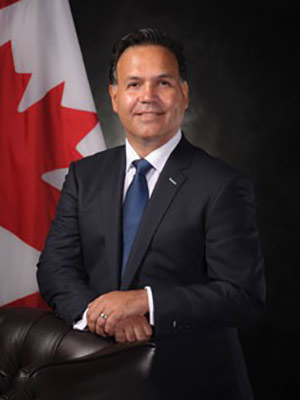
Michael Sousa
Senior Assistant Deputy Minister
The Policy Sector provides comprehensive legal and policy advice, research, program delivery, and international legal technical assistance in support of the justice system.
The Sector is comprised of the following units: the Criminal Law Policy Section; the Family Law and Youth Justice Policy Section; the Programs Branch; the Policy Integration and Coordination Section; the International Development Section; and the Access to Justice Secretariat. The Sector’s main areas of expertise are criminal law (substantive and procedural), victims, federal family law, youth criminal justice, Indigenous justice, international development, and access to justice.
The Policy Sector coordinates both the Department’s policy work and its relationships with policy partners in the federal government and with the provinces and territories, non-governmental organizations in Canada, and international institutions and organizations.
The Sector plays a strategic role in contributing to the policy function across the Department, including through Gender-Based Analysis Plus, foresight, managing priorities and planning, and sustaining the Department’s research capacity by undertaking research and analysis to support evidence-based decisions.
In addition, the Policy Sector has a multidisciplinary team responsible for grants and contributions. Through this, the Department provides funding to community organizations and other levels of government that are working to support a fair, relevant, and accessible justice system.
Public Law and Legislative Services Sector

Nancy Othmer
Assistant Deputy Minister
The Public Law and Legislative Services Sector delivers specialized legal advisory services and policy advice, and plays a fundamental role in developing Canadian legislation and regulations.
The Sector has recognized expertise in human rights law and policy; constitutional, administrative and international law; information and privacy law and policy; official languages law and policy; judicial affairs; international trade and investment law; and legislative and regulatory law.
The Legislative Services Branch drafts bills and regulations in both official languages harmoniously with Canada’s two legal systems. In doing so, it contributes to the general recognition and promotion of bilingualism and bijuralism.
The Secretariat of the Action Committee on Court Operations in Response to COVID-19 is housed in the Sector and supports the work of the Committee and its working group. The Sector also houses the Secretariat for the establishment of an independent Criminal Case Review Commission, which is tasked with the revival of the Law Commission of Canada.
Public Safety, Defence and Immigration Portfolio

Samantha Maislin Dickson
Assistant Deputy Minister
The Public Safety, Defence and Immigration Portfolio provides integrated legal advisory services, litigation support, and drafting support services to the following departments and agencies:
- Public Safety Canada;
- Correctional Service of Canada;
- Parole Board of Canada;
- Royal Canadian Mounted Police (RCMP);
- Canadian Security Intelligence Service;
- Canada Border Services Agency (CBSA);
- Department of National Defence;
- Immigration, Refugees and Citizenship Canada (IRCC); and
- Communications Security Establishment.
It is also responsible for the Department of Justice’s Crimes Against Humanity and War Crimes (CAHWC) Section, which offers legal support to the CAHWC Program partners (CBSA, IRCC and the RCMP) in fulfilling their mandate to deny safe haven in Canada to individuals believed to have committed or been complicit in war crimes, crimes against humanity, or genocide.
The Portfolio also houses the Issues Management and Review Coordination Unit (IMRCU). The mandate of the IMRCU is to support the Portfolio by working on significant and complex issues that require coordination across the Portfolio and/or between Portfolios and Sectors or that require additional capacity. In fulfilling its mandate, the Unit is specifically responsible for ensuring a coordinated Justice approach to national security review. It also acts as the Department’s coordination unit for immigration litigation, supporting the Portfolio and the National Litigation Sector in ensuring nationally consistent legal positions.
The Portfolio’s main areas of expertise include national security law, corrections and conditional release, immigration and refugee law, border law, national defence law, law enforcement, and international criminal law.
Tax Law Services Portfolio

Jade Boucher
Acting Assistant Deputy Minister
The Tax Law Services Portfolio is responsible for the delivery of all litigation and advisory services provided to the Canada Revenue Agency and the management of the law in all areas of tax law. The Portfolio’s experience encompasses areas of practice such as the goods and services tax, income tax, collections, bankruptcy and insolvency, employment insurance, administrative law, and ministerial governance.
The Portfolio provides legal services in coordination with the regional offices of the National Litigation Sector across the country. Its in-depth expertise in tax law and related areas allows the Portfolio to mobilize resources best suited to respond to the evolving legal needs of the Canada Revenue Agency.
Organizational Chart
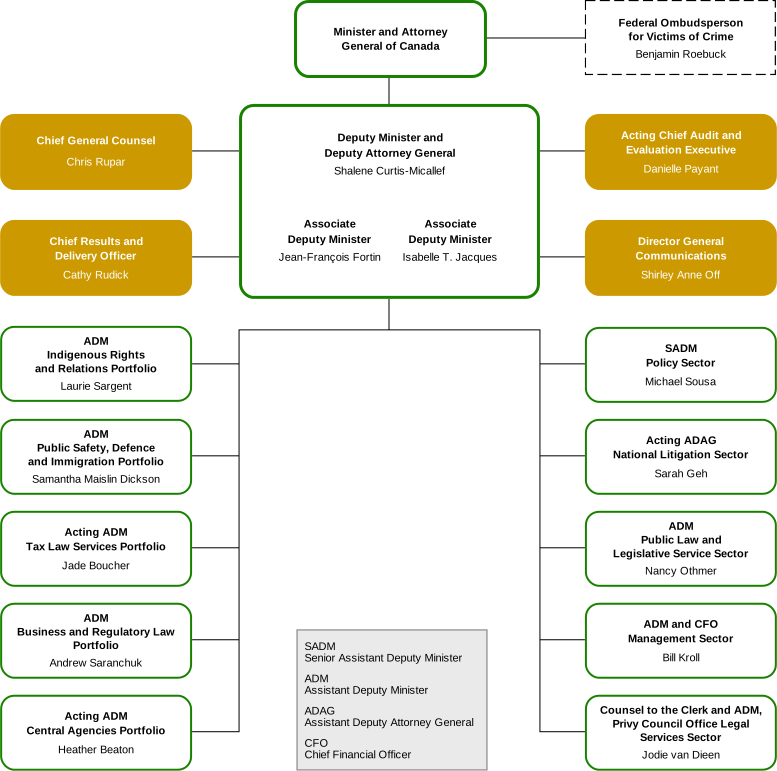
Organizational Chart – Text version
- Minister and Attorney General of Canada
- Federal Ombudsperson for Victims of Crime, Benjamin Roebuck
- Deputy Minister and Deputy Attorney General of Canada, Shalene Curtis-Micallef
- Associate Deputy Minister, Jean-François Fortin
- Associate Deputy Minister, Isabelle T. Jacques
- Chief General Counsel, Chris Rupar
- Chief Results and Delivery Officer, Cathy Rudick
- Acting Chief Audit and Evaluation Executive, Danielle Payant
- Director General, Communications, Shirley Anne Off
- SADM, Policy Sector, Michael Sousa
- ADM, Indigenous Rights and Relations Portfolio, Laurie Sargent
- ADM, Public Safety, Defence and Immigration Portfolio, Samantha Maislin Dickson
- Acting ADM, Tax Law Services Portfolio, Jade Boucher
- ADM, Business and Regulatory Law Portfolio, Andrew Saranchuk
- Acting ADM, Central Agencies Portfolio, Heather Beaton
- Acting ADAG, National Litigation Sector, Sarah Geh
- ADM, Public Law and Legislative Services Sector, Nancy Othmer
- ADM and CFO, Management Sector, Bill Kroll
- Counsel to the Clerk of the Privy Council and ADM, Privy Council Office Legal Services Sector, Jodie van Dieen
- Date modified: