
Courts
Judicial Appointments
The Minister of Justice is responsible for making recommendations to the Governor in Council for the appointment of judges to the provincial and territorial superior courts and courts established federally under section 101 of the Constitution Act, 1867.
Recommendations for appointment of chief justices, associate chief justices, and judges of the Supreme Court of Canada are made by the Prime Minister of Canada. The Minister is supported in this function by the Office of the Commissioner for Federal Judicial Affairs and by the Minister’s Judicial Affairs Advisor.
The section 101 courts are as follows:
- Supreme Court of Canada
- Federal Court of Appeal
- Federal Court
- Tax Court of Canada
- Court Martial Appeal Court of Canada
Supreme Court of Canada
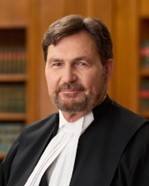
The Right Honourable Richard Wagner, P.C.
Chief Justice of Canada
The Supreme Court of Canada is the country’s final court of appeal, established in the Supreme Court Act. It has jurisdiction for both the civil law of Quebec and the common law and assures uniformity, consistency and correctness in the articulation, development and interpretation of legal principles throughout the Canadian judicial system.
The Court hears cases on appeal from the provincial and territorial courts of appeal, the Federal Court of Appeal, and the Court Martial Appeal Court. In most cases, leave to appeal must be obtained first from a panel of three judges of the Court. In addition, the Governor in Council may refer important questions of law to the Court.
The Supreme Court consists of the Chief Justice of Canada and eight puisne justices appointed by the Governor in Council from among superior court judges or barristers of at least ten years of standing at the bar of a province or territory. The Chief Justice is sworn as a member of the Privy Council of Canada before taking the oath of office as Chief Justice. The Chief Justice is also the chairperson of the Canadian Judicial Council, which is constituted under the Judges Act and comprises all superior court chief justices and associate chief justices.
The current puisne justices are:
- Hon. Andromache Karakatsanis
- Hon. Suzanne Côté
- Hon. Malcolm Rowe
- Hon. Sheilah L. Martin
- Hon. Nicholas Kasirer
- Hon. Mahmud Jamal
- Hon. Michelle O’Bonsawin
- Hon. Mary T. Moreau
Federal Court of Appeal
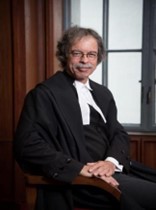
The Honourable Yves de Montigny
Chief Justice
The Federal Court of Appeal is a bijural court that hears civil law and common law cases in both official languages. The national jurisdiction of the Court is intended to ensure that federal legislation is applied uniformly while taking into consideration the private law in the province or territory where the litigation arises.
The Federal Court of Appeal hears appeals from judgments of the Federal Court and the Tax Court of Canada.
In addition, the Federal Court of Appeal hears judicial review applications with respect to federal boards, commissions and tribunals listed in the Federal Courts Act. It also hears appeals pursuant to a variety of other federal legislation.
Under the Federal Courts Act, the Federal Court of Appeal consists of the Chief Justice, 14 puisne judges, and such supernumerary judges as are in office from time to time.
Federal Court
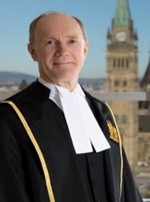
The Honourable Paul Crampton
Chief Justice
Federal Court is a bijural and bilingual trial court with national jurisdiction. Geographically, the Court may sit anywhere in Canada and regularly conducts hearings and renders decisions in disputes across the country. Orders of the Court are binding in every province and territory, thus providing efficient, national coverage. The jurisdiction of the Federal Court is conferred by the Federal Courts Act and, at present, close to 100 other applicable federal statutes.
These give the Court authority to hear and decide cases in a number of broad categories, including jurisdiction to review the actions and decisions of most federal boards, commissions and administrative tribunals; Aboriginal law; maritime and admiralty law; intellectual property; national security; and citizenship, immigration and refugee law. Under the Federal Courts Act, the Federal Court consists of the Chief Justice, the Associate Chief Justice (the Honourable Martine St-Louis), 39 puisne judges, and such supernumerary judges as are in office from time to time.
Tax Court of Canada
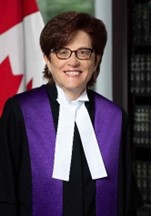
The Honourable Gabrielle St-Hilaire
Chief Justice
The Tax Court of Canada is a superior court that hears appeals to settle disagreements between taxpayers and the Government of Canada on matters arising under legislation over which the Court has exclusive original jurisdiction. It is the first level of appeal for taxpayers and is independent from the Canada Revenue Agency and all other government departments. The bulk of the appeals to the Court relate to income tax, goods and services tax, and employment insurance.
The Court also hears references from the Canada Revenue Agency to provide interpretations of the legislation within its areas of jurisdiction.
The Court is a national court that regularly holds hearings in diverse locations across the country.
Under the Tax Court of Canada Act, the Court consists of a Chief Justice, an Associate Chief Justice (the Honourable Anick Pelletier), 23 puisne judges, and such supernumerary judges as may hold office from time to time.
Court Martial Appeal Court of Canada
The Honourable Mary J. L. Gleason
Chief Justice
The Court Martial Appeal Court of Canada hears appeals from decisions of Courts Martial, which are military courts established under the National Defence Act. The Courts Martial try military personnel and civilians accompanying such personnel abroad for crimes and offences against the Code of Service Discipline. The Code of Service Discipline includes crimes under the Criminal Code, the Controlled Drugs and Substances Act, and other statutes.
The function of the Court is comparable to a civilian court of appellate criminal jurisdiction.
Pursuant to the National Defence Act, the Court Martial Appeal Court comprises at least four Judges of the Federal Court of Appeal or the Federal Court designated by the Governor in Council. The Governor in Council may also appoint to the Court Martial Appeal Court additional judges of a superior court of criminal jurisdiction (i.e., provincial and territorial courts of appeal and superior trial courts).
- Date modified: