Evaluation of the Justice Canada Federal Victims Strategy
Appendix A: Program Profile
Figure 1: Justice Federal Victims Strategy Logic Model
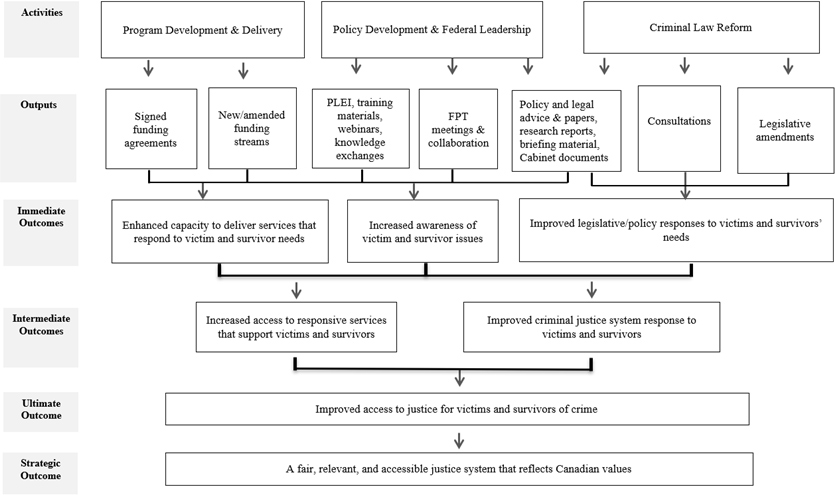
Figure 1: Justice Federal Victims Strategy Logic Model – Text version
Figure 1: Justice Federal Victims Strategy Logic Model
Figure 1 depicts the logic model for the Justice Federal Victims Strategy, which outlines the activities, outputs and outcomes of the Strategy.
The Activities are:
- Program Development and Delivery;
- Policy Development and Federal Leadership;
- Criminal Law Reform.
The Outputs are:
- Signed funding agreements;
- New/amended funding streams;
- PLEI, training materials, webinars, knowledge exchanges;
- FPT meetings and collaboration;
- Policy and legal advice and papers, research reports, briefing material, Cabinet documents;
- Consultations;
- Legislative amendments.
The Immediate Outcomes are:
- Enhanced capacity to deliver services that respond to victim and survivor needs;
- Increased awareness of victim and survivor issues;
- Improved legislative/policy responses to victims and survivors’ needs.
The Intermediate Outcomes are:
- Increased access to responsive services that support victims and survivors;
- Improved criminal justice system response to victims and survivors.
The Ultimate Outcome is: Improved access to justice for victims and survivors of crime.
The Strategic Outcome is: A fair, relevant, and accessible justice system that reflects Canadian values.
| Stakeholders | Description |
|---|---|
| Victims and Survivors of Crime | Victims and survivors of crime are the ultimate beneficiaries of Justice FVS activities. A large part of the policy and program work that is undertaken focuses on supporting those who deliver victim services, victim advocacy organizations, and criminal justice system and allied professionals. A small proportion of the Justice FVS work benefits victims and survivors directly (e.g., funding for Canadians victimized abroad and funding for registered victims and a support person to attend PBC hearings). |
| Federal Departments and Agencies | The Justice FVS is an interdepartmental initiative that includes Correctional Service Canada, the PBC, and the Office of the Director of Public Prosecutions, in addition to Justice Canada. Justice works to ensure that there is a consistent federal approach to victim and survivors of crime issues at the federal level and plays a leadership role in coordinating collaboration between the various federal partners in the FVS.Footnote xv The PCVI is also the Secretariat and Chair of the FPTWG, of which federal partners of the FVS are members as are other departmental officials and representatives with a mandate to respond to victims and survivors of crime (e.g., the RCMP, and the CCJS), as well as the co chair of the Federal WG on Violence and Victimization. |
| PT Governments | Given the shared jurisdiction in responding to the needs of victims and survivors of crime in Canada, FPT collaboration is essential on these issues. PT governments are therefore key partners in the Justice FVS. Justice Canada and PT governments work together on many areas of shared jurisdiction and mutually agreed upon activities to benefit victims and survivors of crime. It is through this collaborative relationship that many of the outcomes – and ultimately, the objective of the Justice FVS – will be achieved. |
| NGOs | NGOs and/or CBOs that provide services to victims and survivors of crime, advocate for changes in the criminal justice system, or raise awareness about the concerns and experiences of victims, are key partners in the Strategy. The Justice FVS works closely with NGOs/CBOs through collaboration in designing and delivering policy initiatives as well as through Victims Fund funding in support of FVS priority areas (e.g., to develop and deliver services to victims and survivors of crime, including family members of MMIWG, children and youth that have experienced abuse, victims of human trafficking, victims with disabilities, and victims of sexual assault). |
- Date modified: