
Pandemic relief funding
Legal aid plans were provided with additional criminal legal aid funding in 2022-23 to address pressures resulting from the COVID-19 pandemic. Funding was provided for both technological and service delivery improvements to help mitigate the impact of the pandemic on criminal legal aid operations. Table 19 provides a detailed inventory of the funded initiatives. Overall, there was a roughly even breakdown in spending between technological and service delivery initiatives. Many jurisdictions used the technological funding to purchase equipment (e.g., laptops, webcams) to support/improve the ability of counsel to participate in remote appearances or to increase their information technology capacities (e.g., hiring an IT manager). Service delivery funds were often spent to expand access to court time, through hiring additional counsel, or creation of expanded hours for bail hearings.
Figure 23. Specialized courts by province/territory and type of legal aid service delivery, 2022-23
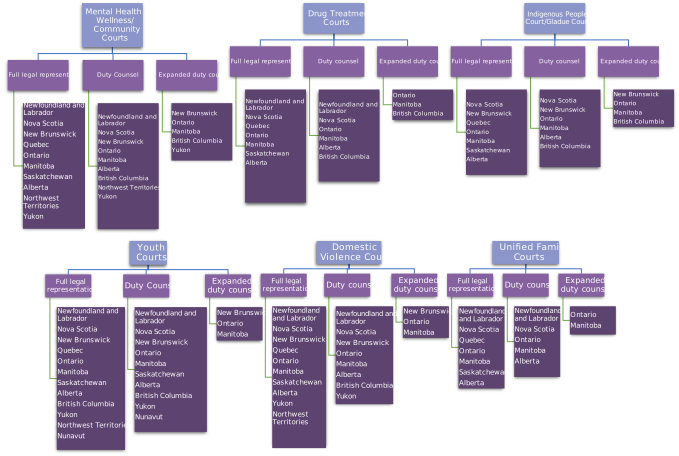
Figure 23. Specialized courts by province/territory and type of legal aid service delivery, 2022-23 – Text version
This is an infographic showing two graphs in the style of organizational charts. The first one has three levels: the top level has three boxes in light purple. The first box says “mental health/wellness community courts”. Below this box are three medium purple boxes. The first one says: “full legal representation”, the second one says “duty counsel”, and the third one says “expanded duty counsel”.
Under the box that says “full legal representation” there is a dark purple box with the following jurisdictions: Newfoundland and Labrador, Nova Scotia, New Brunswick, Quebec, Ontario, Manitoba, Saskatchewan, Alberta, Northwest Territories and Yukon.
Under the box that says “duty counsel” there is a dark purple box with the following jurisdictions: Newfoundland and Labrador, Nova Scotia, New Brunswick, Ontario, Manitoba, Alberta, British Columbia, Northwest Territories and Yukon.
Under the box that says “expanded duty counsel” there is a dark purple box with the following jurisdictions: New Brunswick, Ontario, Manitoba, British Columbia and Yukon.
The second light purple box at the top of the infographic reads “drug treatment courts”. Below this box are three medium purple boxes. The first one reads “full legal representation”. Under this box is a dark purple box listing the following jurisdictions: Newfoundland and Labrador, Nova Scotia, Quebec, Ontario, Manitoba, Saskatchewan, Alberta.
The second medium purple box reads “duty counsel”. Under this box is a dark purple box listing the following jurisdictions: Newfoundland and Labrador, Nova Scotia, Ontario, Manitoba, Alberta, British Columbia.
The third medium purple box reads “expanded duty counsel”. Under this box is a dark purple box listing the following jurisdictions: Ontario, Manitoba, British Columbia.
The last light purple box at the top of the infographic reads “First Nations / Gladue courts”. Below this box are three medium purple boxes. The first one reads “full legal representation”. Under this box is a dark purple box listing the following jurisdictions: Nova Scotia, New Brunswick, Quebec, Ontario, Manitoba, Saskatchewan, Alberta.
The second medium purple box reads “duty counsel”. Under this box is a dark purple box listing the following jurisdictions: Nova Scotia, New Brunswick, Ontario, Manitoba, Alberta, British Columbia.
The third medium purple box reads “expanded duty counsel”. Under this box is a dark purple box listing the following jurisdictions: New Brunswick, Ontario, Manitoba.
The second part of the infographic also has three light purple boxes on top.
The first one is labeled: “youth courts”. Under this box are three medium purple boxes. The first one says “full legal representation”. Under this box is a dark purple box listing the following jurisdictions: Newfoundland and Labrador, Nova Scotia, New Brunswick, Quebec, Ontario, Manitoba, Saskatchewan, Alberta, Yukon, Northwest Territories, Yukon, Nunavut.
The second medium purple box says “duty counsel”. Under this box is a dark purple box listing the following jurisdictions: Newfoundland and Labrador, Nova Scotia, New Brunswick, Ontario, Manitoba, Saskatchewan, Alberta, British Columbia, Yukon, Nunavut.
The third medium purple box says “expanded duty counsel”. Under this box is a dark purple box listing the following jurisdictions: New Brunswick, Ontario, Manitoba.
The second light purple box is labeled: Domestic Violence Courts. Under this box are three medium purple boxes. The first one says “full legal representation”. Under this box is a dark purple box listing the following jurisdictions: Newfoundland and Labrador, Nova Scotia, New Brunswick, Quebec, Ontario, Manitoba, Saskatchewan, Alberta, Yukon, Northwest Territories.
The second medium purple box says “duty counsel”. Under this box is a dark purple box listing the following jurisdictions: Newfoundland and Labrador, Nova Scotia, New Brunswick, Ontario, Manitoba, Alberta, British Columbia, Yukon.
The third medium purple box says “expanded duty counsel”. Under this box is a dark purple box listing the following jurisdictions: New Brunswick, Ontario, Manitoba.
The last light purple box in this infographic is labeled: Unified Family Courts. Under this box are three medium purple boxes. The first one says “full legal representation”. Under this box is a dark purple box listing the following jurisdictions: Newfoundland and Labrador, Nova Scotia, Quebec, Ontario, Manitoba, Saskatchewan, Alberta.
The second medium purple box says “duty counsel”. Under this box is a dark purple box listing the following jurisdictions: Newfoundland and Labrador, Nova Scotia, Ontario, Manitoba, Alberta.
The third medium purple box says “expanded duty counsel”. Under this box is a dark purple box listing the following jurisdictions: Ontario, Manitoba.
Table 1 – Legal aid plan revenues, by type of revenue, annual, 2022-23
| Type of Revenue | ||||||||||||||
|---|---|---|---|---|---|---|---|---|---|---|---|---|---|---|
| Total legal aid plan revenuesFootnote 1 of Table 1 Dollars (%) |
Federal contributions from 2022-23 agreements | P/T contributions to legal aid plansFootnote 4 of Table 1 Dollars (%) |
Client contributions and cost recoveries to legal aid plansFootnote 5 of Table 1 Dollars (%) |
Contributions of the legal profession and interest earned from lawyers’ trust accountsFootnote 6 of Table 1 Dollars (%) |
Other legal aid plan revenues Dollars (%) |
|||||||||
| Criminal (+civil in territories) Dollars (%)Footnote 2 of Table 1 |
I&RFootnote 3 of Table 1 Dollars (%) |
|||||||||||||
| N.L. | 18,648,644 | 100% | 2,612,824 | 14% | 0 | 0% | 14,424,076 | 77% | 49,641 | 0% | 1,465,679 | 8% | 96,424 | 1% |
| P.E.I. | 1,021,585 | 100% | 545,887 | 53% | 475,698 | 47% | 0 | 0% | 0 | 0% | 0 | 0% | ||
| N.S. | 32,843,372 | 100% | 4,987,881 | 15% | 836,000 | 3% | 26,534,219 | 81% | 31,397 | 0% | 0 | 0% | 453,875 | 1% |
| N.B. | 12,719,232 | 100% | 3,107,771 | 24% | 8,358,478 | 66% | 643,969 | 5% | 200,000 | 2% | 409,014 | 3% | ||
| Que. | 180,512,857 | 100% | 31,480,868 | 17% | 8,466,095 | 5% | 134,846,137 | 75% | 3,461,249 | 2% | 0 | 0 % | 2,258,508 | 1% |
| Ont. | 577,745,083 | 100% | 61,190,384 | 11% | 44,224,211 | 8% | 226,214,685 | 39% | 12,919,086 | 2% | 231,786,894 | 40% | 1,409,823 | 0% |
| Man. | 36,889,162 | 100% | 9,430,933 | 26% | 215,000 | 1% | 23,275,038 | 63% | 1,842,196 | 5% | 1,536,484 | 4% | 589,511 | 2% |
| Sask. | 29,664,754 | 100% | 8,734,788 | 29% | 20,501,212 | 69% | 5,575 | 0% | 0 | 0% | 423,179 | 1% | ||
| Alta. | 120,647,765 | 100% | 21,722,708 | 18% | 924,000 | 1% | 87,458,292 | 72% | 4,923,029 | 4% | 2,728,761 | 2% | 2,890,975 | 2% |
| B.C. | 122,446,843 | 100% | 21,189,390 | 17% | 6,780,000 | 6% | 90,777,185 | 74% | 0 | 0% | 2,463,311 | 2% | 1,236,957 | 1% |
| Yuk. | 3,250,533 | 100% | 1,356,163 | 42% | 1,830,518 | 56% | 12,950 | 0% | 902 | 0% | 50,000 | 2% | ||
| N.W.T. | – | – | – | – | – | – | – | – | – | – | – | – | – | – |
| Nvt. | – | – | – | – | – | – | – | – | – | – | – | – | – | – |
| Canada | 1,136,389,830 | 100% | 166,359,597 | 15% | 61,445,306 | 5% | 634,695,538 | 56% | 23,889,092 | 2% | 240,182,031 | 21% | 9,818,266 | 1% |
Table 2a – Legal aid plan expenditures, by type of expenditure, 2022-23
| Total ExpendituresFootnote 1 of Table 2a Dollars (%) |
Legal Services Expenditures (including administrative and other costs) |
|||||||
|---|---|---|---|---|---|---|---|---|
| Criminal matters Dollars (%) |
Civil matters | |||||||
| I&RFootnote 2 of Table 2a Dollars (%) |
All other civil Dollars (%) |
|||||||
| N.L. | 17,547,740 | 100% | 11,314,906 | 64% | 32,357 | 0% | 6,200,477 | 35% |
| P.E.I. | 2,160,414 | 100% | 938,887 | 43% | 1,221,527 | 57% | ||
| N.S. | 32,154,098 | 100% | 19,139,682 | 60% | 836,751 | 3% | 12,177,665 | 38% |
| N.B. | 11,102,326 | 100% | 6,174,267 | 56% | 4,928,059 | 44% | ||
| Que. | 205,121,351 | 100% | 81,299,548 | 40% | 8,466,095 | 4% | 115,355,708 | 56% |
| Ont. | 468,797,356 | 100% | 210,687,608 | 45% | 44,521,388 | 10% | 213,588,360 | 46% |
| Man. | 33,771,458 | 100% | 24,445,837 | 72% | 216,059 | 1% | 9,109,562 | 27% |
| Sask. | 31,635,669 | 100% | 25,151,101 | 80% | 6,484,568 | 20% | ||
| Alta. | 100,065,238 | 100% | 75,813,344 | 76% | 726,143 | 1% | 23,525,751 | 24% |
| B.C. | 96,578,798 | 100% | 57,659,028 | 60% | 7,580,607 | 8% | 31,339,163 | 32% |
| Yuk. | 3,242,688 | 100% | – | – | – | – | ||
| N.W.T. | – | – | – | – | – | – | ||
| Nvt. | – | – | – | – | – | – | ||
| Canada | 1,002,177,136 | 100% | 512,624,208 | 51% | 62,379,400 | 6% | 423,930,840 | 42% |
Table 2b – Total administrative and other costs, 2022-23
| Dollars | |
|---|---|
| N.L. | 2,061,953 |
| P.E.I. | 220,047 |
| N.S. | 2,692,548 |
| N.B. | 1,376,002 |
| Que. | 30,046,372 |
| Ont. | 46,896,921 |
| Man. | 5,448,525 |
| Sask. | 3,624,157 |
| Alta. | 6,893,939 |
| B.C. | 7,034,631 |
| Yuk. | 493,416 |
| N.W.T. | – |
| Nvt. | – |
| Canada | 106,788,511 |
Table 3 – Legal aid applications received, by type of matter, 2022-23
| Total legal aid applicationsFootnote 1 of Table 3 Number (%) |
Criminal legal aid applications | P/T offences Number (%)Footnote 3 of Table 3 |
Civil legal aid applications | |||||||||||
|---|---|---|---|---|---|---|---|---|---|---|---|---|---|---|
| Total criminal applications Number (%) |
Adult | YouthFootnote 2 of Table 3 | Total civil applications (including I&R) Number (%) |
Child ProtectionFootnote 4 of Table 3 | FamilyFootnote 5 of Table 3 | Non-familyFootnote 6 of Table 3 | I&RFootnote 7 of Table 3 | |||||||
| N.L. | 7,234 | 100% | 4,476 | 62% | 4,199 | 277 | 0 | 0% | 2,758 | 38% | 2,691 | – | – | 67 |
| P.E.I. | 1,109 | 100% | 878 | 79% | 807 | 71 | 0 | 0% | 231 | 21% | 26 | 193 | 12 | |
| N.S.Footnote 8 of Table 3 | 38,300 | 100% | 24,114 | 63% | 23,197 | 917 | 459 | 1% | 13,727 | 36% | 1,556 | 10,028 | 2,059 | 84 |
| N.B. | 4,766 | 100% | 2,619 | 55% | 2,449 | 170 | 10 | 0% | 2,137 | 45% | 356 | 1,779 | 2 | |
| Que. | 219,754 | 100% | 87,293 | 40% | 79,393 | 7,900 | 7765 | 4% | 124,696 | 57% | 44,992 | 30,065 | 39,102 | 10,537 |
| Ont. | 120,626 | 100% | 63,212 | 52% | 59,924 | 3,288 | 0 | 0% | 57,414 | 48% | 3,810 | 20,171 | 8,216 | 25,217 |
| Man. | 27,012 | 100% | 18,690 | 69% | 17,215 | 1,475 | 46 | 0% | 8,276 | 31% | 1,762 | 5,545 | 708 | 261 |
| Sask. | 22,007 | 100% | 15,527 | 71% | 13,956 | 1,571 | 0 | 0% | 6,480 | 29% | 911 | 5,569 | 0 | |
| Alta. | 33,116 | 100% | 26,137 | 79% | 25,572 | 565 | 150 | 0% | 6,829 | 21% | 1,303 | 4,888 | 430 | 208 |
| B.C. | 36,638 | 100% | 20,533 | 56% | 19,605 | 928 | 1443 | 4% | 14,662 | 40% | 2,386 | 8,933 | 0 | 3,343 |
| Yuk. | 1,738 | 100% | 1,315 | 76% | 1,256 | 59 | 0 | 0% | 423 | 24% | – | 310 | 113 | |
| N.W.T. | – | – | – | – | – | – | – | – | – | – | – | – | – | |
| Nvt. | – | – | – | – | – | – | – | – | – | – | – | – | – | |
| Canada | 512,300 | 100% | 264,794 | 52% | 247,573 | 17,221 | 9,873 | 2% | 237,633 | 46% | 59,793 | 87,481 | 50,642 | 39,717 |
Table 4 – Legal aid applications approved for full legal representation, by staff and private bar lawyers, annual, 2022-23
| Total approved legal aid applicationsFootnote 1 of Table 4 Number (%) |
Criminal applicationsFootnote 2 of Table 4 | P/T offencesFootnote 5 of Table 4 Number (%) |
Civil applicationsFootnote 3 of Table 4 | |||||||||||
|---|---|---|---|---|---|---|---|---|---|---|---|---|---|---|
| Total approved criminal applications Number (%) |
Adult | YouthFootnote 4 of Table 4 | Total approved civil legal aid applications Number (%) |
Child ProtectionFootnote 6 of Table 4 | FamilyFootnote 7 of Table 4 | Non-FamilyFootnote 8 of Table 4 | I&RFootnote 9 of Table 4 | |||||||
| N.L. | 3,733 | 100% | 2,784 | 75% | 2,535 | 249 | 0 | 0% | 949 | 25% | 909 | 7 | 1 | 32 |
| P.E.I. | 862 | 100% | 767 | 89% | 696 | 71 | 0 | 0% | 95 | 11% | – | – | – | |
| N.S. | 17,004 | 100% | 12,293 | 72% | 11,561 | 732 | 25 | 0% | 4,686 | 28% | 910 | 2,818 | 885 | 73 |
| N.B. | 3,344 | 100% | 2,021 | 61% | 1,863 | 158 | 6 | 0% | 1,317 | 39% | 280 | 1,037 | 0 | |
| Que. | 175,999 | 100% | 70,025 | 40% | 62,434 | 7,591 | 6,175 | 4% | 99,799 | 57% | 42,191 | 19,983 | 27,839 | 9,786 |
| Ont. | 108,733 | 100% | 58,147 | 53% | 54,678 | 3,469 | 0 | 0% | 50,586 | 47% | 3,395 | 15,488 | 8,022 | 23,681 |
| Man. | 31,645 | 100% | 26,071 | 82% | 24,291 | 1,780 | 12 | 0% | 5,562 | 18% | 1,404 | 3,710 | 240 | 208 |
| Sask. | 16,649 | 100% | 12,737 | 77% | 11,212 | 1,525 | 0 | 0% | 3,912 | 23% | 783 | 3,129 | 0 | |
| Alta. | 22,226 | 100% | 19,229 | 87% | 18,743 | 486 | 123 | 1% | 2,874 | 13% | 991 | 1,711 | 43 | 129 |
| B.C. | 28,256 | 100% | 17,319 | 61% | 16,435 | 884 | 1,150 | 4% | 9,787 | 35% | 1,672 | 5,294 | 0 | 2,821 |
| Yuk. | 1,733 | 100% | 1,315 | 76% | 1,256 | 59 | 0 | 0% | 418 | 24% | – | 310 | 108 | |
| N.W.T. | 0 | – | – | – | – | – | – | – | – | – | – | – | – | |
| Nvt. | 0 | – | – | – | – | – | – | – | – | – | – | – | – | |
| CDA | 410,184 | 100% | 222,708 | 54% | 205,704 | 17,004 | 7,491 | 2% | 179,985 | 44% | 52,535 | 53,487 | 37,138 | 36,730 |
Table 5 – Refused legal aid applications, by reason for refusal, all legal aid matters, 2022-23
| Total reasons for refusalFootnote 2 of Table 5 Number (%) |
Reasons for refusalFootnote 1 of Table 5 | |||||||||||
|---|---|---|---|---|---|---|---|---|---|---|---|---|
| Financial eligibilityFootnote 3 of Table 5 Number (%) |
Coverage restrictionsFootnote 4 of Table 5 Number (%) |
Lack of meritFootnote 5 of Table 5 Number (%) |
Non-compliance or abuseFootnote 6 of Table 5 Number (%) |
Other reasons for refusalFootnote 7 of Table 5Footnote 8 of Table 5 Number (%) |
||||||||
| N.L. | 2,759 | 100% | 400 | 14% | 0 | 0% | 350 | 13% | 0 | 0% | 2,009 | 73% |
| P.E.I. | 142 | 100% | 132 | 93% | 0 | 0% | 10 | 7% | 0 | 0% | 0 | 0% |
| N.S. | 1,817 | 100% | 927 | 51% | 308 | 17% | 161 | 9% | 265 | 15% | 156 | 9% |
| N.B. | 486 | 100% | 228 | 47% | 154 | 32% | 7 | 1% | 0 | 0% | 97 | 20% |
| Que. | 39,831 | 100% | 32,921 | 83% | 3,632 | 9% | 783 | 2% | 44 | 0% | 2,451 | 6% |
| Ont. | 8,641 | 100% | 5,119 | 59% | 2,835 | 33% | 431 | 5% | 0 | 0% | 256 | 3% |
| Man. | 8,718 | 100% | 3,785 | 43% | 2,075 | 24% | 1174 | 13% | 74 | 1% | 1,610 | 18% |
| Sask. | 3,164 | 100% | 2,192 | 69% | 599 | 19% | 328 | 10% | 19 | 1% | 26 | 1% |
| Alta. | 10,268 | 100% | 3,908 | 38% | 2459 | 24% | 29 | 0% | 0 | 0% | 3,872 | 38% |
| B.C. | 8,382 | 100% | 1,289 | 15% | 609 | 7% | 0 | 0% | 0 | 0% | 6,484 | 77% |
| Yuk. | 55 | 100% | 51 | 93% | 1 | 2% | 3 | 5% | 0 | 0% | 0 | 0% |
| N.W.T. | – | – | – | – | – | – | – | – | – | – | – | – |
| Nvt. | – | – | – | – | – | – | – | – | – | – | – | – |
| Canada | 8– | 4,263100% | 50,952 | 60% | 12,672 | 15% | 3,276 | 4% | 402 | 0% | 16,961 | 20% |
Table 6 – Refused legal aid applications, by reason for refusal, criminal matters, 2022-23
| Total reasons for refusalFootnote 2 of Table 6 Number (%) |
Reasons for refusalFootnote 1 of Table 6 | |||||||||||
|---|---|---|---|---|---|---|---|---|---|---|---|---|
| Financial eligibilityFootnote 3 of Table 6 Number (%) |
Coverage restrictionsFootnote 4 of Table 6 Number (%) |
Lack of meritFootnote 5 of Table 6 Number (%) |
Non-compliance or abuseFootnote 6 of Table 6 Number (%) |
Other reasons for refusalFootnote 7 of Table 6Footnote 8 of Table 6 Number (%) |
||||||||
| N.L. | 1,261 | 100% | 208 | 16% | 0 | 0% | 47 | 4% | 0 | 0% | 1,006 | 80% |
| P.E.I. | 105 | 100% | 105 | 100% | 0 | 0% | 0 | 0% | 0 | 0% | 0 | 0% |
| N.S. | 596 | 100% | 317 | 53% | 84 | 14% | 30 | 5% | 69 | 12% | 96 | 16% |
| N.B. | 288 | 100% | 99 | 34% | 111 | 39% | 5 | 2% | 0 | 0% | 73 | 25% |
| Que. | 14,753 | 100% | 13,446 | 91% | 564 | 4% | 22 | 0% | 6 | 0% | 715 | 5% |
| Ont. | 4,261 | 100% | 2,024 | 48% | 1,919 | 45% | 205 | 5% | 0 | 0% | 113 | 3% |
| Man. | 5,076 | 100% | 2203 | 43% | 1,360 | 27% | 335 | 7% | 34 | 1% | 1,144 | 23% |
| Sask. | 1,623 | 100% | 1168 | 72% | 405 | 25% | 30 | 2% | 12 | 1% | 8 | 0% |
| Alta. | 6,200 | 100% | 2050 | 33% | 845 | 14% | 15 | 0% | 0 | 0% | 3,290 | 53% |
| B.C. | 3,214 | 100% | 445 | 14% | 291 | 9% | 0 | 0% | 0 | 0% | 2,478 | 77% |
| Yuk. | 43 | 100% | 39 | 91% | 1 | 2% | 3 | 7% | 0 | 0% | 0 | 0% |
| N.W.T. | – | – | – | – | – | – | – | – | – | – | – | – |
| Nvt. | – | – | – | – | – | – | – | – | – | – | – | – |
| Canada | 37,420 | 100% | 22,104 | 59% | 5,580 | 15% | 692 | 2% | 121 | 0% | 8,923 | 24% |
Table 7 – Refused legal aid applications, by reason for refusal, civil matters, 2022-23
| Total refusedFootnote 1 of Table 7Footnote 2 of Table 7 Number (%) |
Financial eligibilityFootnote 3 of Table 7 Number (%) |
Coverage restrictionsFootnote 4 of Table 7 Number (%) |
Lack of meritFootnote 5 of Table 7 Number (%) |
Non-compliance or abuseFootnote 6 of Table 7 Number (%) |
Other reasons for refusalFootnote 7 of Table 7Footnote 8 of Table 7 Number (%) |
||||||||
|---|---|---|---|---|---|---|---|---|---|---|---|---|---|
| N.L. | Other Civil | 1,470 | 100% | 191 | 13% | 0 | 0% | 292 | 20% | 0 | 0% | 987 | 67% |
| I&R | 28 | 100% | 1 | 4% | 0 | 0% | 11 | 39% | 0 | 0% | 16 | 57% | |
| Total | 1,498 | 100% | 192 | 13% | 0 | 0% | 303 | 20% | 0 | 0% | 1,003 | 67% | |
| P.E.I. | Other Civil | 37 | 100% | 27 | 73% | 0 | 0% | 10 | 27% | 0 | 0% | 0 | 0% |
| I&R | |||||||||||||
| Total | 37 | 100% | 27 | 73% | 0 | 0% | 10 | 27% | 0 | 0% | 0 | 0% | |
| N.S. | Other Civil | 1,190 | 100% | 602 | 51% | 216 | 18% | 128 | 11% | 186 | 16% | 58 | 5% |
| I&R | 9 | 100% | 6 | 67% | 0% | 3 | 33% | 0% | 0% | ||||
| Total | 1,199 | 100% | 608 | 51% | 216 | 18% | 131 | 11% | 186 | 16% | 58 | 5% | |
| N.B. | Other Civil | 194 | 100% | 128 | 66% | 41 | 21% | 2 | 1% | 0 | 0% | 23 | 12% |
| I&R | |||||||||||||
| Total | 194 | 100% | 128 | 66% | 41 | 21% | 2 | 1% | 0 | 0% | 23 | 12% | |
| Que. | Other Civil | 22,985 | 100% | 18,049 | 79% | 2,580 | 11% | 726 | 3% | 37 | 0% | 1,593 | 7% |
| I&R | 647 | 100% | 566 | 87% | 16 | 2% | 25 | 4% | 1 | 0% | 39 | 6% | |
| Total | 23,632 | 100% | 18,615 | 79% | 2,596 | 11% | 751 | 3% | 38 | 0% | 1,632 | 7% | |
| Ont. | Other Civil | 3,721 | 100% | 2,732 | 73% | 753 | 20% | 117 | 3% | 0 | 0% | 119 | 3% |
| I&R | 659 | 100% | 363 | 55% | 163 | 25% | 109 | 17% | 0 | 0% | 24 | 4% | |
| Total | 4,380 | 100% | 3,095 | 71% | 916 | 21% | 226 | 5% | 0 | 0% | 143 | 3% | |
| Man. | Other Civil | 3,546 | 100% | 1,548 | 44% | 690 | 19% | 817 | 23% | 40 | 1% | 451 | 13% |
| I&R | 70 | 100% | 27 | 39% | 17 | 24% | 18 | 26% | 0 | 0% | 8 | 11% | |
| Total | 3,616 | 100% | 1,575 | 44% | 707 | 20% | 835 | 23% | 40 | 1% | 459 | 13% | |
| Sask. | Other Civil | 1,541 | 100% | 1,024 | 66% | 194 | 13% | 298 | 19% | 7 | 0% | 18 | 1% |
| I&R | |||||||||||||
| Total | 1,541 | 100% | 1,024 | 66% | 194 | 13% | 298 | 19% | 7 | 0% | 18 | 1% | |
| Alta. | Other Civil | 3,946 | 100% | 1,822 | 46% | 1,584 | 40% | 14 | 0% | 0 | 0% | 526 | 13% |
| I&R | 93 | 100% | 36 | 39% | 30 | 32% | 0 | 0% | 0 | 0% | 27 | 29% | |
| Total | 4,039 | 100% | 1,858 | 46% | 1614 | 40% | 14 | 0% | 0 | 0% | 553 | 14% | |
| B.C. | Other Civil | 4,353 | 100% | 614 | 14% | 180 | 4% | 0 | 0% | 0 | 0% | 3,559 | 82% |
| I&R | 522 | 100% | 180 | 34% | 121 | 23% | 0 | 0% | 0 | 0% | 221 | 42% | |
| Total | 4,875 | 100% | 794 | 16% | 301 | 6% | 0 | 0% | 0 | 0% | 3,780 | 78% | |
| Yuk. | Other Civil | 12 | 100% | 12 | 100% | 0 | 0% | 0 | 0% | 0 | 0% | 0 | 0% |
| I&R | |||||||||||||
| Total | 12 | 100% | 12 | 100% | 0 | 0% | 0 | 0% | 0 | 0% | 0 | 0% | |
| Canada | Other Civil | 42,995 | 100% | 26,749 | 62% | 6,238 | 15% | 2,404 | 6% | 270 | 1% | 7,334 | 17% |
| I&R | 2,028 | 100% | 1,179 | 58% | 347 | 17% | 166 | 8% | 1 | 0% | 335 | 17% | |
| Total | 45,023 | 100% | 27,928 | 62% | 6,585 | 15% | 2,570 | 6% | 271 | 1% | 7,669 | 17% | |
Table 8 – Applications for full legal representation, approved and refused, by self-identified Indigenous population, criminal and civil, and province/territory, 2022-23
| All criminal and civil applicationsFootnote 1 of Table 8 | Criminal legal aid applications | Civil legal aidFootnote 4 of Table 8 applications | ||||||||||||||
|---|---|---|---|---|---|---|---|---|---|---|---|---|---|---|---|---|
| Total received Number (%) |
Total approvedFootnote 2 of Table 8 Number (%) |
Total RefusedFootnote 3 of Table 8 Number (%) |
Total received | Total approved Number (%) |
Total refused Number (%) |
Total received | Total approved Number (%) |
Total refused Number (%) |
||||||||
| N.L. | 642 | 100% | 456 | 71% | 186 | 29% | 578 | 417 | 72% | 161 | 28% | 64 | 39 | 61% | 25 | 39% |
| P.E.I. | 68 | 100% | 64 | 94% | 4 | 6% | 63 | 60 | 95% | 3 | 5% | 5 | 4 | 80% | 1 | 20% |
| N.S. | 2,507 | 62% | 1,458 | 58% | 105 | 4% | 1,865 | 1,121 | 60% | 42 | 2% | 642 | 337 | 52% | 63 | 10% |
| N.B. | 379 | 100% | 339 | 89% | 40 | 11% | 281 | 250 | 89% | 31 | 11% | 98 | 89 | 91% | 9 | 9% |
| Que. | – | – | – | – | – | – | – | – | – | – | – | – | – | – | – | – |
| Ont. | 18,356 | 93% | 17,110 | 93% | 0 | 0% | 14,690 | 13,444 | 92% | 0 | 0% | 3,666 | 3,666 | 100% | 0 | 0% |
| Man. | 14,745 | 91% | 9,573 | 65% | 3,887 | 26% | 11,626 | 7,465 | 64% | 2,772 | 24% | 3,119 | 2,108 | 68% | 1,115 | 36% |
| Sask. | 13,102 | 100% | 11,410 | 87% | 1,692 | 13% | 10,087 | 9,105 | 90% | 982 | 10% | 3,015 | 2,305 | 76% | 710 | 24% |
| Alta. | – | – | – | – | – | – | – | – | – | – | – | – | – | – | – | – |
| B.C. | 7,965 | 100% | 6,374 | 80% | 1,591 | 20% | 5,539 | 4,792 | 87% | 747 | 13% | 2,426 | 1,582 | 65% | 844 | 35% |
| Yuk. | 568 | 100% | 568 | 100% | – | – | – | – | – | – | – | – | – | – | – | – |
| N.W.T. | – | – | – | – | – | – | – | – | – | – | – | – | – | – | – | – |
| Nvt. | – | – | – | – | – | – | – | – | – | – | – | – | – | – | – | – |
| Canada | 58,332 | 94% | 47,352 | 81% | 7,505 | 13% | 44,729 | 36,654 | 82% | 4,738 | 11% | 13,035 | 10,130 | 78% | 2,767 | 21% |
Table 9 – Duty counsel services, by type of matter, 2022-23
| Total duty counsel services Number (%) |
Criminal duty counsel servicesFootnote 1 of Table 9 | Provincial Statute Offences Number (%) |
Civil duty counsel servicesFootnote 2 of Table 9 | |||||||||
|---|---|---|---|---|---|---|---|---|---|---|---|---|
| Total criminal duty counsel services Number (%) |
Adult matters | YouthFootnote 3 of Table 9 matters | Total civil duty counsel services Number (%) |
I&RFootnote 4 of Table 9 | Other civil mattersFootnote 5 of Table 9 | |||||||
| N.L.Footnote P of Table 9 | 12,279 | 100% | 11,714 | 95% | 11,457 | 257 | 0 | 0% | 565 | 5% | 0 | 565 |
| P.E.I. | 703 | – | 703 | 100% | 703 | 0 | 0 | 0% | 0 | 0% | 0 | |
| N.S.Footnote A of Table 9 | 17,822 | 100% | 15,143 | 85% | 14,875 | 268 | 370 | 2% | 2,309 | 13% | 0 | 2,309 |
| N.B.Footnote A of Table 9 | 21,707 | 100% | 19,744 | 91% | 19,100 | 644 | 764 | 4% | 1,199 | 6% | 1,199 | |
| Que. | 18,056 | 100% | 18,056 | 100% | 18,056 | 0 | 0% | 0 | 0% | 0 | 0 | |
| Ont.Footnote A of Table 9 | 993,122 | 100% | 893,221 | 90% | 879,995 | 13,226 | 0 | 0% | 99,901 | 10% | 122 | 99,779 |
| Man.Footnote A of Table 9 | 54,416 | 100% | 50,964 | 94% | 46,768 | 4,196 | 0 | 0% | 3,452 | 6% | 0 | 3,452 |
| Sask.Footnote A of Table 9 | 35,537 | 100% | 34,753 | 98% | 32,637 | 2,116 | 784 | 2% | 0 | 0% | 0 | |
| Alta. | – | – | – | – | – | – | – | – | – | – | – | – |
| B.C.Footnote A of Table 9 | 86,221 | 100% | 63,751 | 74% | 62,454 | 1,297 | 0% | 22,470 | 26% | – | 22,470 | |
| Yuk. | 1,359 | – | 1,331 | 98% | 1,301 | 30 | 3 | 0% | 25 | 2% | 25 | |
| N.W.T.Footnote A of Table 9 | – | – | – | – | – | – | – | – | – | – | – | |
| Nvt. | – | – | – | – | – | – | – | – | – | – | – | |
| Canada | 1,241,222 | 100% | 1,109,380 | 89% | 1,087,346 | 22,034 | 1,921 | 0% | 129,921 | 10% | 122 | 129,799 |
Table 10 – Duty counsel service expenditures, by type of matter, 2022-23
| Total duty counsel servicesFootnote 1 of Table 10 Dollars (%) |
Criminal duty counsel servicesFootnote 2 of Table 10 | Provincial Statute Offences Dollars (%) |
Civil duty counsel servicesFootnote 3 of Table 10 | |||||||||
|---|---|---|---|---|---|---|---|---|---|---|---|---|
| Total criminal duty counsel services Dollars (%) |
Adult matters | YouthFootnote 4 of Table 10 matters | Total civil duty counsel services Dollars (%) |
I&RFootnote 5 of Table 10 | Other civil mattersFootnote 6 of Table 10 | |||||||
| N.L. | 197,220 | 100% | 197,220 | 100% | 196,636 | 584 | – | – | – | – | – | – |
| P.E.I. | 68,093 | – | 68,093 | 100% | 68,093 | – | – | – | – | – | – | |
| N.S. | 3,009,865 | 100% | 2,594,263 | 86% | 2,562,934 | 31,329 | – | – | 415,602 | 14% | – | 415,602 |
| N.B. | 1,685,985 | 100% | 1,495,068 | 89% | 1,490,639 | 4,429 | 4,904 | 0% | 186,013 | 11% | 186,013 | |
| Que. | 1,053,171 | 100% | 1,053,171 | 100% | 1,053,171 | – | – | – | - | 0% | – | – |
| Ont. | 78,269,806 | 100% | 56,062,618 | 72% | 55,120,854 | 941,764 | – | – | 22,207,188 | 28% | 10,536 | 22,196,652 |
| Man. | 3,011,615 | 100% | 2,825,280 | 94% | 2,597,429 | 227,851 | – | – | 186,335 | 6% | – | 186,335 |
| Sask. | 5,789,836 | 100% | 5,775,802 | 100% | 5,553,170 | 222,632 | 7,784 | 0% | 6,250 | 0% | 6,250 | |
| Alta. | 20,038,712 | 100% | 20,038,712 | 100% | 19,401,012 | 637,700 | – | – | – | – | – | – |
| B.C. | 16,173,045 | 100% | 10,690,071 | 66% | 10,214,366 | 475,705 | 693,060 | 4% | 4,789,914 | 30% | 325,926 | 4,463,988 |
| Yuk. | 133,715 | 100% | – | – | – | – | – | – | – | – | – | |
| N.W.T. | – | – | – | – | – | – | – | – | – | – | – | |
| Nvt. | – | – | – | – | – | – | – | – | – | – | – | |
| Canada | 129,431,063 | 100% | 100,800,298 | 78% | 98,258,304 | 2,541,994 | 705,748 | 1% | 27,791,302 | 21% | 336,462 | 27,454,840 |
Table 11 – Appeal applications, approved and refused, for legal aid services, by criminal and civil matters, 2022-23
| Total criminal and civil matters | Criminal matters (adult and youth) | Civil matters (including I&R) | ||||||||||||||||
|---|---|---|---|---|---|---|---|---|---|---|---|---|---|---|---|---|---|---|
| Total Approved and refused appealsFootnote 1 of Table 11 N (%) |
Total Approved appeals N (%) |
Total Refused appeals N (%) |
Approved and refused appeals N (%) |
Approved appeals N (%) |
Refused appeals N (%) |
Approved and refused appeals N (%) |
Approved appeals N (%) |
Refused appeals N (%) |
||||||||||
| N.L. | – | – | – | – | – | – | – | – | – | – | – | – | – | – | – | – | – | – |
| P.E.I. | 2 | 100% | 0 | 0% | 2 | 100% | 2 | 100% | 0 | 0% | 2 | 100% | 0 | 100% | 0 | 100% | 0 | 100% |
| N.S. | 84 | 101% | 67 | 80% | 17 | 20% | 55 | 100% | 46 | 84% | 9 | 16% | 29 | 100% | 21 | 72% | 8 | 28% |
| N.B. | 32 | 102% | 16 | 50% | 16 | 50% | 20 | 100% | 13 | 65% | 7 | 35% | 12 | 100% | 3 | 25% | 9 | 75% |
| Que. | 688 | 100% | 431 | 63% | 257 | 37% | 269 | 100% | 197 | 73% | 72 | 27% | 419 | 100% | 234 | 56% | 185 | 44% |
| Ont. | 10,084 | 100% | 9,872 | 98% | 212 | 2% | 881 | 100% | 771 | 88% | 110 | 12% | 9,203 | 100% | 9,101 | 99% | 102 | 1% |
| Man. | 142 | 100% | 71 | 50% | 71 | 50% | 120 | 100% | 66 | 55% | 54 | 45% | 22 | 100% | 5 | 23% | 17 | 77% |
| Sask. | 4 | 125% | 4 | 100% | 0 | 0% | 3 | 100% | 3 | 100% | 0 | 0% | 1 | 100% | 1 | 100% | 0 | 0% |
| Alta. | – | – | – | – | – | – | – | – | – | – | – | – | – | – | – | – | – | – |
| B.C. | 1,164 | 100% | 654 | 56% | 510 | 44% | 402 | 100% | 117 | 29% | 285 | 71% | 762 | 100% | 537 | 70% | 225 | 30% |
| Yuk. | 9 | 106% | 5 | 56% | 4 | 44% | 9 | 100% | 5 | 56% | 4 | 44% | 0 | 100% | 0 | 100% | 0 | 100% |
| N.W.T. | – | – | – | – | – | – | – | – | – | – | – | – | – | – | – | – | – | – |
| Nvt. | – | – | – | – | – | – | – | – | – | – | – | – | – | – | – | – | – | – |
| Canada | 12,209 | 100% | 11,120 | 91% | 1,089 | 9% | 1,761 | 100% | 1,218 | 69% | 543 | 31% | 10,448 | 100% | 9,902 | 95% | 546 | 5% |
Table 12 – Legal aid clients, by age, gender, and type of matter, Canada, 2022-23
| Type of matter | Total Number % |
|||||||||
|---|---|---|---|---|---|---|---|---|---|---|
| Criminal Number % |
I&RFootnote 1 of Table 12 Number % |
Civil Number % |
Criminal and Civil (combined)Footnote 2 of Table 12 Number % |
|||||||
| Male 17 and under | 10,214 | 7% | 207 | 1% | 15,715 | 30% | 856 | 4% | 26,992 | 11% |
| Male 18-34 | 65,738 | 44% | 12,995 | 55% | 10,900 | 21% | 8,712 | 41% | 98,345 | 40% |
| Male 35-49 | 50,942 | 34% | 8,263 | 35% | 14,595 | 28% | 8,555 | 40% | 82,355 | 33% |
| Male 50+ | 21,974 | 15% | 2,238 | 9% | 10,961 | 21% | 3,055 | 14% | 38,228 | 16% |
| Total Males | 148,868 | 100% | 23,703 | 100% | 52,171 | 100% | 21,178 | 100% | 245,920 | 100% |
| Female 17 and under | 3,248 | 8% | 183 | 2% | 16,642 | 19% | 630 | 5% | 20,703 | 13% |
| Female 18-34 | 20,322 | 47% | 5,550 | 49% | 31,045 | 35% | 5,067 | 42% | 61,984 | 40% |
| Female 35-49 | 14,708 | 34% | 3,984 | 35% | 28,651 | 32% | 5,317 | 44% | 52,660 | 34% |
| Female 50+ | 4,625 | 11% | 1,691 | 15% | 12,696 | 14% | 1,076 | 9% | 20,088 | 13% |
| Total Females | 42,903 | 100% | 11,408 | 100% | 89,034 | 100% | 12,090 | 100% | 155,435 | 100% |
| Other 17 and under | 163 | 10% | * | 0% | 140 | 8% | 92 | 62% | 396 | 11% |
| Other 18-34 | 637 | 40% | 131 | 64% | 661 | 39% | 34 | 23% | 1,463 | 41% |
| Other 35-49 | 443 | 28% | 58 | 28% | 314 | 19% | 19 | 13% | 834 | 23% |
| Other 50+ | 336 | 21% | 15 | 7% | 563 | 34% | * | 3% | 918 | 25% |
| Total OtherFootnote 3 of Table 12 | 1,579 | 100% | 205 | 100% | 1,678 | 100% | 149 | 100% | 3,611 | 100% |
| Total 17 and under | 13,625 | 7% | 391 | 1% | 32,497 | 23% | 1,578 | 5% | 48,091 | 12% |
| Total 18-34 | 86,697 | 45% | 18,676 | 53% | 42,606 | 30% | 13,813 | 41% | 161,792 | 40% |
| Total 35-49 | 66,093 | 34% | 12,305 | 35% | 43,560 | 30% | 13,891 | 42% | 135,849 | 34% |
| Total 50+ | 26,935 | 14% | 3,944 | 11% | 24,220 | 17% | 4,135 | 12% | 59,234 | 15% |
| Canada | 193,350 | 100% | 35,316 | 100% | 142,883 | 100% | 33,417 | 100% | 404,966 | 100% |
Table 13 – Indigenous legal aid clients receiving full legal representation and summary services, by gender and type of matter, 2022-23
| Total criminal and civilFootnote 1 of Table 13 Number (%) |
Criminal | CivilFootnote 3 of Table 13 | |||||||||||||||
|---|---|---|---|---|---|---|---|---|---|---|---|---|---|---|---|---|---|
| Total criminal adult Number (%) |
Adult | YouthFootnote 2 of Table 13 | Total criminal youth Number (%) |
||||||||||||||
| Male | Female | Other | Male | Female | Other | Male | Female | Other | Total civil Number (%) |
||||||||
| N.L. | 642 | 100% | 571 | 2% | 440 | 131 | 0 | 6 | * | 0 | 7 | 0% | 26 | 38 | 0 | 64 | 1% |
| N.B. | 603 | 100% | 384 | 1% | 280 | 104 | 0 | 34 | * | 0 | 38 | 2% | 50 | 131 | 0 | 181 | 2% |
| N.S. | 1681 | 100% | 1214 | 4% | 863 | 342 | 9 | 61 | 16 | 0 | 77 | 3% | 108 | 280 | * | 390 | 4% |
| Ont. | 17,110 | 100% | 12,751 | 38% | 9,395 | 3,265 | 91 | 448 | 241 | * | 693 | 28% | 1,279 | 2,315 | 72 | 3,666 | 36% |
| Man. | 9,583 | 100% | 6,981 | 21% | 5,287 | 1,653 | 41 | 368 | 121 | 5 | 494 | 20% | 702 | 1,395 | 11 | 2,108 | 21% |
| Sask. | 10,943 | 100% | 7,735 | 23% | 5,576 | 1,815 | 344 | 628 | 231 | 44 | 903 | 37% | 547 | 1,636 | 122 | 2,305 | 23% |
| B.C. | 5,958 | 100% | 4,257 | 13% | 3,174 | 1,079 | * | 177 | 68 | 0 | 245 | 10% | 427 | 1,028 | * | 1,456 | 14% |
| Yuk. | 568 | 100% | – | – | – | – | – | – | – | – | – | – | – | – | – | – | – |
| Canada | 47,088 | 100% | 33,893 | 72% | 25,015 | 8,389 | 489 | 1,722 | 682 | 53 | 2,457 | 100% | 3,139 | 6,823 | 208 | 10,170 | 100% |
Table 14 – Criminal legal aid cases by type of offence and in-year expenditures, adults, Canada, 2022-23
| List of OffencesFootnote 1 of Table 14 and Appeals | Total casesFootnote 2 of Table 14 Number (%) |
Total in-year expenditures (fees and disbursements) Dollars (%) |
||
|---|---|---|---|---|
| Homicide | 2,172 | 1% | 42,127,056 | 13% |
| Sexual Assault | 9,496 | 4% | 26,176,753 | 8% |
| Robbery | 6,826 | 3% | 14,160,230 | 4% |
| Kidnapping | 1,563 | 1% | 3,710,644 | 1% |
| Arson | 838 | 0% | 1,316,772 | 0% |
| Narcotics | 16,623 | 7% | 27,157,587 | 8% |
| Theft, Break and Enter, Possession of Stolen Property | 40,268 | 17% | 40,346,731 | 12% |
| Impaired Driving | 6,470 | 3% | 7,060,763 | 2% |
| Other Driving Offences | 2,636 | 1% | 3,404,894 | 1% |
| Assault | 49,986 | 22% | 54,019,767 | 17% |
| Breach of Probation | 21,954 | 10% | 13,124,249 | 4% |
| Administration of Justice | 11,312 | 5% | 15,889,534 | 5% |
| Proceedings under Part XX.1 Criminal Code (Mental Disorder) | 499 | 0% | 671,353 | 0% |
| Proceedings under the Extradition Act | 3 | 0% | 36,974 | 0% |
| Other OffencesFootnote 3 of Table 14 | 59,018 | 26% | 74,899,744 | 23% |
| Subtotal – Offences | 229,664 | 100% | 324,707,745 | 99% |
| Appeals:Footnote 4 of Table 14 | ||||
| a. Crown | 95 | 0% | 944,084 | 0% |
| b. Eligible Person Requested | 312 | 0% | 1,373,409 | 0% |
| c. Proceedings under Part XX.1 Criminal Code (Mental Disorder) | 2 | 0% | 257 | 0% |
| d. Proceedings under the Extradition Act | 1 | 0% | 33,296 | 0% |
| Subtotal – Appeals | 410 | 0% | 2,351,046 | 1% |
| Total – Criminal Legal Aid | 230,074 | 100% | 327,058,791 | 100% |
Table 15 – Criminal legal aid cases by type of offence and in-year expenditures, youth, Canada, 2022-23
| List of OffencesFootnote 1 of Table 15 and Appeals | Total volume of casesFootnote 2 of Table 15 Number (%) |
Total in-year expenditures (fees and disbursements) Dollars (%) |
||
|---|---|---|---|---|
| Homicide | 144 | 1% | 1,832,396 | 8% |
| Sexual Assault | 1,946 | 10% | 3,210,053 | 14% |
| Robbery | 1,357 | 7% | 1,684,066 | 7% |
| Kidnapping | 69 | 0% | 136,208 | 1% |
| Arson | 109 | 1% | 109,007 | 0% |
| Narcotics | 518 | 3% | 1,179,882 | 5% |
| Theft, Break and Enter, Possession of Stolen Property | 2,165 | 11% | 2,166,173 | 9% |
| Impaired Driving | 137 | 1% | 216,470 | 1% |
| Other Driving Offences | 106 | 1% | 176,603 | 1% |
| Assault | 5,707 | 29% | 5,454,349 | 23% |
| Breach of Probation | 632 | 3% | 339,186 | 1% |
| Administration of Justice | 450 | 2% | 962,600 | 4% |
| Proceedings under Part XX.1 Criminal Code (Mental Disorder) | 4 | 0% | 3,662 | 0% |
| Proceedings under the Extradition Act | 0 | 0% | 0 | 0% |
| Other OffencesFootnote 3 of Table 15 | 6,073 | 31% | 6,115,060 | 26% |
| Subtotal – Offences | 19,417 | 100% | 23,748,545 | 100% |
| Appeals: | ||||
| a. Crown | 3 | 0% | 9,249 | 0% |
| b. Eligible Person Requested | 2 | 0% | 20,290 | 0% |
| c. Proceedings under Part XX.1 Criminal Code (Mental Disorder) | 0 | 0% | 0 | 0% |
| d. Proceedings under the Extradition Act | 0 | 0% | 0 | 0% |
| Subtotal – Appeals | 5 | 0% | 29,539 | 0% |
| Total – Criminal Legal Aid – Youth | 19,422 | 100% | 23,778,084 | 100% |
Table 16 – Immigration and refugee legal aid certificates and expenditures, by province and type of lawyer, 2022-23
| CertificatesFootnote 1 of Table 16 issued in the fiscal year Number (%) |
Expenditures for certificates issued in the fiscal year Dollars | Certificates carried over from previous fiscal year Number (%) |
Expenditures for certificates issued in a previous fiscal year Dollars |
Total number of certificates (previous and current fiscal year) Number (%) |
Total expenditures Dollars (%) |
|||||
|---|---|---|---|---|---|---|---|---|---|---|
| Alberta | ||||||||||
| Private Bar | 195 | 58% | 170,318 | 60 | 55% | 58,532 | 255 | 57% | 228,850 | 34% |
| Staff Lawyer | 140 | 42% | 128,251 | 49 | 45% | 319,026 | 189 | 43% | 447,277 | 66% |
| Specialized Clinics | – | – | – | – | – | – | – | – | – | – |
| Totals | 335 | 100% | 298,569 | 109 | 100% | 377,558 | 444 | 100% | 676,127 | 100% |
| British Columbia | ||||||||||
| Private Bar | 2,251 | 100% | 3,856,934 | 1,319 | 100% | 2,636,284 | 3,570 | 100% | 6,493,218 | 100% |
| Staff Lawyer | 0 | 0% | 0 | 0 | 0% | 0 | 0 | 0% | 0 | 0% |
| Specialized Clinics | 0 | 0% | 0 | 0 | 0% | 0 | 0 | 0% | 0 | 0% |
| Totals | 2,251 | 100% | 3,856,934 | 1,319 | 100% | 2,636,284 | 3,570 | 100% | 6,493,218 | 100% |
| Manitoba | ||||||||||
| Private Bar | 148 | 71% | 54,338 | 36 | 55% | 33,917 | 184 | 67% | 88,255 | 50% |
| Staff Lawyer | 60 | 29% | 14,970 | 30 | 45% | 74,694 | 90 | 33% | 89,664 | 50% |
| Specialized Clinics | 0 | 0% | 0 | 0 | 0% | 0 | 0 | 0% | 0 | 0% |
| Totals | 208 | 100% | 69,308 | 66 | 100% | 108,611 | 274 | 100% | 177,919 | 100% |
| Nova Scotia | ||||||||||
| Private Bar | 21 | 66% | 44,315 | – | – | – | 21 | 8% | 44,315 | 5% |
| Staff Lawyer | – | 0% | – | – | – | – | 0 | 0% | 0 | 0% |
| Specialized Clinics | 73 | 78% | 792,436 | 164 | 100% | – | 237 | 92% | 792,436 | 95% |
| Totals | 94 | 100% | 836,751 | 164 | 100% | 0 | 258 | 100% | 836,751 | 100% |
| Newfoundland and Labrador | ||||||||||
| Private Bar | – | 0% | – | – | – | – | 0 | 0% | 0 | 0% |
| Staff Lawyer | 32 | 100% | – | – | – | 28,552 | 32 | 100% | 28,552 | 100% |
| Specialized Clinics | – | 0% | – | – | – | – | 0 | 0% | 0 | 0% |
| Totals | 32 | 100% | 0 | 0 | 0% | 28,552 | 32 | 100% | 28,552 | 100% |
| Ontario | ||||||||||
| Private Bar | 23,683 | 71% | 11,686,766 | 0 | 0% | 15,742,093 | 23,683 | 71% | 27,428,859 | 69% |
| Staff Lawyer | 1,782 | 5% | 4,677,015 | 0 | 0% | 0 | 1,782 | 5% | 4,677,015 | 12% |
| Specialized Clinics | 8,062 | 24% | 7,465,238 | 0 | 0% | 0 | 8,062 | 24% | 7,465,238 | 19% |
| Totals | 33,527 | 100% | 23,829,019 | 0 | 0% | 15,742,093 | 33,527 | 100% | 39,571,112 | 100% |
| Quebec | ||||||||||
| Private Bar | 8,343 | 85% | 1,099,121 | 2,813 | 100% | 2,851,358 | 11,156 | 89% | 3,950,479 | 49% |
| Staff Lawyer | 32 | 0% | 68,853 | – | – | – | 32 | 0% | 68,853 | 1% |
| Specialized Clinics | 1,411 | 14% | 4,074,755 | 0 | 0% | 0 | 1,411 | 11% | 4,074,755 | 50% |
| Totals | 9,786 | 100% | 5,242,729 | 2,813 | 100% | 2,851,358 | 12,599 | 100% | 8,094,087 | 100% |
| Canada | ||||||||||
| Private Bar | 34,641 | 75% | 16,911,792 | 4,228 | 98% | 21,322,184 | 38,869 | 77% | 38,233,976 | 68% |
| Staff Lawyer | 2,046 | 4% | 4,889,089 | 79 | 2% | 422,272 | 2,125 | 4% | 5,311,361 | 10% |
| Specialized Clinics | 9,546 | 21% | 12,332,429 | 0 | 0% | 0 | 9,710 | 19% | 12,332,429 | 22% |
| Totals | 46,233 | 100% | 34,133,310 | 4,307 | 100% | 21,744,456 | 50,540 | 100% | 55,877,766 | 100% |
Table 17 – Legal aid service delivery by private bar, staff, and other lawyers, 2022-23
| Total lawyers providing legal aid services Number (%) |
Type of lawyer providing legal aid services | |||||||||||||||||||
|---|---|---|---|---|---|---|---|---|---|---|---|---|---|---|---|---|---|---|---|---|
| Private bar lawyersFootnote 1 of Table 17 | Staff lawyersFootnote 2 of Table 17 | Other lawyers (e.g., Executive Director)Footnote 3 of Table 17 | ||||||||||||||||||
| Criminal | I&RFootnote 4 of Table 17 | Other Civil | Criminal and Civil | Total Number (%) |
Criminal | I&R | Other Civil | Criminal and Civil | Total Number (%) |
Criminal | I&R | Other Civil | Criminal and Civil | Total Number (%) |
||||||
| N.L. | 87 | 100% | 0 | 0 | 0 | 13 | 13 | 15% | 0 | 0 | 0 | 70 | 70 | 80% | 0 | 0 | 0 | 4 | 4 | 5% |
| P.E.I. | 29 | 100% | 8 | 6 | 6 | 20 | 69% | 3 | 4 | 1 | 8 | 28% | 0 | 0 | 1 | 1 | 3% | |||
| N.S. | 326 | 100% | 0 | 0 | 0 | 216 | 216 | 66% | 0 | 3 | 0 | 103 | 106 | 1% | 0 | 1 | 0 | 3 | 4 | 0% |
| N.B. | 146 | 100% | 30 | 46 | 31 | 107 | 73% | 24 | 12 | 0 | 36 | 25% | 1 | 1 | 1 | 3 | 2% | |||
| Que. | 2,212 | 100% | – | – | – | 1,752 | 1,752 | 79% | – | – | – | 392 | 392 | 18% | – | – | – | 68 | 68 | 3% |
| Ont. | 3,352 | 100% | 1,225 | 280 | 958 | 480 | 2,943 | 88% | 155 | 21 | 65 | 142 | 383 | 11% | 0 | 0 | 0 | 26 | 26 | 1% |
| Man. | 344 | 100% | 0 | 0 | 0 | 286 | 286 | 83% | 23 | 0 | 17 | 12 | 52 | 15% | 0 | 0 | 0 | 6 | 6 | 2% |
| Sask. | 212 | 100% | 0 | 0 | 118 | 118 | 56% | 0 | 0 | 83 | 83 | 39% | 0 | 0 | 11 | 11 | 5% | |||
| Alta. | 2,709 | 100% | 702 | 325 | 1,567 | 0 | 2,594 | 96% | 0 | 0 | 0 | 115 | 115 | 2% | 0 | 0 | 0 | 0 | 0 | 0% |
| B.C. | 1,091 | 100% | 438 | 75 | 384 | 159 | 1,056 | 97% | 4 | 1 | 24 | 3 | 32 | 3% | 0 | 0 | 0 | 3 | 3 | 0% |
| Yuk. | 25 | 100% | 14 | 0 | 0 | 14 | 56% | 0 | 0 | 10 | 10 | 40% | 0 | 0 | 1 | 1 | 4% | |||
| N.W.T. | – | – | – | – | – | – | – | – | – | – | – | – | – | – | – | – | – | |||
| Nvt. | – | – | – | – | – | – | – | – | – | – | – | – | – | – | – | – | ||||
| Canada | 10,533 | 100% | 2,417 | 680 | 2,961 | 3,061 | 9,119 | 87% | 209 | 25 | 122 | 931 | 1,287 | 12% | 1 | 1 | 1 | 124 | 127 | 1% |
Table 18 – Legal aid plan personnel as of March 31, 2023
| Total legal aid plan personnel N (%) |
Lawyers providing legal aid | Non-lawyers | |||||||||||||
|---|---|---|---|---|---|---|---|---|---|---|---|---|---|---|---|
| Total lawyers N (%) |
Private bar lawyersFootnote 1 of Table 18 | Staff lawyersFootnote 2 of Table 18 | Other lawyersFootnote 3 of Table 18 | Total non-lawyers N (%) |
Intake workerFootnote 4 of Table 18 | Support StaffFootnote 5 of Table 18 | Para-legalFootnote 6 of Table 18 | Legal assistantFootnote 7 of Table 18 | Articling studentFootnote 8 of Table 18 | OtherFootnote 9 of Table 18 | |||||
| N.L. | 158 | 100% | 87 | 55% | 13 | 70 | 4 | 71 | 45% | 13 | 18 | 3 | 27 | 9 | 1 |
| P.E.I. | 36 | 100% | 29 | 81% | 20 | 8 | 1 | 7 | 19% | 0 | 7 | 0 | 0 | 0 | 0 |
| N.S. | 418.2 | 100% | 326 | 78% | 216 | 106 | 4 | 92.2 | 22% | 0 | 12 | 3 | 73.2 | 2 | 2 |
| N.B. | 190 | 100% | 146 | 77% | 107 | 36 | 3 | 44 | 23% | 14 | 8 | 0 | 8 | 0 | 14 |
| Que. | 2,803 | 100% | 2,212 | 79% | 1,752 | 392 | 68 | 591 | 21% | 73 | 475 | 0 | 26 | 17 | 0 |
| Ont. | 4,028 | 100% | 3,352 | 83% | 2,943 | 383 | 26 | 676 | 17% | 121 | 537 | 15 | 3 | 0 | 0 |
| Man. | 444 | 100% | 344 | 77% | 286 | 52 | 6 | 100 | 23% | 22 | 24 | 5 | 35 | 13 | 1 |
| Sask. | 303 | 100% | 212 | 70% | 118 | 83 | 11 | 91 | 30% | 7 | 64 | 0 | 9 | 2 | 9 |
| Alta. | 2,892 | 100% | 2,709 | 94% | 2,594 | 115 | 0 | 183 | 6% | 73 | 56 | 0 | 51 | 3 | 0 |
| B.C. | 1,261 | 100% | 1,091 | 87% | 1,056 | 32 | 3 | 170 | 13% | 37 | 123 | 10 | 0 | 0 | 0 |
| Yuk. | 0 | 0% | 0 | 0% | – | – | – | 0 | 0% | – | – | – | – | – | – |
| N.W.T. | – | – | – | – | – | – | – | – | – | – | – | – | – | – | – |
| Nvt. | – | – | – | – | – | – | – | – | – | – | – | – | – | – | – |
| Canada | 12,533 | 100% | 10,508 | 84% | 9,105 | 1,277 | 126 | 2,025 | 16% | 360 | 1,324 | 36 | 232.2 | 46 | 27 |
Table 19 – Criminal legal aid funding for innovations, 2022-23
| Name of Innovation / Initiative(s) | Objective | Timeline | Beneficiary | Expected Outcome |
|---|---|---|---|---|
| Newfoundland and Labrador – Technological | ||||
| Laptops to support remote work | Building on the success with upgrading laptops for solicitors in the previous year, during 2022-23 all support staff were migrated from desktops to laptops. | 2022-23 Permanent |
Support staff | Enhanced ability of support staff to work remotely, reducing absenteeism and minimizing interruptions to administrative services and supports. |
| Modernize IT Infrastructure | Investments towards faster internet services, modern telephone system, and new equipment to support virtual conferences and meetings. | 2022-23 Permanent |
All staff | Greater employee participation and higher productivity. |
| Virtual Training and Development | More training and development programs delivered virtually and made available permanently on the intranet for future reference. | 2022-23 Permanent |
All staff | Enhanced learning and development environment. |
| Newfoundland and Labrador – Service delivery | ||||
| Online applications and virtual risk assessments | Online application portal and technology to facilitate virtual risk assessments was rolled out to all Legal Aid offices across the province. | 2022-23 Permanent |
Clients and Staff Lawyers | Faster application processing timelines for clients. Reduced travel time and costs for Legal Aid staff. |
| Nova Scotia – Technological | ||||
| Laptops for Lawyers | To upgrade hardware for lawyers. | 3 months Permanent | Lawyers/clients | Providing laptops has created a better remote work-life balance and enabled support staff to participate in required teams/web meetings. Upgraded computer equipment created efficiencies for lawyers. |
| Nova Scotia – Service delivery | ||||
| Lawyers to ease Jordan delay and backlog | Additional duty counsel lawyer to reduce backlog and ease Jordan delay. | 2022-23 Temporary | Justice system, clients and Nova Scotia Legal Aid (NSLA) staff. | Reduction in pressure on staff lawyers and ensured clients received representation in a timely manner. That also assisted the justice system overall. |
| Increased criminal certificates issued to private lawyers to deal with Covid backlogs in courts | To assist with backlogs where staff lawyers were at max capacity. | 2022-23 Temporary | Justice system and clients | Reduction in pressure on staff lawyers and ensured clients received representation as matters proceeded. That also assisted the justice system overall. |
| Increased per diem duty counsel coverage | Additional duty counsel lawyer to reduce backlog and ease Jordan delay. | 2022-23 Temporary | Justice system, clients and NSLA staff | Reduction in pressure on staff lawyers and ensured clients received representation in a timely manner. That also assisted the justice system overall. |
| Virtual professional development, including annual general meeting | To ensure staff received appropriate professional development in order to satisfy bar requirements and maintain high level of competency. | 2022-23 Temporary and permanent |
Staff were able to receive the necessary training. | Staff received training safely. |
| New Brunswick – Service delivery | ||||
| Private bar criminal certificate | To meet the increased number of certificates. | 2022-23 Permanent | Clients | Consistency in service delivery. |
| Criminal contact lawyer | To cover staff shortages (sick leaves and vacancies). | 2022-23 Permanent | ||
| Prince Edward Island – Technological | ||||
| Cell phones, cases, and additional laptop for staff lawyers.Technological | To ensure each criminal legal aid staff lawyer has the capacity to work outside the office setting, facilitating communication with clients, and courts as required. | Permanent | Lawyers, clients, and the criminal justice system generally. | Improved communication facilitating more efficient operation of the courts and the justice system, including probation services and the corrections system. |
| Prince Edward Island – Service delivery | ||||
| Additional lawyer positions and administrative staffing to increase operational capacity and engaging the assistance of the private bar. | To deal with increased complexity of criminal law cases due to significant backlogs, social stressors, lack of correctional capacity, prior significant adjournments causing delays particularly in Provincial Courts. | Permanent | All participants in the criminal justice system including offenders, corrections, police, probation services, victims, and support workers. | Fewer delays, more efficient processing of cases through the justice system, decreased incarcerations, lower costs, less stress on justice participants at every level. Improved long term efficiency through development and participation in new court technology including court appearances via phone and video. |
| Quebec – Technological | ||||
| Programme eMAJ | Digital transformation of the legal aid network | 2025-03-31 (4 year investment) |
Clients and staff and private bar lawyers. | Service improvements. |
| Acquisition of computer hardware | Upgrading of equipment and staff mobility | 2023-03-31 Permanent | Staff and clients. | |
| Quebec – Service delivery | ||||
| Itinerant court (Grand Nord) | Legal representation services. | 2023-03-31 Permanent | Indigenous clients. | Service improvements. |
| Virtual appearances on weekends and holidays | Reduce court delays. | 2023-03-31 Permanent | Clients. | |
| Projet Centaure | Gun control. | 2023-03-31 Permanent | Citizens. | Fighting gun violence. |
| Ontario – Technological | ||||
| Service Integration (SI) – Duty Counsel (DC) Worksheets | Deploy and continue to improve online worksheet to capture client information to improve client services and record-keeping, ensure continuity of client files, and improve data collection and reporting to better understand client needs and services delivered. Obtain better data and understanding of issues related to bail and delays in criminal Courts. | Permanent | Clients: improved services and record-keeping. Justice system partners: more accurate records; reduced appearances; more accurate reports resulting in better allocation of scarce resources. | Have system available at all court sites. Have all duty counsel services recorded through the system. |
| Remote appearances, disclosure review and summary legal advice | LAO adapted to remote services due to the pandemic and to ensure clients could have access to legal advice remotely; developed processes and invested in technology to ensure staff had access to equipment and software necessary to assist clients. | Permanent | Clients: improved services and record-keeping. Access to legal advice and counsel for remote and hybrid court hearings. Justice system partners: more accurate records; reduced appearances; more accurate reports resulting in better allocation of scarce resources. | Ensure that the most vulnerable clients have access to services during and following the pandemic. Assist the courts by ensuring that bail supports are available, and that duty counsel continue to assist eligible clients with disclosure reviews, pre-trials and resolutions. |
| Dedicated phone lines for Summary Legal Advice – Criminal and Family (SLAC and SLAF) | Through the use of these phone lines, LAO offered more summary legal advice in family and criminal law matters, temporarily waiving financial eligibility testing requirement. | Permanent | Clients: Increased access to legal advice. | LAO aimed to ensure clients had easy access to legal advice during the pandemic. |
| Return to in-person services (Hybrid) | LAO conducted site surveys to ensure compliance with health and safety protocols and public health safety requirements for staff and clients attending court locations. In addition to these assessments, LAO updated equipment and wireless infrastructure. | On-going Permanent | Clients: Improved access to service; Justice system partners: reduced and more meaningful appearances. | Provide safe and reliable access to legal advice to promote access to justice and facilitate court appearances. |
| Improvements to LAO’s client portal | LAO introduced the ability for clients to apply for Legal Aid online in May of 2021. Ongoing improvements to client portal, which allows potential clients to apply for legal aid certificates online. | Ongoing Permanent | Clients: Easier access to apply for Legal Aid; Justice system partners: reduction in administrative appearances for legal aid applications. | Increase access points and simplify the application process for clients. |
| Lawyer portal changes – outcome reporting | To improve data collection on all certificate matters, including bail and outcome data. This data will also assist with analyzing racial disparities in bails and sentences. | Came into effect April 2023 Permanent | Collecting these data is expected to benefit LAO clients, LAO lawyers, roster lawyers, and the criminal justice system as a whole in the long run. | Better outcome reporting for block and hourly matters – better data collection and ability to analyze, including analysis of racial disparities in outcomes of legally-aided criminal law matters. |
| Added "chat" function to LAO website | LAO introduced the chat function to LAO’s public website for general inquiries – https://www.legalaid.on.ca/news/expansion-of-live-chat-feature-for-general-inquiries/ | On-going Permanent |
Client: fast and improved access to LAO for general inquiries | For website users to get answers to common questions about legal aid services. |
| Development of service location finder | Tool enables staff to determine which services to refer clients to by answering a series of simple one-click questions. Tool also enables offices to add and update information, such as hours of operation, languages offered and accessibility services, in real time. | On-going Being tested internally Permanent |
Client: better referrals, improved interaction with LAO | Improve triaging by LAO staff. |
| Ontario – Service delivery | ||||
| Continuation of criminal COVID measures for in-custody individuals: Coverage for block fee bail hearings, increased hours for bail, waiver of financial eligibility testing for in-custody criminal accused, coverage for Myers detention reviews, etc. | To continue assisting individuals in custody in a timely manner (post-COVID environment presents challenges to accessing individuals in custody, and remand rates are very high). | Ongoing Temporary, with some of the measures to continue as part of tariff reform (see below) |
Clients: improved services and access to justice, reduction in in-custody population, reduction in unnecessary court appearances; Justice system partners: reduced and more meaningful appearances, fewer in-custody appearances, fewer adjournments for administrative purposes, increased representation and efficiency. | Ensure that the most vulnerable clients have access to services during the pandemic. Keep assisting the courts by ensuring that bail supports are available and that clients are afforded legal representation at the earliest opportunity. |
| Support for Judge-led Intensive Case Management Court (JICMC) and Lawyer applications for JICMC | LAO supports the Judge-Led Intensive Case Management Court (JICMC) with time-limited certificates for accused individuals without retained counsel whose matters are more than twelve months old and who have had their cases adjourned to the JICMC. Clients do not need to contact LAO directly; their lawyer will initiate and complete the application on their behalf. No financial testing is applied to these certificates. | October 2021 and ongoing Temporary | Clients: ensure limited but timely representation is available in JICMC courts without the need for eligibility testing and without submitting an application to LAO. | Increased access to representation and increased efficiency in JICMC courts. |
| Virtual Case Management Court services (VCMC) | LAO continues to provide representation across most locations in Virtual Case management court (VCMC). Duty counsel continues to attend VCMC and will assist clients in a breakout room as required. | Ongoing Temporary |
Client: provided easier access to legal aid. | Ensure clients have access to legal aid in response to the pandemic and the lack of in-person services availble. |
| Training & continuing professional education initiatives | Defending youth (YCJA) and the unment legal needs of individuals in custody
|
Recording available on a permanent basis. | Roster lawyers, LAO staff and LAO clients. | Improve quality of service to LAO clients – youth charged with criminal offences. |
| Manitoba – Technological | ||||
| Increase bandwidth to service move to paperless environment | Reduce use of paper while increasing efficiency. | Ongoing Permanent | Staff, clients, stakeholders. | Increased productivity and reduced paper consumption. |
| Increase availability of video and other technology | Better contact with clients. | Ongoing Permanent | Staff, clients, stakeholders. | Increased productivity and reduced travel. |
| Manitoba – Service delivery | ||||
| Increase in demand following lifting of restrictions | ||||
| Increase court capacity to address backlog | ||||
| Funding Winnipeg counsel to travel to the north to manage shortage of local counsel | Provide service to northern clients. | 2022 to 2025 Temporary |
Clients | Clients receive representation in a timely manner. |
| Equipment and supplies related to covid mitigation measures | Provide a safe working environment. | 2022-23 Temporary | Staff and Clients | Risk of contracting covid is reduced. |
| Saskatchewan – Technological | ||||
| Hire IT Manager and IT Support Officer | Modernise and digitize Legal Aid Saskatchewan’s (LAS) IT infrastructure in order to meet the demands. | October 2021 to no end date Permanent | Applicants and staff. Clients/applicants will benefit with an individual managing the IT for LAS. | Improved IT services with someone directly responsible for managing IT. |
| IT cloud processing and migration. Implement O365 and Support (License and Contract); includes costs of eTicket and setup | Modernise and digitize the IT infrastructure in order to meet the demands. | June 2021 to no end date Permanent | Applicants and staff. Clients /applicants will benefit with better access with staff through better IT. | This initiative is intended to move the organization from processes that are either paper or hybrid paper/electronic to more electronic-based processes. |
| Private bar modernisation | Modernise private bar process and technology to better serve clients; provide portal for efficient billing and payment; and to allow for comparative data analysis. | April 2022 to ongoing | Private bar lawyers; staff; clients. | An efficient and effective private bar billings and payment technological system. |
| Saskatchewan – Service delivery | ||||
| Hire Term Lawyer Positions | To reduce waitlists and backlogs for criminal legal aid services. | September 2021 to March 2024 Temporary | Clients/applicants will benefit with more prompt legal services. | Reduced wait times and backlogs. |
| Contract Private Bar (PB) to assist with backlogs due to Covid | To reduce waitlists and backlogs for criminal legal aid services. | April 2021 to March 2024 Temporary | ||
| Restructuring of head office staff for administrative support of improved service delivery | To improve management, oversight and risk management. | April 2021 to no end date Permanent | Applicants and staff/private bar. Clients/applicants will benefit with additional support from head office for the service delivery by staff and private bar lawyers. | Improved overall management of the legal aid system. |
| Gladue Database | Hired Gladue Database Coordinator to focus on enhancing practical application for staff and connections with Indigenous Community | July 2022 to ongoing. | Staff and private bar lawyers; justice stakeholders; Indigenous clients. | Improved Gladue submissions and improved outcomes sentencing for Indigenous clients. |
| Glaude Report Partnership | Develop partnership with IJS and FASD Network to improve access to Gladue Reports | April 2022 to March 2023 | Indigenous clients. | Gladue reports for all clients who need them; improved sentencing outcomes for Indigenous clients. |
| Alberta – Technological | ||||
| Modernize and enhance systems and equipment – including client record and case management | Simplify systems, enhance capabilities – including improved support for remote/virtual work. | Ongoing Permanent | Clients, private bar, and staff. | A modernized and enhanced system and equipment that better supports client record and case management, and remote/virtual work. |
| Alberta – Service delivery | ||||
| Improved client access to legal aid services | Allow clients better access to services – wherever they live in Alberta. | Ongoing Permanent | Clients. | Allow clients better access to services – wherever they live in Alberta. |
| British Columbia – Technological | ||||
| Online Application for Criminal Clients – Legal Aid British Columbia (LABC) | Allow lawyers to submit legal aid applications on behalf of criminal clients through an online portal. Applications are assessed automatically, speeding up the approval process, which creates efficiencies for lawyers and LABC staff and benefits the clients. | 2022-23, 2023-24 Permanent |
Legal aid lawyers, legal aid clients | Lawyers can submit applications online, reduced timeline for application approval, reduced staff time for relevant applications. |
| Duty Counsel Scheduling (LABC) | Modernize the process of scheduling Duty Counsel lawyers across the province by adopting scheduling software. The proejct was initiated in 22/23 and will be completed in 23/24. | 2022-23, 2023-24 Permanent |
Legal aid lawyers, LABC, legal aid clients | Automating a mostly manual duty counsel scheduling process has increased LABC’s ability to achieve efficiencies and adapt to new court processes. This has also supported duty counsel scheduling for the expansion of virtual bail. |
| Criminal Justice Navigators (LABC) | Criminal Justice Navigators assist clients with time-sensitive matters in accessing help more quickly, and give Intake workers space to focus on assessing applications and providing contracts for clients who are more likely to be eligible for legal aid. By providing clients with ongoing assistance for complex issues outside the responsibility of Intake workers and legal aid lawyers, Criminal Justice Navigators can address each client’s underlying needs and connect them to support organizations in their communities, along with helping them through their entire journey via regular check-ins and general support. This improves client legal outcomes which are often strongly correlated with issues like addictions, housing, and mental health. The project was initiated in 22/23 and completed in 23/24. | 2022-23, 2023-24 Temporary |
Criminal legal aid clients, mainly those engaged in the bail system. | Providing additional supports for those with criminal matters who need information or support in accessing supplemental social services (e.g., mental health community services, treatment centre options, how and where to apply for social assistance). |
| BC First Nations Justice Council Technology Projects (BCFNJC) | "Implementation of technology projects to enhance case management and communication systems for client services within the BC First Nations Justice Council (BCFNJC) and BC Indigenous Justice Centres (IJCs). This includes:
|
2022-23, 2023-24 Permanent |
Indigenous Legal Aid Clients / BC First Nation Justice Council. | Improving current service delivery to Indigenous clients while also expanding BCFNJC’s capacity for increased service delivery in the future. |
| British Columbia – Service delivery | ||||
| Virtual Bail (LABC) | Support Provincial Court to transition to remote bail hearings province-wide: introduction of regional duty counsel. | 2022-2023 Permanent |
Criminal legal aid clients in the bail system. | Improved service delivery for virtualized bail services. |
| One-time grants for West Coast Prison Justice Society (WCPJS) (prison) law program (LABC) | On behalf of LABC, the West Coast Prison Justice Society operates PLS, a legal clinic for federal and provincial prisoners in BC; this includes assisting with issues that affect people’s liberty rights under the Canadian Charter of Rights and Freedoms. In recent years, the demand for representation has exceeded the clinic’s capacity with a significant increase following COVID-19 health restrictions in correctional facilities. This grant was used to support some temporary staffing and increased hours for roster lawyers. | 2022-2023 Temporary |
Criminal legal aid clients in custody in federal / provincial correctional centres. | This grant supplemented core funding to help these organizations meet critical demand, process and staffing challenges that intensified through the pandemic. |
| One-time grants for Community Legal Assistance Society (CLAS) (mental health) law program (LABC) | On behalf of LABC, the Community Legal Assistance Society (CLAS) provides legal representation for clients who have been involuntarily detained pursuant to the Mental Disorder Provisions of the Criminal Code. The pandemic has acted as a multiplier on the factors leading to individuals being involuntarily detained under the BC Mental Health Act. This grant was provided to assist CLAS to provide more support for clients and advocates including some temporary staffing and increased hours for roster lawyers. | 2022-2023 Temporary |
Criminal legal aid clients involuntarily detained under Mental Disorder Provisions of the Criminal Code. | This grant supplemented core funding to help these organizations meet critical demand, process and staffing challenges that intensified through the pandemic. |
| Establishment of Legal Services Transition Project Team (BCFNJC) | Strategy 5 of the BC First Nations Justice Strategy commits to the establishment of a newly created First Nations Legal Services agency under the control of the BCFNJC to ensure more effective access to justice for Indigenous people. A to design legal aid services for Indigenous people that are better, more effective, and more culturally informed, a Legal Services Transition Project Team was established to develop the architecture for this new model. This work has included:
|
2022-2023 to 2023-2024 Temporary |
Indigenous Legal Aid Clients / BC First Nation Justice Council. | Guided by the work completed by the Project Team a workplan will be developed to transition legal aid services from LABC to the BCFNJC and implement a new for legal aid service model for Indigenous people. |
| Yukon – Technological | ||||
| Continued development of a customized File Management System (database). | To increase organizational efficiency and employee productivity, and gain the ability to capture and report statistics related to service delivery. | 2020-21 to 2024-25 | Clients, organization (YLSS), employees, and territorial and federal governments. | Organized data. |
- Date modified: