
What We Heard from 2SLGBTQI+
We hosted one meeting with organizations, advocates, and individuals representing the 2SLGBTQI+ Indigenous communities. In particular, organizations supporting two-spirited and transgendered Indigenous people engaged with us during the dialogue, being sure to stress the importance of including two-spirited and Trans support systems in the IJS.
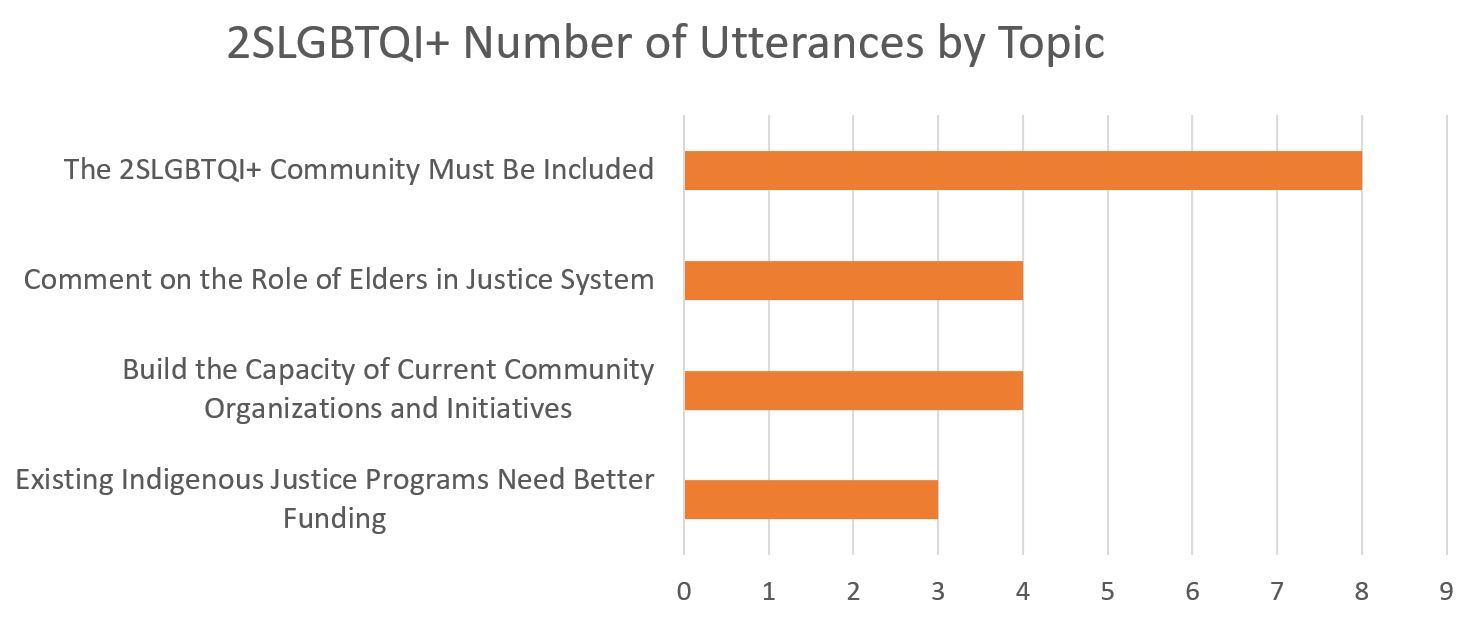
Text version
Bar chart representing the 4 common themes raised during the engagement session with Two-Spirit, Lesbian, Gay, Bisexual, Transgender, Queer, Intersex, Plus people:
- The Two-Spirit, Lesbian, Gay, Bisexual, Transgender, Queer, Intersex, Plus community must be included: 8 times
- Comment on the role of Elders in the justice system: 4 times
- Build the capacity of current community organizations and initiatives: 4 times
- Existing Indigenous justice programs need better funding: 3 times
We heard that the colonial system has changed the traditional ways that communities viewed and accepted 2SLGBTQI+ peoples, and that in order for these individuals to thrive in community, education will be a key factor. This education piece was discussed from two different angles: educating those who work in the justice system regarding the needs and considerations of 2SLGBTQI+ individuals, and re-educating Indigenous communities on the traditional and cultural significance of 2SLGBTQI+ individuals that has been lost in the colonial worldviews.
“The biggest part of this journey is educating, re-educating our own people about who we are as Indigenous Queer Two-Spirit people, because our communities have been so influenced by colonizers' beliefs and constructs, and that homophobia is a really big, live, ugly thing in our communities, whether on or off reserve.”
Furthermore, 2SLGBTQI+ advocates spoke to the need for greater funding for programs specifically designed for the 2SLGBTQI+ community, and that this funding stream be separate from other funding streams. Ideally, participants would like to see a model where funding is not “competed over”, and instead there are different funds allocated for the needs of individual communities.
“That there should be a separate stream of funding for Indigenous men, a separate stream of funding for Indigenous boys, a separate stream of funding for Indigenous women, a separate stream of funding for Indigenous girls, and a separate stream of funding for Indigenous queer Two-Spirit people so that we don't have to continue to fight these battles amongst our own relatives, and I think it's important to remember.”
2SLGBTQI+ people also spoke to the anxieties they face when needing to interact with police, and the lack of understanding that the system seems to show to 2SLGBTQI+ individuals. It was noted that many 2SLGBTQI+ Indigenous individuals carry even more trauma and have experienced even greater stigmatization and isolation, and that trauma-informed care and approaches to healing and justice are potentially even more important for 2SLGBTQI+ Indigenous persons as they are for non-2SLGBTQI+ Indigenous persons.
“I've learned about the two-spirited people and to appreciate them and to appreciate their gifts. I also know that colonization has had a huge impact on that. From the discrimination, to lack of understanding, to see the brutality towards two-spirited people, to not understanding, to having the impacts of intergenerational trauma and even our own people. Because that had been taken from us. That understanding, the understanding of acceptance of others. Colonization has had a huge impact on our people. Need to see how trauma-informed care affects two-spirited people.”
- Date modified: