
What We Heard from Métis
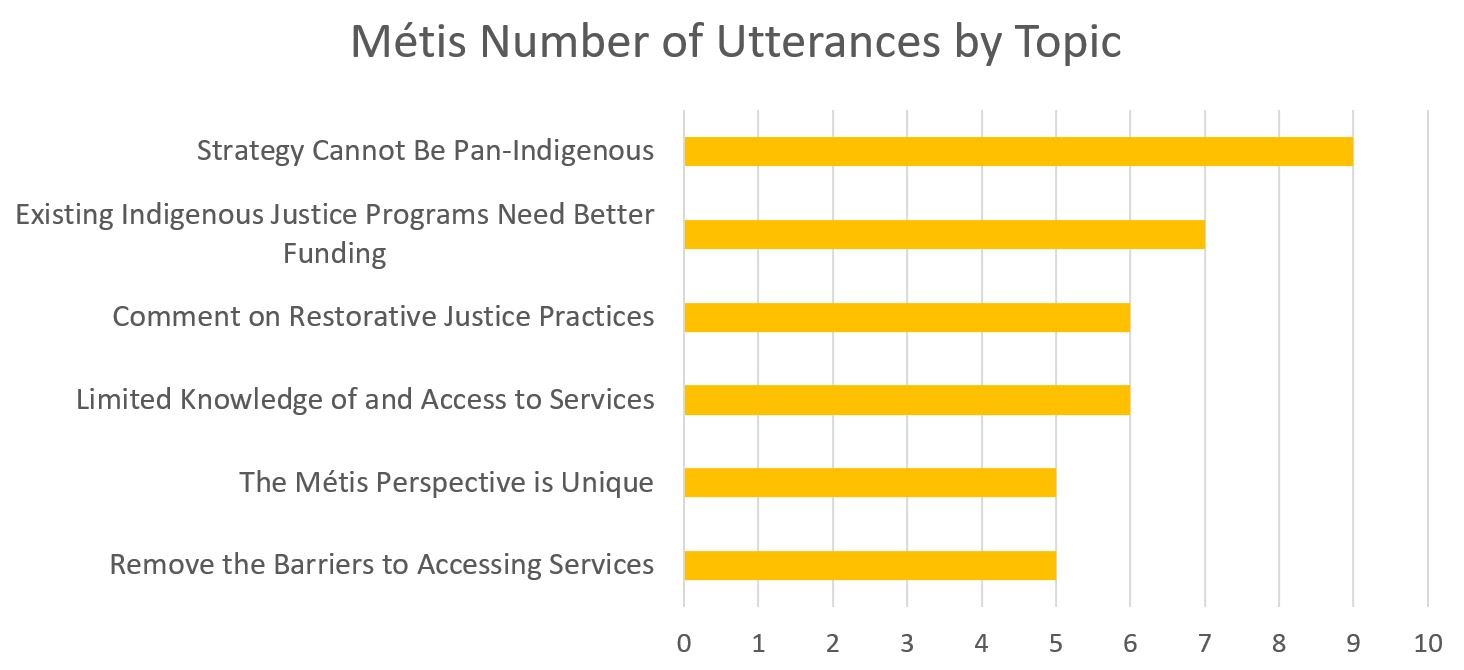
The following chart shows the most commonly coded themes across all Métis dialogues, not including those themes that were identified as being shared key themes across all meetings.
Text version
Bar chart representing the number of times 6 common themes were raised during engagement sessions with Métis:
- Strategy cannot be pan-Indigenous: 9 times
- Existing Indigenous justice programs need better funding: 7 times
- Comment on restorative justice practices: 6 times
- Limited knowledge of and access to services: 6 times
- The Métis perspective is unique: 5 times
- Remove the barriers to accessing services: 5 times
In particular, participants identified the need for Justice Canada to improve access to services for Métis individuals living in urban centres, as well as helping to fund Métis-specific programs, rather than creating services that try to be pan-Indigenous. Having culturally appropriate supports in place from the beginning of the interaction with the justice system is a key part of ensuring that Métis people are treated fairly and are aware of their rights when they come into contact with the justice system. Moreover, these supports must be specifically run by and staffed by Métis people. Participants felt that in particular, services such as Gladue Reports need to be tailored to Métis perspectives and needs.
“I'd really like to echo that sentiment of having an advocate there, especially from the beginning. A lot of these systems are not friendly. They're often hostile. They're often confusing and unfamiliar. [We]…advocated for something we refer to as system navigators. And that's not even just criminal justice specific. That can be child welfare, that can be health care, that can be education, but especially with criminal justice system helping to navigate through the courts, helping to navigate through arrest and policing and detention and bail and all of those things. Something that we heard, is that Métis especially aren't given opportunities to self-identify. If they're even able to get a Gladue report, if there's a Gladue writer available, it's often the judge that determines whether their Métis-specific, Gladue factors are mitigating enough.”
Those who participated in the Métis dialogues advocated passionately for restorative justice models. Participants noted two major hurdles with regards to restorative justice programs: inconsistent access to restorative justice, and a need for restorative justice models to provide holistic, beginning-to-end wrap-around services. Métis living in rural areas were vocal about the ways in which where a person is charged affects the options that person has when navigating through the justice system.
“I believe that at the provincial and federal level that there is a lack of consistency in access to different or sort of processes and practices in different areas, especially in rural areas where specific courts are used. One municipality or Indigenous community may have access to the specific restorative justice program, but if you go a few communities over they may not have any access to the restorative justice.”
It was suggested that the wrap-around services needed to offer effective restorative justice programs are also deeply entwined in place and setting. In rural environments, gaining access to the appropriate programs and being able to serve individuals’ needs within the community can be complicated. Conversely, making someone travel for services or having to remove them from their community so they can access the specialized help they may need, can also lead to negative impacts and outcomes. Participants spoke of the importance of developing and funding programs that could provide these types of services in each community, so that regardless of where a person is living, they can have access to the resources and supports they need when they interact with the justice system.
“I'll just add that when you're looking at a restorative justice program and I can only speak from a rural perspective like this, when you're implementing a restorative process, the end goal is usually to have some sort of agreement or plan that you can provide wraparound services to the individuals involved in the restorative process. I think better support in developing your restorative justice program in your own community and knowing how to reach out to mental health support, the addiction support, the health support housing, knowing where to reach out to the resources that you need to build into those plans is something that's really important.”
- Date modified: